Full Article
about El Ordial
Mountain village in the Sierra del Ocejón; black-and-gold architecture
Hide article Read full article
Arrival in the Pines
Early in the morning, when sunlight still slips low between the pines, the air in El Ordial carries the scent of resin and cold earth. The village reveals itself gradually as the track bends, low, compact houses appearing one by one as if sheltering from the mountain wind. Tourism in El Ordial tends to begin like this: a slow approach along a dirt road, ending at a tiny settlement of just a few dozen houses at 1,220 metres above sea level, deep in the Serranía de Guadalajara.
Human presence is felt more in details than in activity. Thick limestone walls, roofs of curved tiles darkened by long winters, and the occasional wooden door that creaks when opened. There is barely any traffic between the houses. What carries instead is the wind moving through the pine tops and, now and then, the sharp knock of a shutter.
Getting There and What to Expect
Reaching El Ordial means driving several kilometres along a forest track that winds through pine woods and scattered juniper trees. It is best to arrive prepared, as there are no shops or services here. From the city of Guadalajara, the distance exceeds 70 kilometres, with the final stretch taken slowly. After rain, the surface can become uneven.
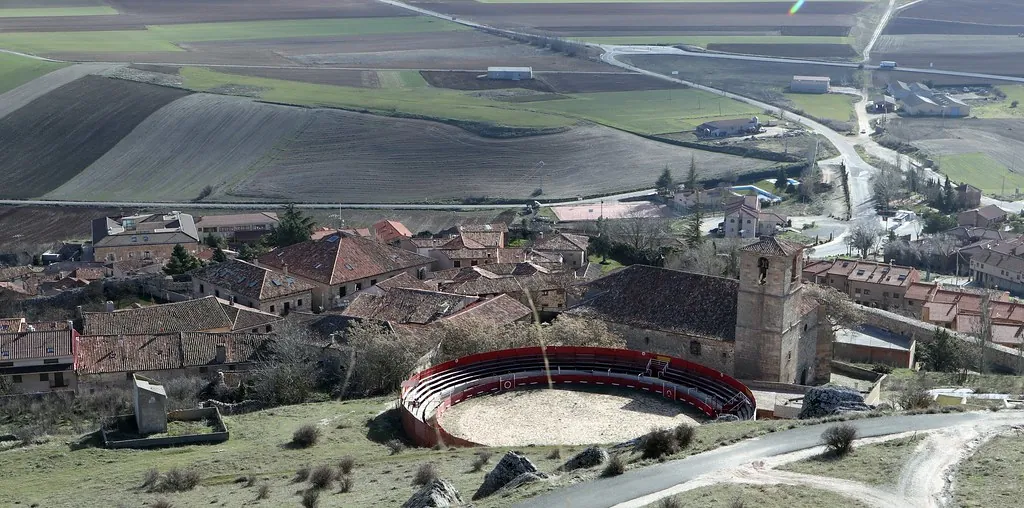
The parish church of San Pedro stands in one of the slightly more open areas of the village. Its masonry walls are plain, and a simple bell gable cuts a clear outline against the mountain sky. The building is usually dated to the 16th century. Inside, there are old religious images and a modest wooden altarpiece, in keeping with the scale of the place.
A Harsh and Open Landscape
Beyond the cluster of houses, the landscape stretches out wide and austere. Pine-covered hills roll into clearings where the ground turns stony, and grey rock formations rise among low vegetation. In summer, the grass yellows and the air becomes dry. In winter, snow is not unusual at this altitude, and paths can remain covered for days.
Old routes that once linked El Ordial with other mountain hamlets are still visible in many sections, though they are not usually signposted. Anyone planning to walk them should carry a map or a downloaded track. Some of these paths climb towards rocky ridges where several lines of mountains come into view, one behind another, with ravines opening towards the valleys below.
Wildlife leaves its mark most clearly at the edges of the day. In the early morning or late afternoon, tracks appear in the mud: roe deer prints, or signs of foxes among the scrub. Large birds of prey can sometimes be seen gliding above the dips in the terrain, using the rising air currents from the valley floor.
Changing Seasons in the Hills
Autumn brings a noticeable shift in the pine forest after the rains. Mushrooms appear among the damp needles, though collecting them is often regulated across much of the province, so it is worth checking the rules beforehand. Walking through the woods at this time has a different rhythm: trunks covered in lichen, the smell of wet wood, leaves clinging to boots.
The nights in El Ordial are especially dark. With no lighting for kilometres around, the sky is remarkably clear when conditions allow. On moonless nights, the Milky Way appears as a pale band stretching above the mountains.
A Village of Few but Meaningful Moments
Life in El Ordial gathers around specific times of year. The festival dedicated to San Pedro usually takes place towards the end of June. Families and former residents return, meeting in the square or near the fountain. Tables are set out with homemade food, and conversations drift towards past harvests, livestock that is now less common in these hills, and the changes in the old paths.
For much of the year, the permanent population can fall below twenty people. Numbers rise slightly in summer, when those who still keep family homes come back for a time. Even then, El Ordial remains small, including in August.
When to Go
It is best to avoid periods of intense summer heat and the harshest weeks of winter. Late spring and early autumn tend to bring more manageable temperatures and paths that are easier to follow. In this part of the Sierra Norte, the weather can change quickly, so carrying warm clothing is advisable even on clear days. Here, the landscape sets the terms, and the pace follows the mountain.