Full Article
about Estriégana
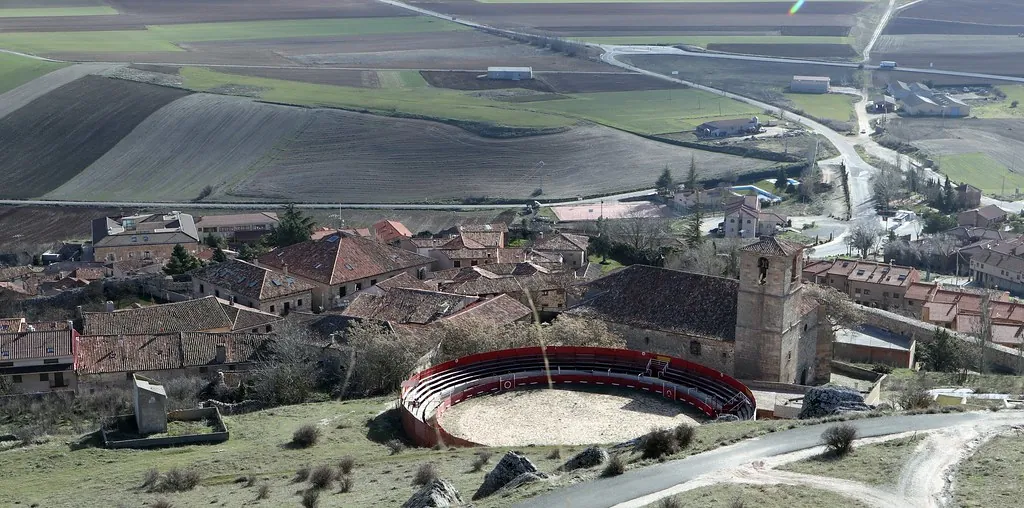
Tiny village overlooking the Dulce River valley; total quiet.
Hide article Read full article
Estriégana: un final de carretera en la Sierra Norte
La carretera termina en Estriégana. No hay más asfalto. Este es el dato geográfico principal: un pueblo de trece habitantes a más de mil metros de altitud, en el límite sur de la Sierra de Pela, en Guadalajara. El silencio que se encuentra aquí no es una postal. Es la consecuencia de una despoblación que ha redefinido la serranía durante décadas.
Para entenderlo, hay que ajustar la escala. No hay monumentos destacados ni calles con actividad comercial. Es un conjunto de casas de piedra apiñadas contra el clima, rodeadas por un paisaje abierto de horizontes largos. El viaje ya lo anuncia. Desde la ciudad de Guadalajara son unos noventa kilómetros por carreteras comarcales. Los pueblos se hacen más pequeños y la distancia entre ellos, mayor. Estriégana aparece al final de uno de esos desvíos, como otros muchos en el mapa de esta España vaciada.
Origen medieval y función ganadera
Estriégana se fundó probablemente entre los siglos XII y XIII, durante la repoblación cristiana del norte de Guadalajara. Su existencia dependía de la villa de Atienza, centro defensivo y administrativo de la zona. Los asentamientos de esta época tenían una función clara: ocupar el territorio, gestionar pastos y mantener abiertas las vías entre valles.
Este pueblo formaba parte de esa red de pequeñas comunidades ligadas a la ganadería extensiva. La economía local giró durante siglos en torno al ganado y los recursos del monte. La cercanía de la Sierra de Pela proporcionaba pastos de verano, y las cañadas locales conectaban con las rutas trashumantes mayores.
Esa lógica explica su trazado compacto y su tamaño reducido. Nunca estuvo pensado para crecer. Su razón de ser era mantener a una comunidad rural vinculada a la tierra. Todavía hoy se lee ese propósito en la forma en que las casas se agrupan y en la relación directa entre el pueblo y el monte.
Casas de piedra e iglesia de San Pedro
La arquitectura de Estriégana responde a esa escala. Dominan las casas de mampostería, con muros gruesos y cubiertas sencillas. Su diseño obedece más al clima que a la ornamentación. A esta altitud, los inviernos son fríos y la nieve es habitual, por lo que la solidez era una necesidad. Algunas viviendas están rehabilitadas; otras muestran el abandono de forma evidente. En un núcleo tan pequeño, cada puerta cerrada cuenta una parte de la historia reciente.
La iglesia parroquial de San Pedro ocupa uno de los puntos más visibles. Es un edificio modesto, de mampostería, rematado con una espadaña. Muchos templos de la zona adoptaron esta forma entre la época moderna y el siglo XVIII, a menudo sobre restos anteriores.
El interior es sobrio. La decoración es secundaria. La importancia del edificio radicaba en su papel como punto de encuentro de la comunidad, no en el despliegue artístico. En sitios como este, la iglesia estructuraba la vida social, marcaba el calendario y reunía a los vecinos.
Un paisaje modelado por el ganado
El paisaje alrededor explica por qué se asentaron aquí. Las laderas cercanas combinan pinares con manchas de roble y quejigo. Son montes de media altura que en algunos puntos dan paso a valles amplios. La ganadería extensiva y el aprovechamiento forestal han modelado este entorno durante generaciones.
Las estaciones cambian el carácter del terreno. En invierno, la nieve es frecuente en la sierra y puede cubrir los caminos durante días. La primavera devuelve el color a los prados. En verano, la sequía revela con más crudeza la estructura del terreno: monte, pasto y los horizontes planos de la meseta.
Quien llega hasta aquí suele hacerlo para caminar. Desde el pueblo salen pistas forestales y senderos antiguos que atraviesan las lomas colindantes. No siempre están señalizados; conviene llevar mapa o usar una aplicación de rutas. Los recorridos son generalmente suaves, sin grandes desniveles. Yendo con calma, aún es posible ver corzos o escuchar rapaces.
No hay espectáculo. El atractivo está en el espacio, en el silencio y en la continuidad entre el pueblo y el monte. Las mismas veredas que se usaban para mover el ganado ahora sirven para paseos por un terreno que ha cambiado poco en su trazado.
Una vida diaria mínima
La vida cotidiana en Estriégana se reduce a lo esencial. No hay tiendas ni servicios. Quien planee pasar tiempo aquí debe llevar agua y comida desde fuera. La escasa población hace que la actividad sea mínima durante gran parte del año.
El verano altera ligeramente el ritmo. Familias que mantienen casas en el pueblo regresan durante los meses cálidos, lo que aporta algo de movimiento a las calles. Las celebraciones ligadas a San Pedro suelen concentrar estos reencuentros vecinales, reconectando a quienes se fueron con el lugar donde sus familias vivieron todo el año.
Aun así, Estriégana no se convierte en un núcleo turístico. Su carácter sigue definido por su escala reducida y su distancia de los centros mayores. La experiencia de llegar tiene menos que ver con visitar un monumento concreto y más con alcanzar uno de los márgenes de la España habitada.
En esta parte de Castilla-La Mancha, el viaje a menudo pesa tanto como el destino. Estriégana es uno más de los pueblos configurados por la organización medieval, las economías pastoriles y la salida constante de población durante el siglo XX. No hace grandes declaraciones; solo muestra, con quietud, cómo se adaptó la vida humana a la altitud, al clima y al terreno.