Full Article
about Hijes
Village with archaeological sites; reddish-stone architecture
Hide article Read full article
Un pueblo que casi no anuncia que está
Hay sitios que parecen un error del GPS. Llegas, miras el cuentakilómetros y te preguntas si de verdad vive alguien. Hijes es de esos lugares donde hasta la navegación duda, como preguntándote si estás seguro. Pero está. Veinticuatro personas en un término municipal ancho. Vamos, menos densidad que una nevera a final de mes.
Se llega desde la A-2, tomando una carretera provincial bastante recta que va subiendo poco a poco. Hijes no está perdido, está apartado. Se queda a unos 1.100 metros, donde el aire en invierno corta un poco más y en verano trae una brisa constante.
No es un pueblo colgado dramáticamente de una montaña. La sierra simplemente lo dejó donde estaba, sin aspavientos.
El sonido de casi nada
Llegar a Hijes incluye una pausa obligatoria. Aparcas cerca de la iglesia y te quedas quieto un minuto. No pasa gran cosa. No pasan coches, no se oyen voces, ninguna persiana que se abra. Ahí es cuando el sitio empieza a tener sentido.
Los sonidos pequeños cobran protagonismo. El viento moviéndose entre las casas. Los pasos contra la piedra. Algún pájaro cruzando los tejados.
Para quien está acostumbrado al ruido de ciudad, ese silencio llama más la atención de lo previsto.
Las calles son sencillas, las casas están juntas, construidas para aguantar el invierno más que para impresionar. Todo parece práctico y asentado en su sitio.
La iglesia que simplemente ha seguido
La Iglesia de la Natividad no intenta impresionar a nadie. Su tamaño es modesto y su decoración contenida. Parece una casa vieja reparada poco a poco con los años y que aún cumple su función.
La piedra cambia de color en algunos puntos, sobre todo donde ha sido tocada por generaciones de manos. La puerta a veces queda abierta. En un pueblo tan pequeño, cerrar con llave no parece una prioridad.
Dentro, el aire es fresco y huele a piedra antigua. El edificio ha servido para lo mismo durante siglos: bancos gastados, muros gruesos y un silencio que se instala rápido.
No es un monumento famoso. Es solo la iglesia del pueblo que ha llegado hasta hoy. Eso ya dice bastante.
Cuando todo cambia por unos días
Durante gran parte del año, cruzarte con alguien por la calle depende de la suerte. Luego llegan unos días en los que Hijes cambia por completo.
Las fiestas de San Bernabé y las de agosto traen gente de vuelta. Muchos tienen familia aquí, otros pasaron veranos de niños en el pueblo. De repente, la plaza se llena de movimiento, aparecen coches donde normalmente no los hay y las conversaciones se alargan al aire libre.
Suele organizarse una comida comunal. Una paella grande o algo similar ocupa el centro. Cada uno aporta lo que puede y, en poco tiempo, medio pueblo se reúne alrededor de la misma mesa.
Durante unas horas, el lugar recupera algo que debió ser normal hace décadas: ruido, puertas abriéndose y cerrándose, niños correteando por las calles.
Luego se desvanece otra vez.
Un camino para el que hay que preguntar
Aquí no hay rutas señalizadas cada pocos metros. Si pides indicaciones para subir al monte cercano, la respuesta será probablemente sencilla: ve arriba detrás de la iglesia y sigue el camino.
Funciona.
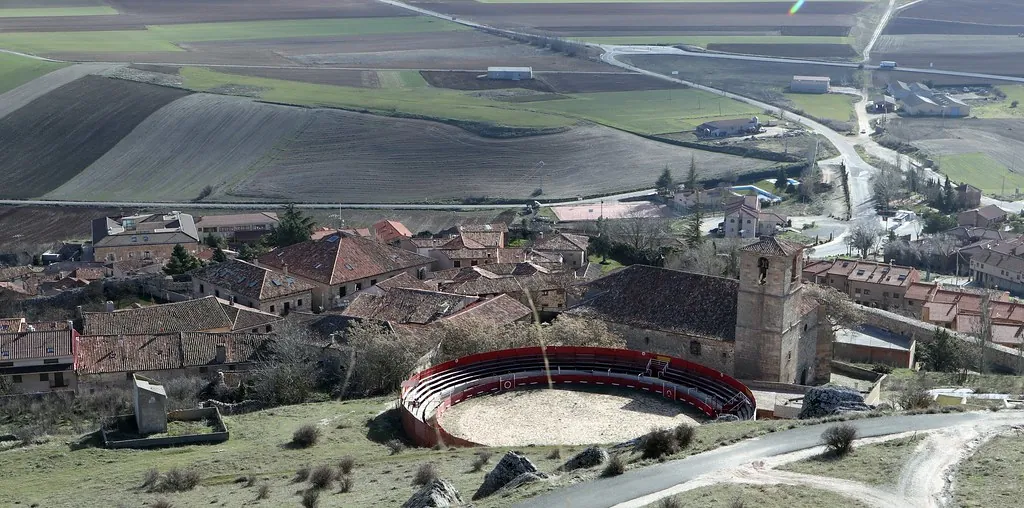
Una pista de piedra sale del pueblo. En pocos minutos, al mirar atrás ves las casas agrupadas, los tejados pegados unos a otros como protección contra el viento.
Más arriba el paisaje se abre de golpe: aparece la caliza clara con lomas anchas y un horizonte extenso; Hijes queda abajo pequeño como colocado con cuidado entre las rocas; esa subida corta da una perspectiva clara desde arriba se entiende mejor lo extenso del territorio eso explica por qué siempre ha sido tan apartado este sitio; trae agua si vas porque aunque sea corto conviene ir preparado sobre todo con calor; no es una ruta épica pero sí suficiente para entender dónde estás metido realmente desde allí arriba todo encaja mejor sabes cuando has visto suficiente porque sientes frío o porque simplemente ya has entendido lo que necesitabas ver entonces bajas otra vez hacia ese silencio familiar otra vez hacia ese sonido mínimo otra vez hacia ese lugar pequeño alto en sierra norte todavía ahí porque nadie tuvo prisa por cambiarlo eso hoy tiene su propio tipo interés sabes?