Full Article
about La Miñosa
Scattered municipality with several hamlets; authentic rural setting
Hide article Read full article
A Village That Moves at Its Own Speed
Arriving in La Miñosa feels a little like stepping into a house that has been shut up all winter: quiet air, the scent of the countryside, and the sense that time behaves differently here. Life is not slower out of nostalgia. There is simply no rush.
Around thirty people live here. In winter, sometimes fewer.
On a campsite nearby, a local once described days so cold that only four or five people might pass each other in the street. Once you arrive, that makes sense. The roads wind between pines and gentle hills, and then the village appears, small and compact. The houses seem to lean towards one another, as if bracing against the wind.
La Miñosa does not try to impress. It is the kind of place that still exists because people stayed, not because visitors arrived in coaches.
Stone, Roof Tiles and the Church of San Pedro
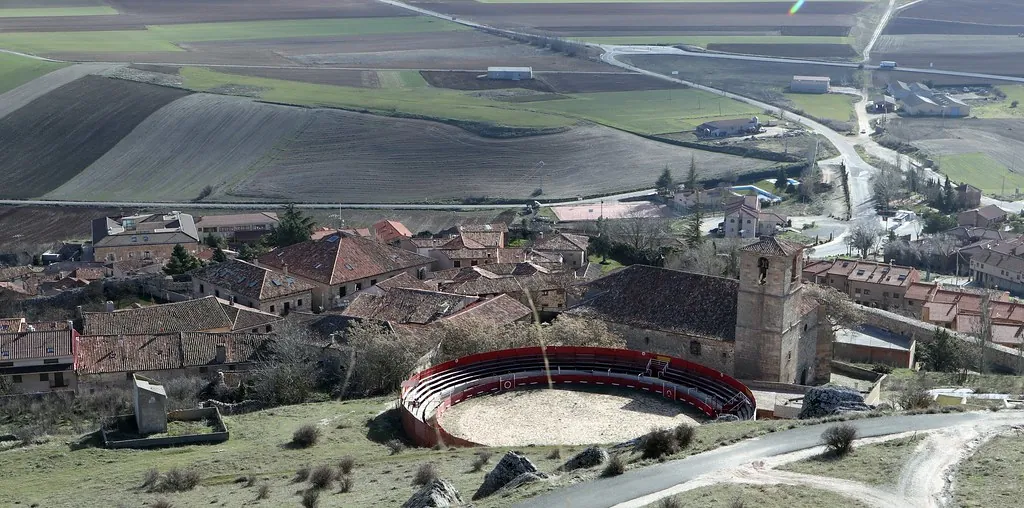
You can walk around the village in very little time. It feels like a hamlet set down in the middle of the hills and then left just as it was, without expansion or redesign.
Much of the traditional mountain architecture remains. Thick stone walls protect against the cold. Roofs slope steeply. The streets are barely streets at all, more narrow passages between façades. Nothing here aims for grandeur. Everything is practical, built to withstand long winters.
At the centre stands the church of San Pedro. It is simple, closer in appearance to a large house with a bell than to a monumental church. For many years it served as the meeting point for village life. People gathered here for Mass, for announcements, and for conversations after work in the fields.
Beyond the buildings, the landscape takes over. Oaks and pines cover the slopes. The hills shift in character with the seasons. Spring turns everything a deep green. Autumn brings tones of copper and damp earth. When snow falls, the village resembles the nativity scenes that are set up in Spain each December, with white roofs and smoke rising from a chimney or two.
Walking Into Silence
The most common activity in La Miñosa is straightforward: walking.
Footpaths leave directly from the village and head into the hills. Some are marked. Others are older routes, worn by use over generations rather than signposted for visitors.
A map or a route app is useful. Signage does not always help, and it is easy to lose your bearings. The area is wide and notably quiet. At times it feels as though you are walking through countryside that has been left empty.
The sky often rewards those who look up. Buzzards circle overhead. With luck, a goshawk may appear. There are no large observatories or dedicated facilities. The experience is closer to watching the landscape from a car window, except here you move slowly and on foot.
La Miñosa has no formal tourist services. There are no places to sit down for a meal throughout the year. Visitors usually bring something with them or stop in larger towns nearby before arriving. Those same towns make it easier to find local produce from the surrounding area: honey from nearby beekeepers, mushrooms in season, and lamb from small-scale farms.
When Summer Brings People Back
Summer changes the atmosphere, though not dramatically. The village does not fill up, yet there is a noticeable shift. Families return for a few days. Houses that have been closed for months open their doors again.
Around this time, the festival linked to San Pedro, the village’s patron saint, is usually held. It is a simple occasion. There is a Mass, a short procession through the streets, and a shared meal between neighbours and those who have come back for the celebration. It feels more like a family gathering than a staged event.
Other customs connected to farming and livestock continue as well. They are small in scale and rarely appear on official calendars, yet they maintain a link between those who live here all year and those who return from time to time.
Reaching the Sierra Norte
La Miñosa lies in the Sierra Norte of Guadalajara. The approach is along secondary roads, with the final stretch unfolding through gentle bends between scrubland and pine forest. The drive is not difficult, though it makes sense to come by car and to have the destination clearly marked.
Public transport barely reaches this far. Once you park, everything is done on foot. You do not need anything more.
La Miñosa is quickly understood. You walk around once, sit for a while looking at the hills, and that is enough. It has something in common with a motorway service stop on a long journey. You are not searching for spectacle. You stop to breathe before continuing on your way. For that purpose, this small village in Castilla La Mancha does exactly what it needs to do.