Full Article
about La Toba
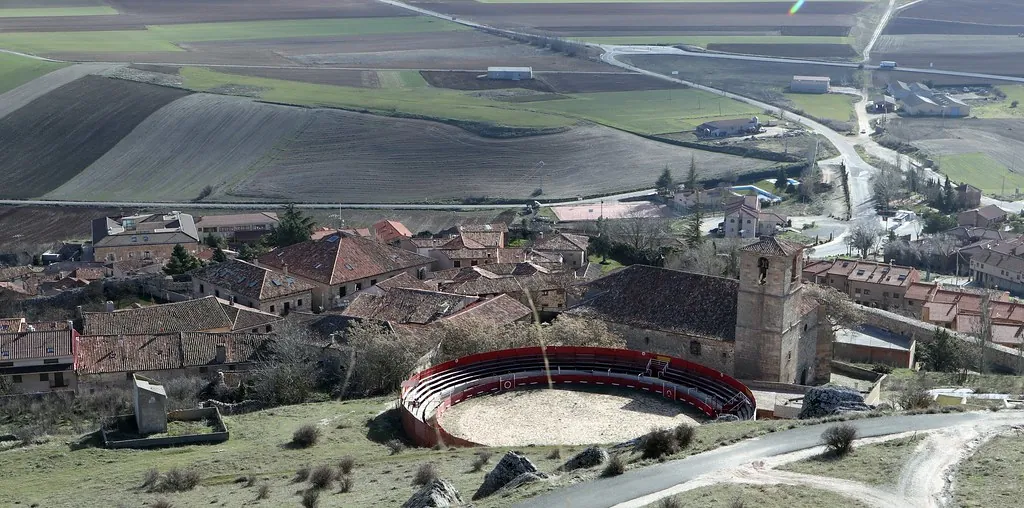
Mountain village in the Bornova valley; green, cool setting
Ocultar artículo Leer artículo completo
The Road That Tests Your Patience
The last twelve kilometres to La Toba unwind like a loose cassette tape. The CM-2106 narrows after Tamajón, climbing through gorse and holm oak until asphalt gives way to patched concrete. Hire-carundersides scrape on central ridges. Google Maps loses the plot somewhere around the 937-metre mark. This is the village’s first filter: if you turn back now, you probably weren’t who they were waiting for anyway.
Seventy-odd souls live here year-round, a number that swells to perhaps a hundred and fifty when Madrid families reopen their grandparents’ stone houses for August. The place name comes from the crumbly limestone that crops out in road cuts—rock so porous it drinks rainwater like bread. Locals call it toba, geologists call it calcarenite, and everyone agrees it makes terrible building stone. They used it anyway. Most houses bear the scars: walls patched and repatched, corners rounded off by centuries of frost.
A Main Street That Forgets Its Own Name
There isn’t one. Streets are labelled only on the cadastral map; nobody bothers with signs. You park where the tarmac ends, by the stone trough that catches meltwater from a pipe. Walk uphill past the church—mid-nineteenth-century, single nave, bell turret more useful for spotting kites than summoning worshippers—and the village simply dissolves into threshing circles and vegetable plots. A brass plate announces “Plaza de la Constitución” but the plaza is a triangle of packed earth where two dogs sleep and a tractor tyre slowly becomes soil.
The grocer’s opens Saturday mornings if Concha isn’t babysitting in Tamajón. Bread arrives frozen from a supplier in Molina and is finished in someone’s domestic oven. Want coffee? Bring a thermos; the last bar closed when the owner died in 2018. This is not a metaphor. The zinc counter is still there, shutters bolted, Fanta sign bleaching to the colour of bone.
Walking Without Waymarks
Proper boots help, but the real trick is recognising that every track was made by something with four legs and a purpose. Follow the stone-lined lane south-west past the cemetery and you drop into the Arroyo de la Dehesa, where Iberian parsley fern grows between boulders. Twenty minutes later the path splits: left to an abandoned pig corral, right to a spring that tastes of iron and disappears in August. No signposts, just instinct and the confidence to backtrack.
The Sierra de Pela rolls out like a crumpled tarpaulin. Elevations hover either side of a thousand metres, enough to trap Atlantic weather and create tiny snow pockets that survive north-facing hollows until April. In May the slopes flare yellow with Spanish broom; by October the same bushes rattle with seed pods. Dawn temperature swings of fifteen degrees are normal—pack a fleece even if Madrid hit 35 °C the day before.
What Passes for Nightlife
Darkness arrives suddenly because there is nothing to soften it. Street lighting consists of three bulbs on a timer that gives up at midnight. Above, the sky grades from cobalt to ink with such clarity that you can watch the International Space Station rise and set without binoculars. On moonless nights the Milky Way throws shadows. Bring a red-filter torch and a star-chart app set to offline mode—phone signal drops to Emergency Calls Only beside the church wall.
Soundtrack: a tawny owl that has occupied the bell turret since 1994, the occasional clank of a cowbell, wind worrying the corrugated roof on the old school. That’s it. Silence here is not poetic; it is simply unpaid-for.
Eating What the Landscape Allows
Hunters arrive in droves each November for red-legged partridge and, if the quota allows, roe deer. They stay in rented village houses, wake at 5 a.m. and return at dusk with plastic bags of feathers. The rest of the year protein comes from chickens kept behind lattice fences and from Cárnicas Julián in Campillos-Sierra, twenty-five minutes away by car. Their lamb shoulder costs €14 a kilo, vacuum-packed, ready for the wood-burning stove every rural letting seems to inherit.
Wild food follows a strict calendar: wild asparagus in April, niscalos (saffron milk-caps) late October, penny bun mushrooms whenever the rains behave. Picking is tolerated provided you avoid the fenced-off repopulation pines. Restaurant tables are harder to find. The nearest sit-down meal is at Mesón de la Sierra in Tamajón—grilled pork ear, roast peppers, wine from Valdepeñas, €12 menu del día. They close Tuesdays and the entire month of February.
Weather as Gatekeeper
Winter is serious. The CM-2106 collects ice in the bends above kilometre-post 18 and the Guardia Civil slap on a chain requirement faster than you can say “all-season tyres”. Snowploughs prioritise the bus route to Sigüenza; La Toba waits its turn. Book accommodation with a chimney and a backup gas heater—power cuts ride in on the same storms that bring the snow.
Summer delivers the opposite problem: 30 °C by eleven in the morning, water pressure dropping as neighbours irrigate tomatoes. Showers become brief, strategic affairs. The upside is longevity of daylight: you can hike until nine and still cook outside. Spring and autumn occupy about six weeks apiece and are, unsurprisingly, when the village looks its best and the roads behave.
Getting There, Getting Out
From London: fly to Madrid, train to Guadalajara (30 min), collect hire car. North Circunvalación to the N-320 towards Cuenca. After Sacedón turn left on the CM-2106; stay on it for 38 km of curves. Total driving time from Barajas: two and a quarter hours if you resist photo stops. Petrol pumps exist in Tamajón and Campillos-Sierra; both shut for siesta 2-4 p.m. and neither accepts Apple Pay.
Public transport is theoretical. A school bus passes through at 7 a.m. on term-time weekdays; the return leg leaves Guadalajara at 2 p.m. Miss it and you are sleeping in the provincial capital. Taxi from Guadalajara costs €90 if you can persuade a driver to make the dead return run.
The Honest Verdict
La Toba offers altitude, absence and affordability. A three-night weekend in a two-bedroom cottage runs €180 total, firewood included. What it does not provide is convenience, curated charm or anything resembling nightlife. When the wind howls down from the Sierra you will question your life choices; when the sky delivers its full cargo of stars you might forgive the lack of soya lattes. Bring supplies, an OS spirit and a car that doesn’t mind reversing half a kilometre when the track turns out to be a dead end. The village will still be there, doing nothing in particular, long after the last Instagrammer gives up and turns around.