Full Article
about Las Navas de Jadraque
Mountain village in the Natural Park; setting of great scenic beauty
Ocultar artículo Leer artículo completo
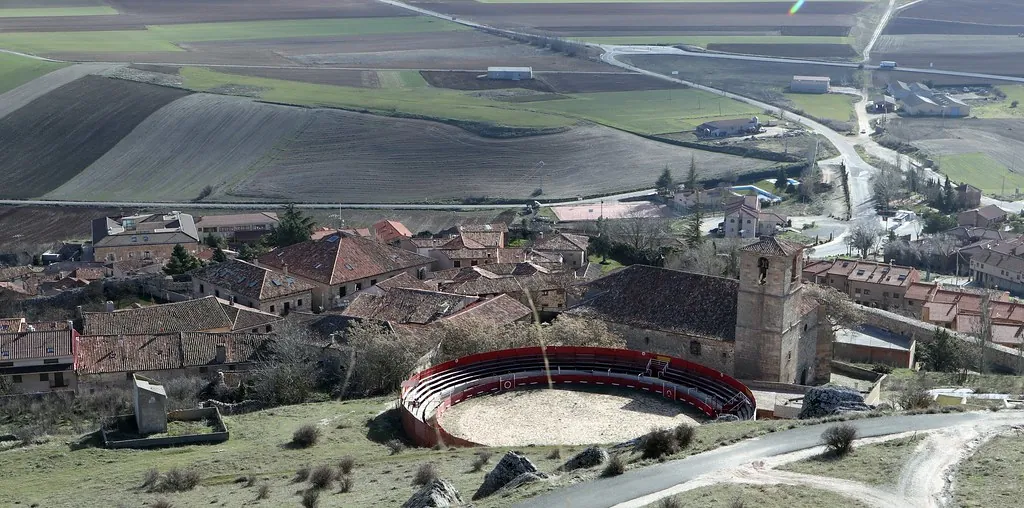
The church bell tolls twelve times, yet nobody appears. At 1,108 metres above sea level, Las Navas de Jadraque keeps its own rhythm—one that has little regard for the precise hour. Thirty-five souls remain year-round in this Castilian outpost, their stone houses scattered across a ridge that feels closer to sky than soil. When the August fiestas arrive, the population swells to perhaps a hundred, as former residents return to unlock shuttered homes and remember why their grandparents stayed so long.
Stone Against Wind
The village architecture tells its story plainly. Thick masonry walls, Arab-tiled roofs weighted against mountain gales, and wooden gates built wide enough for livestock and firewood speak of survival rather than ornament. The parish church of San Pedro stands at the highest point—not for spiritual elevation, but because bedrock here offers the only firm foundation against winter storms that can last three days straight. Its modest bell tower, visible for kilometres across the pine slopes, serves less as a call to prayer than as a landmark for walkers who've misjudged the afternoon light.
A short circuit of the lanes reveals the village's recent history written in stone and absence. Some houses show fresh mortar between their granite blocks, weekend retreats for families from Guadalajara or Madrid. Others sag under collapsed roofs, their empty doorways framing views of empty pasture. The contrast isn't picturesque—it's simply what happens when a place that supported 200 souls in 1950 discovers that sheep farming pays less than city work, and that mountain silence, however profound, cannot compete with broadband connectivity.
Walking the Sky's Edge
The surrounding Sierra Norte de Guadalajara offers compensation for those willing to trade convenience for space. A network of agricultural tracks radiates from the village, following contours that have separated fields and forest since medieval times. None are waymarked in the British sense—no neat fingerposts or Ordnance Survey accuracy here—so navigation requires attention to landscape rather than signage. The reward is walking through country where golden eagles circle overhead and the only human traces might be a rusted ploughshare or dry-stone wall disappearing into bracken.
Altitude makes every slope steeper than it appears. A modest 300-metre climb to the neighbouring ridge feels more like 500, particularly when the sun reflects off pale limestone with an intensity that catches out visitors from cloudier climates. The walking season runs from late April to early June, and again from mid-September to October. Summer temperatures may reach 35°C, but afternoon storms build quickly over these heights. Winter brings proper mountain conditions—snow can block the access road for days, and the handful of permanent residents stock supplies like Arctic explorers.
What Grows Between the Rocks
The land here produces little beyond what sheep and goats can extract from thin soils. Local gastronomy reflects this honesty: cordero al estilo serrano, mountain lamb slow-roasted with nothing more than garlic, bay and the herbs that survive at altitude; morcilla enriched with rice rather than cereal fillers; honey from hives placed among flowering thyme that perfumes the air each May. None of this is available within the village itself—there are no cafés, no restaurants, not even a village shop. The nearest proper meal waits twelve kilometres away in Tamajón, where Casa Ramón serves robust portions to workers who've spent the day clearing firebreaks or repairing terrace walls.
For self-catered stays, the Thursday market in Guadalajara (eighty minutes by car) offers better value than Madrid's gourmet temples. Look for quesado de oveja, an aged sheep's cheese that develops crystalline texture after two years in mountain caves, or buy directly from the dairy at Arbeteta, twenty-five kilometres north. Wine drinkers should abandon Rioja expectations—the local Garnacha from nearby El Cardoso de la Sierra delivers bright acidity that cuts through rich meats, though at €4 a bottle, connoisseur pretensions feel misplaced.
When the Mountain Decides
Access defines the Las Navas experience more than any guidebook highlight. From Guadalajara, the CM-201 winds north through foothills that grow progressively wilder. The final twelve kilometres narrow to single-track with passing places—reverse twenty metres if you meet a timber lorry, and pray the driver recognises British number plates. Google Maps timing proves optimistic; allow ninety minutes from the A-2 motorway, longer if autumn mists descend. Car hire from Madrid Barajas costs around €40 daily for a compact, but specify snow chains between November and March—companies don't volunteer winter equipment.
Accommodation within the village consists of three restored houses rented by their Guadalajara owners. None sleeps more than four; all require minimum three-night stays and cost €80-120 nightly regardless of season. Booking happens through word-of-mouth or Spanish letting sites—search "casas rurales Navas de Jadraque" and prepare for WhatsApp communication in rapid Castilian. Alternatively, Tamajón offers simpler hostals from €45 nightly, useful if mountain driving after dark seems unappealing.
The Silence Between Heartbeats
Evening brings the village's true gift: darkness so complete that the Milky Way casts shadows. At 2am, when the last Madrid weekender has switched off their rental's LED lighting, the silence becomes almost tangible. Then a tawny owl calls from the pine grove, answered by the soft bleating of sheep in the fold below. These sounds—ancient, ordinary—remind visitors that Las Navas de Jadraque never aimed to be destination. It simply persisted while other places grew larger, louder, more convenient.
Stay too long, and the mountain reveals its harsher face. Mobile reception vanishes with each weather front. The spring water that tastes so pure can leave you bedridden if your stomach lacks local conditioning. That walking track which seemed so inviting at 10am becomes a treacherous river of scree when clouds roll in at 4pm. These aren't flaws to overlook—they're the terms of engagement for places that geography never intended for casual occupation.
Three days provides sufficient time to walk the surrounding ridges, learn which tracks lead back to the church tower, and understand why population decline hasn't quite reached zero here. Longer stays risk the realisation that mountain silence, however restorative, eventually amplifies rather than soothes one's own thoughts. Las Navas de Jadraque offers no revelations, sells no souvenirs, promises no life-changing experiences. It simply exists at 1,108 metres, waiting for those who need to remember what horizontal horizons feel like—and for everyone else, the road back to Guadalajara remains mercifully open.