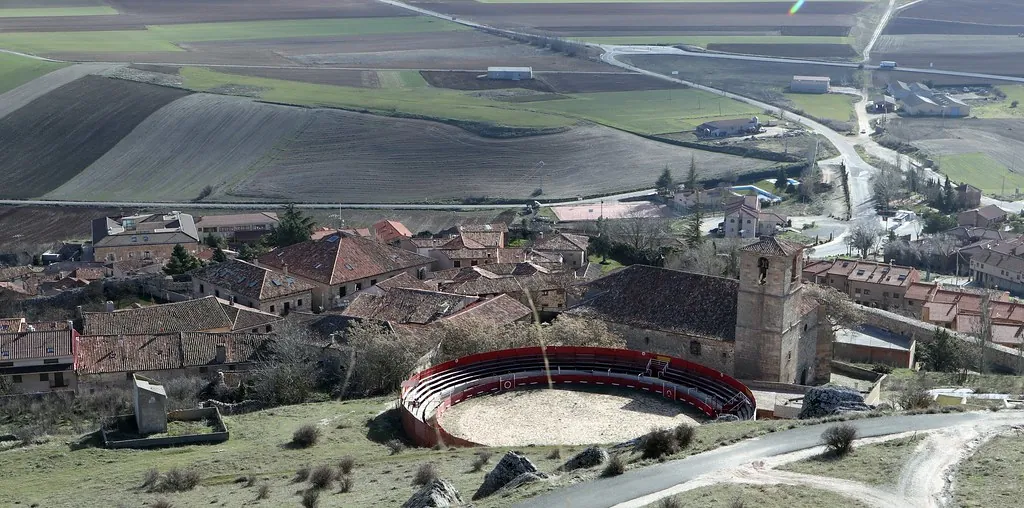
Vista aérea de Mandayona
Instituto Geográfico Nacional · CC-BY 4.0 scne.es
Castilla-La Mancha · Land of Don Quixote

Mandayona

The bakery opens at seven with a bell you can hear from the church steps. By half past, the owner is already wiping flour from her apron and the da...

285 inhabitants · INE 2025
862m Altitude

Why Visit

Mountain Church of San Pedro Río Dulce Route

Best Time to Visit

spring

Fiestas de la Virgen de la Paz (September) Enero y Septiembre

Things to See & Do
in Mandayona

Heritage

  • Church of San Pedro
  • River Dulce Interpretation Center

Activities

  • Río Dulce Route
  • Hiking

Full Article
about Mandayona

Set in the Barranco del Río Dulce Natural Park; gateway to the Félix Rodríguez de la Fuente trail

Ocultar artículo Leer artículo completo

The bakery opens at seven with a bell you can hear from the church steps. By half past, the owner is already wiping flour from her apron and the day's first cortados are sliding across the counter. That's the morning rush in Mandayona: one woman, one coffee machine, and a queue that never reaches the door.

At 862 m above the Tagus basin, the village sits high enough for the air to feel thinner, especially when the wind rolls off the parameras – the treeless ridges that separate the province of Guadalajara from the plains of La Mancha. The altitude matters. In May you still need a jacket at nine o’clock; in August the nights drop to 14 °C, so farmers sleep under blankets while Madrid, 130 km west, swelters at 28 °C. Winter is another story. When snow sweeps in from the Central System the single access road becomes a white ribbon and the council tractor is the only traffic allowed. Visit between December and February only if you carry chains and a thermos; the bakery still opens, but the owner may arrive on skis.

Stone, Tile and the Sound of Silence

There is no monument to tick off, no ticket booth, no audio guide. Instead, a grid of three streets and two alleys offers a crash course in Castilian building logic: granite footings to keep out the damp, adobe above to keep in the warmth, Arabic tiles pitched just steeply enough to slide off the snow. Window grilles are painted the same ox-blood red you will see in Sigüenza and Medinaceli; the colour once cost extra, so householders used it sparingly on the street-side ironwork and left the rear façades plain. Peer into the side lane beside the church and you can still read the 1897 date pressed into a roof tile – the year someone rebuilt after a fire that started in the bread oven.

San Pedro Apóstol, the parish church, squats rather than soars. Its tower is masonry, not dressed stone, giving it a rough, almost geological look. Inside, the only splash of gilt is a seventeenth-century altarpiece rescued from a Franciscan monastery closed during the Desamortización. The side chapel smells of candle wax and dust; swallows nest in the rafters, and the priest doubles as the village IT tutor on Tuesday evenings. Mass is at noon on Sunday; if you arrive early you can hear the bell ringer practise – a teenager earning pocket money who occasionally misses a beat and swears loud enough to echo round the plaza.

Tracks, Talons and the Friday Market

Leave the village on the earth track signed to Carrascosa and you drop into a shallow valley where wheat gives way to holm oak. The path is graded for tractors, so navigation is simple: keep the telecom mast on your right shoulder and the quejigo woods on your left. After 40 minutes the track ends at a threshing floor the size of a tennis court. Eagles use the thermals here; bring binoculars and you can tell a short-toed snake eagle from a booted by the under-wing pattern – the locals do, and will quiz you if you mis-name them.

Serious walkers can stitch together a 17 km loop that links Mandayona with its bigger neighbour, Valdeajos. The route crosses two watersheds and gains 350 m – enough for thigh burn but no Via Ferrata nonsense. In spring the verges foam with white arenaria and the air smells of thyme crushed under hiking boots. Take two litres of water; there is no bar until Valdeajos, and that opens only at weekends.

Back in the village, Friday is market morning. Two vans and a fold-out table constitute the commercial heart of Mandayona: one seller deals in pyramids of tomatoes and calçots trucked up from Valencia, the other offers kitchen knives and cheap fleeces. The event is over by 11:30, so if you want fresh fruit for a picnic, set the alarm. There is still no cash machine; the nearest is a 20-minute drive to Brihuega, famous for its lavender fields and, more importantly, a working Santander branch.

What Passes for Nightlife

By nine the temperature has fallen off a cliff, even in July. The square fills with families wheeling babies and grandparents armed with folding chairs. Bar La Plaza sets out four metal tables and starts pouring cañas at €1.30. Order a dish of local honey with fresh cheese; it comes in a chipped saucer and tastes of rosemary. The house wine from Uclés is sold by the glass for €1.90 – softer than Ribera, less oak than Rioja, it slips down without the tannic punch that usually puts off British palates reared on supermarket claret.

Food after ten means the asador in Carrascosa, ten minutes by car. Their milk-fed lamb is roasted in a brick oven fired with vine cuttings; the meat arrives pink, with a brittle layer of fat that crackles like pork. A quarter kilo is plenty for two; expect to pay €24 including roast potatoes and a bowl of migas – fried breadcrumbs studded with sweet grapes, the gateway drug for offal-shy visitors. Book before six; when the lamb runs out they close.

If you stay in the village itself, the only noise after midnight is the sluice gate on the communal fountain. The fountain was restored in 2008 and now serves as a meeting point for the village WhatsApp generation; teenagers sit on its rim, faces lit by phone screens, discussing whether to drive to Sigüenza for disco night. They rarely do.

Beds, Bills and the Baker’s Hours

Accommodation is limited to four rooms above the former schoolhouse, rented out by the council under the label Alojamientos Rurales. Beds are firm, heating is oil-fired, and the Wi-Fi password is written on a blackboard. €55 a night buys the room, not the flat – bathrooms are shared, towels are provided, breakfast is whatever you bought the day before. There is no reception; keys hang in a coded box and you receive the number by text. Checkout is 11, but the baker will have woken you long before then.

A smarter option is the seventeenth-century manor five minutes away in Valdeajos – now a four-room guesthouse with under-floor heating and a honesty bar. Doubles start at €90 including breakfast, but you lose the thrill of sleeping inside Mandayona proper. Book either place mid-week outside fiestas and you can usually secure a room the same morning; weekends in May and October fill with bird-watchers, so plan ahead.

When the Village Parties

San Pedro, the patronal fiesta, lands on the nearest weekend to 29 June. The population quadruples as emigrants return from Madrid and Zaragoza. A sound system appears in the square, modest compared with coastal Spain but loud enough to vibrate windowpanes until three. The council lays on a communal paella at midday Sunday; tickets cost €8 and you eat standing up, balancing paper plates while catching up on births, deaths and council graft. If you crave sleep, leave town for the night – the nearest hotel that guarantees quiet is 25 km away in Sigüenza’s parador.

August brings the summer fiesta, smaller and younger. A DJ arrives from Guadalajara, a foam machine is erected in the basketball court, and teenagers parade in outfits bought online. Older residents watch from deckchairs, commenting that the music was better when the village band still knew how to play pasodobles. Both events are self-funded; no sponsorship banners, no tourist board branding. If you stumble into one, you are a guest, not a target market.

Leaving Without the Hard Sell

Mandayona will not change your life. You will not raft a gorge, zip-wire across a canyon or post a selfie beside a celebrity chef. What you get is altitude, silence and a working example of how half of Spain still lives: early bed, strong coffee, bread that goes stale by sunset. Drive away in the morning and the village shrinks in the rear-view mirror until only the church tower is visible, a rough rectangle of masonry against the empty plateau. Ten minutes later you re-join the A-2, foot down towards Zaragoza, and the twenty-first century snaps back into place like a seat belt.

Key Facts

Region
Castilla-La Mancha
District
Sierra Norte
INE Code
19168
Coast
No
Mountain
Yes
Season
spring

Livability & Services

Key data for living or remote work

2024
Connectivity5G available
TransportTrain nearby
EducationElementary school
Housing~5€/m² rent · Affordable
Sources: INE, CNMC, Ministry of Health, AEMET

Planning Your Visit?

Discover more villages in the Sierra Norte.

View full region →

More villages in Sierra Norte

Traveler Reviews