Full Article
about Membrillera
Bornova Valley village; botarga tradition
Hide article Read full article
A Village That Moves at Its Own Pace
Some places have the effect of switching your phone off without you noticing, and suddenly the day feels longer. Membrillera has a touch of that. You arrive along a quiet road in the Sierra Norte of Guadalajara and, once the car is parked, the first thing you notice is the silence. Not an awkward silence, but the kind small villages have when hardly anyone is left in the streets and time seems to move at a different speed.
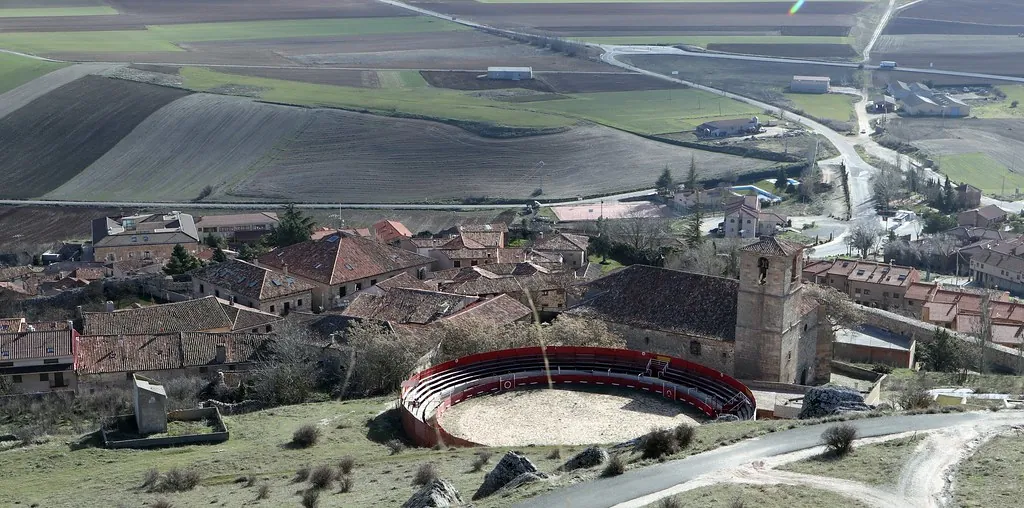
Today, Membrillera has around a hundred residents. Many of the houses belong to families who return at weekends or during the summer because their roots are here. The layout is typical of the area: stone buildings, tiled roofs and streets that rise and dip without much apparent order, as if the village expanded little by little according to need.
There are no large facilities and no obvious tourist scene. That is precisely the point. People who come here usually know why they are coming: to walk for a while, to see the sierra stretching out around them and to spend a few hours without too many distractions.
A Short Walk Through the Village
Membrillera can be explored quickly. In half an hour you will have seen most of it, yet that is part of its appeal rather than a drawback.
The parish church, dedicated to San Miguel, has stood at the centre of village life for generations. It is simple and unassuming, well suited to the scale of the place. Nearby is the small square, where neighbours gather when the weather is kind.
The streets preserve much of their traditional architecture: thick stone walls, heavy wooden gates and inner courtyards that can only just be glimpsed from outside. Walking without hurry, you may notice old animal pens and a number of houses restored by people who returned after years living in the city.
In villages like this, the best approach is often to forget the map. Follow a street to its end and, within minutes, the last house gives way to open countryside.
Easy Walks in the Sierra Norte
Here, the Sierra Norte does not mean dramatic peaks or sweeping mountain panoramas. Instead, it is a patchwork of scrubland, holm oaks, oak trees and tracks that have connected villages for centuries.
From Membrillera, various paths and rural tracks lead out into the surrounding landscape. They are used by local residents, by people tending vegetable plots and by anyone heading out for a walk. These are straightforward routes as long as you have a basic sense of direction and do not stray too far. The terrain alternates between stony ground, small ravines and gentle hills with clear views of the sierra encircling the valley.
Autumn brings a noticeable enthusiasm for mushroom foraging throughout this part of the province of Guadalajara. Níscalos, known in English as saffron milk caps, are particularly sought after when the rains have been generous. Local people take the activity seriously, collecting carefully and in line with the rules that apply each season.
It is also a good area for birdwatching if you are willing to stand still for a while. Vultures are often seen gliding above the slopes, and birds of prey can be heard moving through the scrub.
What Membrillera Is, and What It Isn’t
Membrillera is not a destination for filling an entire weekend with activities. That may sound like criticism, but it is quite the opposite.
This is the sort of place suited to a calm morning. Park the car, wander through the village, head out along a country track and then sit for a while looking at the landscape. It resembles stopping at a particularly pleasant rest area during a long journey and ending up staying longer than planned.
If simple hiking, rural photography or swapping city noise for open countryside appeals, the surroundings deliver. If you are looking for museums, shops or a lively atmosphere, you will not find them here.
The scale is small in every sense. That includes the rhythm of daily life, the number of people you will meet and the range of services available. It makes sense to arrive with realistic expectations and to embrace the quiet rather than resist it.
Festivities and Traditions
Like many small villages in the province, the calendar becomes livelier in summer. That is when relatives who live elsewhere return and, for a few days, Membrillera regains something of the atmosphere it had decades ago.
The patron saint festivities are usually held in August and revolve around religious events, shared meals and activities organised by the residents themselves. Everything happens on a modest scale, in keeping with the size of the community.
The tradition of San Isidro is also maintained in spring. San Isidro, the patron saint of farmers, has strong ties to the agricultural life of the area. On those days, it is common for people to gather in the countryside or around the village to spend time together outdoors.
These celebrations are less about spectacle and more about continuity. They mark the moments in the year when those with family connections return, renew ties and briefly increase the population of a village that otherwise remains quiet.
Getting to Membrillera
Membrillera lies in the Sierra Norte of Guadalajara. The usual way to reach it is by car from the provincial capital, following regional roads. The journey passes through open countryside and small villages that appear suddenly around a bend.
It is best to set out with a clear idea of where you are heading. Membrillera is not a place you simply pass through, and services in the area are those you would expect in a very small municipality.
A simple piece of advice applies: bring water, some food and comfortable footwear if you plan to walk. Plans here work best when there is no rush. And if you end up lingering a little longer than expected, looking out at the sierra, that tends to be how visits unfold.