Full Article
about Puebla de Beleña
Gateway to the sierra; known for its Romanesque church and seasonal ponds.
Hide article Read full article
The Sound of Wind in the Wires
At dawn, the only sounds are a door closing on its hinge and the hum of electricity cables in the wind. The whitewash on the houses holds a blue-grey tint, and the short, irregular streets are empty. This is the hour when you can hear the place breathe.
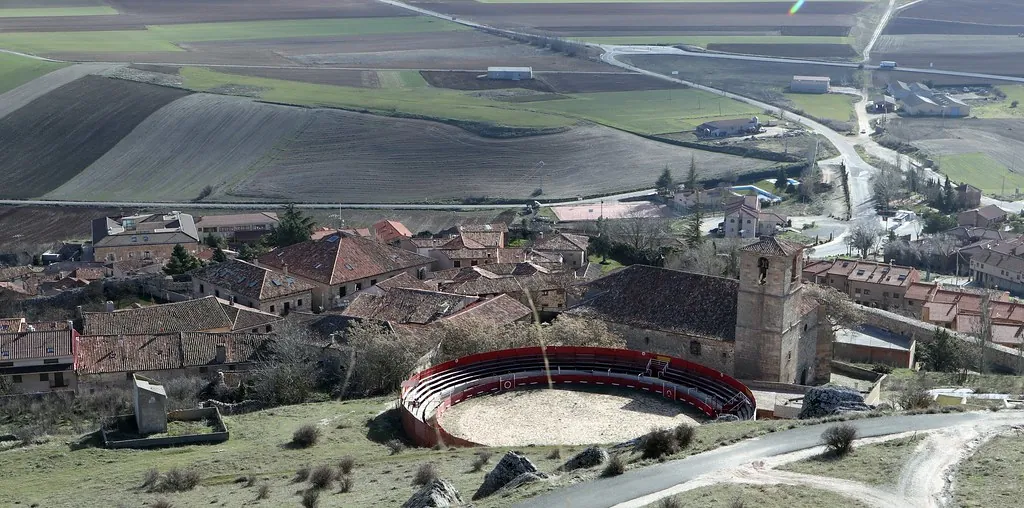
Puebla de Beleña sits at 935 metres in the Sierra Norte de Guadalajara, where the flat cereal plains of La Campiña begin to rumple into hills. The official census says fifty-seven people live here. You won’t find a grand plaza or a curated monument. You will find stone and adobe houses, wooden gates warped by decades of sun, and working yards that smell of earth and dry straw.
The landscape dictates everything. In spring, the fields are a sharp, saturated green. By late July, they’ve turned a brittle gold that crackles underfoot and smells like warm grain. Dirt tracks, made for tractors, lead out from the village and dissolve into the expanse. For most of the day, the only movement is the wind combing through the barley.
Stone, Lime, and Memory
The church of San Blas anchors the village with its square tower and unadorned stone walls. It’s typically locked, like most in villages this size. Its character is in its plainness—a building made for purpose, not for show.
A slow walk reveals the texture of daily life here: iron latches worn smooth by hands, stone benches set against south-facing walls, patches where the limewash has flaked away to reveal older stone beneath. Look for the arched openings of bread ovens built into house walls and the low doors to bodegas, where families once stored their wine. The village is small enough to cross in ten minutes, but it asks for more time than that. The point isn’t to see a sight; it’s to notice how the architecture is shaped by storage, animals, and harvest.
Walking the Farm Tracks
The proper way to see this land is on foot, following the caminos rurales that farmers use. There are no signposts or information panels. You share the path with tractors.
The light defines these walks. In the early morning or late afternoon, the sun sits low and stretches long, precise shadows from every fence post and lone tree. This is also when you’re most likely to see birds—skylarks rising in song, a kestrel hovering over a field, or the distinct, low flight of a sisón, the little bustard that lives in these plains.
The scents shift with the weather. On a dry summer day, the air carries a clean, toasted smell. After a rainstorm, it turns deep and loamy, as if the soil has been turned over. The horizon is a distant, uninterrupted line. This isn’t scenery designed for you; it’s land that works.
The Rhythm of Return
The village’s social heartbeat is the fiesta of San Blas, usually held in summer. It’s when people with roots here return. Long tables appear in the square, voices fill the space between houses, and conversations run into the night.
Older residents still talk about la matanza, the winter pig slaughter that once structured the year. It’s a private family affair now, not a show for outsiders. These memories aren’t performed; they’re simply recalled, connecting today’s quiet to a past of seasonal self-sufficiency. The summer influx changes the noise level, but not the underlying tempo.
A Few Practical Things
From Guadalajara, it’s about an hour by car via the A-2 and then smaller roads through La Campiña. The last few kilometres are narrow; it’s common to pull over onto the verge to let a tractor pass.
Come prepared. There are no open bars or shops here reliably. If you’re walking in summer, carry water and respect the sun—between noon and four, there is virtually no shade and the heat is severe.
But stay until late afternoon. That’s when a calm settles and the light turns thick and honey-coloured for just a few minutes. It gilds the stone and stretches across the fields before fading quickly. That specific light feels like an answer to why you came