Full Article
about Puebla de Valles
Known for its reddish gullies (Pequeño Colorado); a unique landscape
Hide article Read full article
A Small Village Shaped by the Land
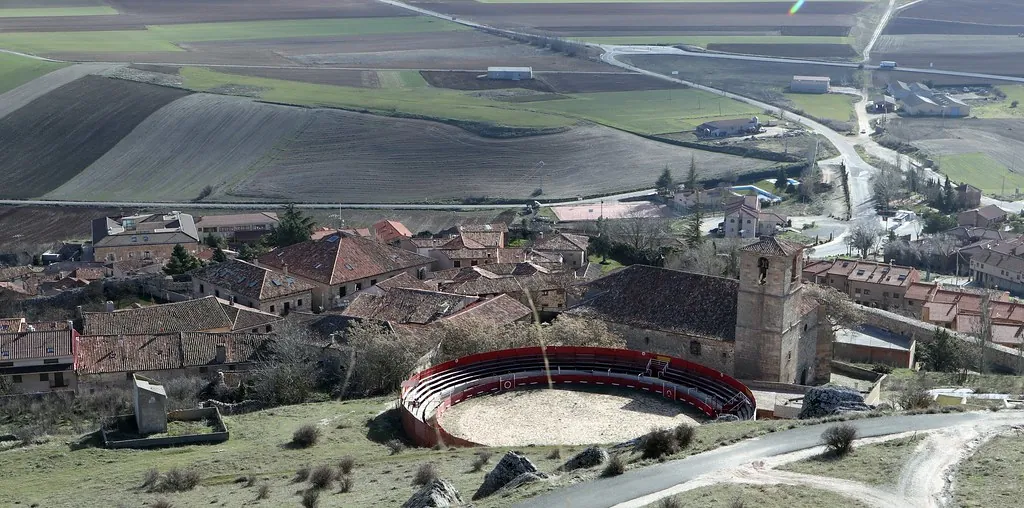
Puebla de Valles, in the Sierra Norte of Guadalajara in Castilla La Mancha, is one of those places that makes more sense when you look at the ground rather than at a map. The village stands at around 850 metres above sea level, set among gentle hills covered with holm oak and oak trees. For centuries, agriculture and livestock farming have shaped both the landscape and daily life here.
Today, only a few dozen people live in Puebla de Valles. Its scale remains that of a small rural community where almost everything lies within a few minutes’ walk. The layout reflects that modest size: houses cluster together on the slope, adapting to the terrain rather than reshaping it.
Walking through the village does not take long, but it reveals how closely architecture and landscape are linked. Old stone houses follow the incline of the land, and the overall feel is practical rather than ornamental. The setting tells much of the story.
Roots in the Repopulation of the Sierra
Like many settlements in this part of Guadalajara province, Puebla de Valles seems to have taken shape during the processes of repopulation that followed the Middle Ages, when the mountain areas were reorganised and resettled. Precise dates are not always easy to establish, yet the structure of the village fits that historical pattern.
Narrow streets run between masonry houses, many of them with adjoining yards or pens once tied to farming and livestock work. The design reflects a community built around self-sufficiency and shared labour.
The parish church is dedicated to San Juan Bautista. The current building is generally associated with the 18th century, although it likely replaced a more modest earlier structure. Its architecture is sober, in keeping with a small rural parish. Inside, a Baroque altarpiece survives. It retains part of its original structure, though later alterations have modified it over time.
The church, like the houses around it, forms part of a landscape where function historically mattered more than display.
Terraces, Woodland and Old Paths
The hillsides around Puebla de Valles still show traces of former terraces, known in Spanish as bancales. For generations these were used to grow cereals and other dryland crops suited to the local climate. Some terraces remain in use, while others have gradually been reclaimed by vegetation.
The surrounding scenery alternates between pasture, holm oak woodland and areas of scrub. Flocks of sheep can often be seen grazing nearby, a reminder that sheep farming has long been one of the economic foundations of the area. This is not a landscape designed for spectacle. It is a working environment shaped by steady, practical use.
Several rural paths leave the village and link it with other settlements in the Sierra Norte, including Valdesotos and Valdepinillos. These are traditional country routes with very little tourist signage. Anyone planning to walk them should carry a map or have a clear reference point, as in some stretches the track fades into the surrounding vegetation.
The experience is closer to rural navigation than to marked hiking trails. The routes connect communities that have historically depended on one another, whether for trade, family ties or shared resources.
Everyday Life and Local Produce
Life in Puebla de Valles remains closely tied to the countryside. Seasonal rhythms still shape activity. In autumn, when the rains arrive, mushroom gathering becomes part of local custom. People look for species common in the pinewoods and holm oak woods of the sierra, always with knowledge of the terrain and what is safe to collect.
Sheep farming has historically carried weight across the wider region, and around these villages honey and some artisan cheeses are also produced on nearby farms. Production is small-scale and rooted in the immediate environment rather than aimed at mass markets.
There is no broad commercial offer in the village itself. Residents and visitors typically rely on larger towns in the surrounding area for supplies. Puebla de Valles functions primarily as a place to live rather than as a service centre.
Festivities and Community Gatherings
The main festivities are held in honour of San Juan Bautista, usually at the end of June. As in many small Spanish villages, these days draw back former residents and families who now live elsewhere. The population temporarily grows, and the square and streets take on an energy that contrasts with the quiet of the rest of the year.
Processions form part of the celebrations, along with gatherings between neighbours and shared meals. The calendar here remains more community-based than tourist-focused. The emphasis lies on reunion and continuity rather than on attracting outside visitors.
These occasions reinforce ties that extend beyond geography. Even for those who have moved away, the village continues to act as a point of reference.
Practicalities and the Pace of the Sierra Norte
Puebla de Valles lies around 70 kilometres from the city of Guadalajara. Access is via regional roads that wind through the Sierra Norte, with the curves typical of mountainous terrain. In winter, it is sensible to check road conditions if the weather turns unsettled.
The village is small and has limited services. Anyone planning a day trip will usually find it practical to bring what they need or to stop in a larger town in the region beforehand.
A visit does not revolve around ticking off sights. The scale encourages a slower pace: walking the streets, noticing the old stone façades, observing how buildings adjust to the slope. Much of Puebla de Valles is understood through these details. The adaptation of houses to uneven ground, the remains of agricultural terraces, the presence of grazing sheep nearby all speak of a long relationship between people and land.
In the Sierra Norte of Guadalajara, villages such as Puebla de Valles continue to follow rhythms established generations ago. The population may be small, and services limited, yet the structure of the place still reflects the historical processes that shaped it. For those interested in rural Spain beyond major routes and monuments, this is a setting where landscape and settlement remain closely intertwined.