Full Article
about Rebollosa de Jadraque
Quiet village in the hills, surrounded by oaks and scrubland.
Hide article Read full article
A Village Measured in Silence
By mid-morning on a clear winter day, sunlight slips through the windows of the church of San Bartolomé and takes the edge off the cold stone inside. In Rebollosa de Jadraque, silence feels almost tangible. It clings to walls, to short streets, to wooden gates that barely open during the colder months. Now and then it is broken by a large bird crossing high overhead or the thud of wind against a loose sheet of metal.
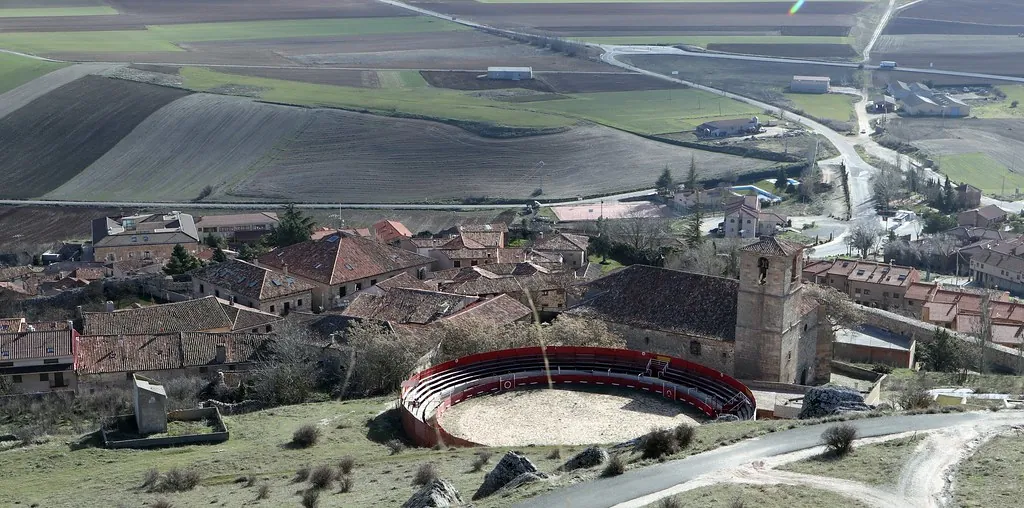
Talking about tourism in Rebollosa de Jadraque means talking about a very small place, the municipal register lists around a dozen residents, set in the Sierra Norte of Guadalajara province in Castilla La Mancha. The village sits at just over 1,000 metres above sea level, and that altitude shapes daily life. The air is drier, winters tend to linger, and the surrounding landscape has the mix of open fields and scrubland typical of this stretch of upland countryside.
Many houses remain closed for much of the year. Some reopen in summer or on special dates. Others stand as best they can, with roofs patched here and there. Even so, the layout of the village still tells the story of a time when farming and livestock dictated the rhythm of everything.
Stone, Timber and Short Streets
It does not take long to walk from one end of Rebollosa to the other. A slow stroll is enough to notice the details: masonry walls mixed with adobe, thick iron bars on the windows, wide wooden gates once designed to admit carts and animals.
The name Rebollosa is likely linked to the rebollos, the Pyrenean oak known in Spanish as roble melojo, which still appears in scattered patches on the nearby slopes. They no longer form large forests, but in autumn they tint some of the hills a deep, distinctive red.
The streets are narrow, with slight irregularities underfoot. Here and there, low stone walls enclose former corrals. Old stables and sheds still hold worn tools. In certain corners, stretches of cobbled paving remain, smoothed by decades of footsteps and hooves.
There is little ornamentation and no grand set pieces. The interest lies in textures and traces of daily life: a repaired lintel, a weathered door, the pattern of stonework on a corner house. The village may be small, yet its fabric preserves a clear sense of how people once lived in this part of rural Spain.
The Church of San Bartolomé
At the centre stands the church dedicated to San Bartolomé. The building appears to date back several centuries. In this region, many rural parishes were constructed or enlarged between the 16th and 17th centuries, and this one seems to fit that pattern, though it has undergone later repairs.
It is a simple structure: a single nave, thick walls and very little decoration. When the door is open, the interior carries the faint scent of old wood and damp stone familiar in many upland churches. The pews show the wear of long use. A modest altarpiece holds popular-style paintings that speak more of devotion than wealth.
There is no grand artistic programme here, no elaborate carving or gilded chapels. Instead, the church reflects the scale of the community it served. Its presence at the centre of the village underlines how closely faith and daily life were once intertwined in places like Rebollosa.
The Landscape That Shaped It
To understand Rebollosa, it helps to step beyond the last houses. Almost immediately the village gives way to open meadows, old plots of land edged with stones and agricultural tracks that wind between gentle hills.
The seasons alter the mood of the surroundings. In spring, tall grasses and wildflowers push up between the fields. Summer brings drier conditions, golden tones and a fine dust along the paths. Autumn returns the reddish hues to the oaks and introduces a damper feel towards evening. In winter, it is not unusual for snow to blanket everything for several days.
For those who enjoy walking, rural tracks link Rebollosa with other hamlets and abandoned settlements in the area. They are not always signposted, and some fade over time, so it is wise to carry a map or have a route prepared. This is also terrain where birds of prey are a common sight. Kestrels and kites circle above the fields, and an owl may appear towards dusk.
The landscape is neither dramatic nor heavily wooded. It is open and exposed, shaped by agriculture and grazing over centuries. The altitude and climate have always imposed limits, and that sense of restraint remains visible in the way the land is divided and used.
A Very Small Village, and What That Means
Rebollosa does not have tourist services as such. There are no shops or bars operating on a regular basis, and that is worth bearing in mind before setting out. The usual pattern is to arrive by car, take a quiet walk and then continue through the wider comarca.
Access is via narrow local roads with bends and the occasional stretch where the surface is less than perfect. In winter, after snowfall or a hard frost, driving can become more uncomfortable.
Anyone seeking a busy weekend atmosphere will not find it here. Rebollosa works best when approached without haste. A short walk through its streets, a pause in the square near the church, a moment listening to the wind moving across the rooftops: that is the scale of the experience.
The village’s small population shapes everything. With only around a dozen registered residents, daily life is sparse and understated. A few chimneys may smoke in winter. At other times, there are long stretches when no one is visible outdoors. This absence of activity is not staged or curated. It is simply the reality of a rural settlement that has seen its numbers decline over time.
When Rebollosa Fills Again
There are moments during the year when the village regains a little of its former bustle. Families with ancestral homes return periodically. Traditionally, around the feast day of San Bartolomé in August, Rebollosa tends to come back to life. The church opens, neighbours organise a shared meal and cars appear parked in spaces that are silent for the rest of the year.
These days are brief, yet they help maintain ties with the place. They reconnect scattered families with streets and houses that might otherwise remain closed.
For the rest of the year, Rebollosa de Jadraque continues at its unhurried pace. A handful of residents keep watch over the seasons as they turn. The fields and low hills surrounding the village set the rhythm, just as they always have. In the Sierra Norte of Guadalajara, at over 1,000 metres above sea level, silence remains one of its defining features.