Full Article
about Riofrío del Llano
Mountain village with a Romanesque church; crossroads toward Atienza
Ocultar artículo Leer artículo completo
The thermometer drops five degrees as the road climbs past the thousand-metre mark. Oak trees thicken their ranks, stone houses huddle closer together, and the mobile signal flickers out. You've arrived in Riofrío del Llano, a Guadalajara mountain hamlet where sixty-odd residents still live by the rhythm of wood smoke and church bells rather than Wi-Fi routers.
High Ground, Slow Time
At 1,050 metres, Riofrío sits high enough for weather to matter. Summer mornings can start at a pleasant 22°C, but by teatime thunderclouds often stack up over the Sierra Norte and temperatures plummet. Winters are serious: snow arrives as early as November and can isolate the village for days. The CM-1016 access road isn't routinely gritted beyond the turning for Corduente, so December visits require winter tyres or chains. Spring arrives late—mid-April rather than March—and autumn lingers into early November, painting the encircling oaks copper and rust.
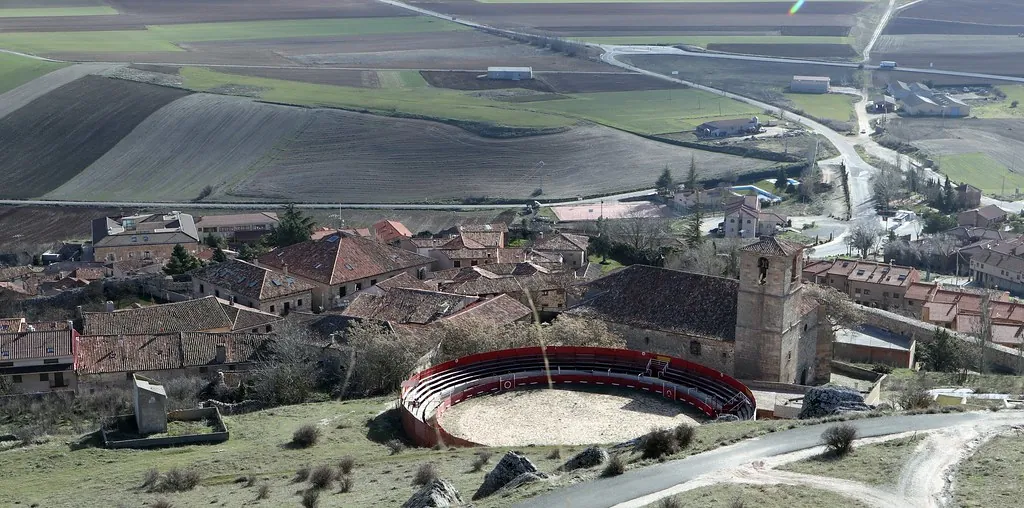
The village layout follows the ridge rather than filling the valley floor. Houses step up the slope in irregular terraces, their two-foot-thick stone walls and tiny windows designed to withstand the Serranía's icy gales. Rooflines sit heavy with grey slate; anything lighter would have been stripped away generations ago. Timber balconies—more Swiss than Castilian—project just far enough for residents to shake rugs over the lane below.
What You Actually See When You Look Around
There is no ticket office, no interpretation centre, no audio guide. The parish church of San Pedro opens only for Sunday mass at eleven o'clock; the key-holder, Julián, can usually be found in the bar opposite if you arrive mid-week. Inside you'll find a single nave, a sixteenth-century polychrome crucifix and pews that still bear the carved initials of shepherds who once wintered here. That's it. The building measures twenty-five metres by eight—smaller than a London bus garage—yet its proportions feel generous because nothing else competes for attention.
Walk five minutes uphill past the last house and the track narrows into a drove road once used for moving sheep between La Mancha and the northern pastures. Follow it for forty minutes and you reach the Puerto de la Hiruela, a wind-scoured pass where the province of Guadalajara gives way to Cuenca. Markers show the route is part of the Cañada Real Conquense, a 400-kilometre transhumance corridor still legally protected since medieval times. On weekdays you might meet a lone farmer on a quad bike; weekends bring the occasional group from Madrid with Nordic walking poles and small dogs wearing fluorescent jackets.
Birds, Boar and the Sound of Nothing
Riofrío del Llano isn't a wildlife theme park, but the odds of sightings are better than in most of Spain. Griffon vultures ride the thermals above the escarpment every afternoon without fail. Booted eagles appear between late March and August; listen for their two-note whistle overhead. Wild boar leave hoofprints along the stream beds at dawn, though you'll smell them long before you see them. Bring binoculars, but leave the feeding-calls at home—local farmers lose enough maize to the pigs already.
The village's own micro-climate creates a sweet spot for deciduous trees. Holm oak and juniper dominate the lower slopes, giving way to Pyrenean oak and scots pine above 1,200 metres. After heavy rain the tracks smell of wet bark and mushrooms; spring brings carpets of white hellebore and the tiny blue flowers of Omphalodes linifolia, known here as "virgin's tears". None of this is sign-posted; you need the 1:50,000 Guadalajara provincial map, sheet 9, sold for €8 in the tobacconist's in Molina de Aragón twenty-five kilometres away.
Eating (and Drinking) Like It's 1973
The only public food outlet is Bar El Paso, open Thursday to Sunday and run by Concha, whose family left the village in the 1960s and returned twenty years later. Coffee comes in glass tumblers, croissants are defrosted, and the television mutters in the corner whatever the time of day. Yet the menu del día—€12 if you ask nicely—delivers a bowl of puchero stew thick enough to stand a spoon in, followed by conejo al ajillo (rabbit with garlic) and a slab of tarta de la abuela. House wine is from Valdepeñas and costs €1.80 a glass; the white arrives ice-cold and tastes of nothing in particular, which is somehow perfect after a morning on the trail.
Self-caterers should stock up beforehand. The nearest supermarket is in Checa, eighteen kilometres down the mountain, and it closes for siesta between 14:00 and 17:00. What you will find in Riofrío is honey: two residents keep hives in the clearings above the village and sell 500-g jars for €5 from kitchen tables. The flavour is sharp with lavender and rosemary—spread it on toasted pan de pueblo and you'll understand why locals drizzle it over everything from yoghurt to roast pork.
When the Village Closes Its Doors
August fiestas swell the population to perhaps two hundred. The streets fill with second-home owners from Madrid, toddlers on plastic tricycles and elderly men arguing about Franco over cañas of beer. A sound system appears in the square, playing Spanish seventies pop until three in the morning; fireworks echo off the valley walls. If you want silence, come in June or late September. If you want company, arrive for the second weekend of August and book the lone rental cottage six months ahead—there is no hotel, no hostel, no casa rural beyond the one converted barn owned by a retired couple from Zaragoza. They charge €90 a night with a two-night minimum and leave the key under a flowerpot because no one has ever stolen anything here.
Winter visits demand realism. Snow can be beautiful, but it also snaps power lines and blocks the single access lane for days. Mobile coverage is patchy even in good weather; in a storm you are on your own. The Ayuntamiento (town hall) keeps a small tractor for ploughing, yet priority goes to the road serving the livestock sheds first, outsiders second. Carry blankets, water and a full tank of petrol between November and March. On the plus side, you'll have the trails to yourself, and the village bar lights its wood-burning stove, creating perhaps the cosiest spot within a hundred kilometres.
Leaving Without the Gift-Shop Moment
There is nothing to buy, nothing to sign, nowhere to post a branded fridge magnet. Riofrío del Llano offers instead a measurement against which to calibrate noisier places: the moment when city traffic starts to sound normal again, you'll realise how rare real quiet has become. Come for a night or two, walk until your boots are dusty, then drive back down the mountain knowing that the village will still be there when the world feels too loud—probably unchanged, possibly emptier, certainly colder, but holding its ground at a thousand metres above the hurry below.