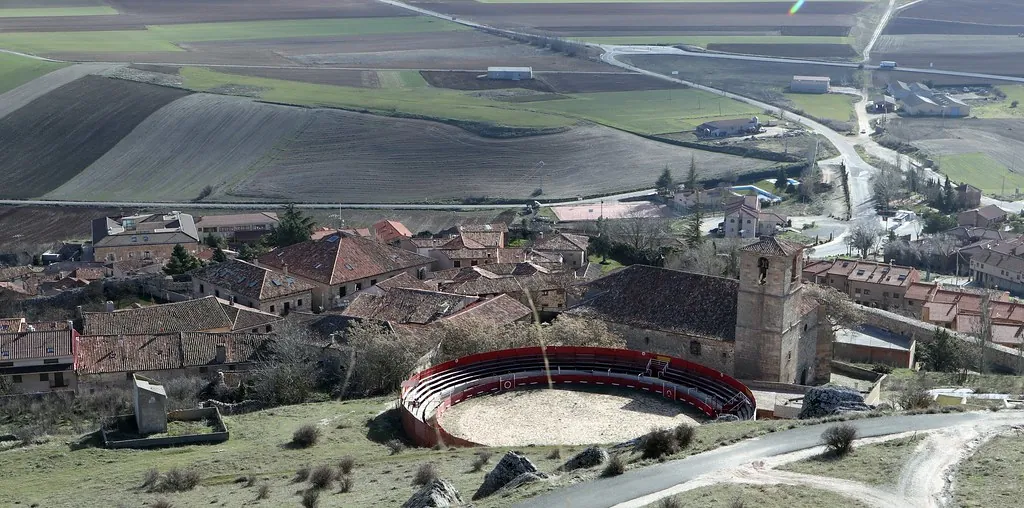
Vista aérea de Romanillos de Atienza
Instituto Geográfico Nacional · CC-BY 4.0 scne.es
Castilla-La Mancha · Land of Don Quixote

Romanillos de Atienza

The mobile phone signal dies somewhere around the 900-metre mark. By the time Romanillos de Atienza appears—a cluster of stone houses huddled again...

37 inhabitants · INE 2025
1100m Altitude

Why Visit

Mountain Church of San Andrés Route of El Cid

Best Time to Visit

summer

San Andrés Festival (November) agosto

Things to See & Do
in Romanillos de Atienza

Heritage

  • Church of San Andrés
  • Roman road

Activities

  • Route of El Cid
  • Hiking

Festivals
& & Traditions

Fecha agosto

Fiestas de San Andrés (noviembre)

Las fiestas locales son el momento perfecto para vivir la autenticidad de Romanillos de Atienza.

Full Article
about Romanillos de Atienza

Town on the Cid Route; Romanesque church and rural setting

Ocultar artículo Leer artículo completo

The mobile phone signal dies somewhere around the 900-metre mark. By the time Romanillos de Atienza appears—a cluster of stone houses huddled against the wind at 1,105 metres—technology has surrendered completely to geography. Thirty-one souls live here, give or take, in a village where the loudest sound is often your own breathing as you adjust to the thin mountain air.

This is not one of those Spanish villages that tourism forgot. Romanillos never had much to forget in the first place. The houses, built from the same limestone they stand on, have watched over the Serranía de Guadalajara for centuries without bothering to update their appearance for passing trade. There's no artisan cheese shop, no boutique hotel occupying a former convent, no weekend farmers' market selling overpriced organic honey. What exists is simpler: a place where walls are a metre thick because winters demand it, where livestock still outnumbers people, and where the rhythm of life follows patterns established long before anyone imagined rural Spain as a destination.

The Architecture of Survival

Walking through Romanillos feels like trespassing in an open-air museum of practical building. The parish church squats at the village's highest point, its modest bell tower more watchtower than architectural statement. Houses grow from the rock like natural formations, their wooden doors painted in colours that might once have been vibrant—oxblood red, deep green, faded blue—now weathered to variations on stone grey. Each dwelling tells its own story of adaptation: ground floors built to shelter animals, upper levels for grain storage, roofs pitched steep enough to shed winter snow but shallow enough to resist the relentless wind.

The stone walls reveal their age through repairs. Where a section has collapsed, newer masonry sits slightly proud, the mortar lines cleaner, the stones more regular. These patches chart decades of maintenance carried out between harvests, a visual history of families keeping weather at bay with whatever materials came to hand. Some houses stand empty now, their windows boarded with corrugated iron that flaps and bangs during storms, creating an accidental percussion that echoes across the narrow streets.

At the village edge, abandoned threshing floors circle like prehistoric monuments. Here, families once spread grain to separate seed from chaff, using the constant mountain breeze as a natural winnowing machine. The stone circles remain perfectly positioned to catch the wind, though now they collect only leaves and the occasional plastic bag carried up from the valley below.

Walking Where Shepherds Once Trod

The paths radiating from Romanillos follow ancient drove roads, their routes dictated by geography rather than human convenience. These tracks, worn smooth by centuries of hooves, connect the village to seasonal pastures across the Sierra. Walking them requires preparation—the signposting ranges from adequate to imaginary, and mobile mapping apps become expensive ornaments. A proper Ordnance Survey equivalent (the Spanish CNIG 1:25,000 series) proves more reliable than any smartphone.

The landscape reveals itself gradually. First come the quejigo oaks, their trunks twisted into impossible spirals by wind that never seems to stop. Higher up, rebollos—deciduous oaks—create patches of woodland where wild boar root for acorns. Between these islands of trees stretch parameras, high plateaus where grass grows yellow and tough, nourished by thin soil and harsh weather. On clear days, the views extend across three provinces, though clear days become less frequent as autumn progresses.

Spring brings the most reliable walking weather, when daytime temperatures hover around 15°C and the paths firm up after winter's mud. Autumn offers the best light—low sun that turns the landscape golden—but carries the risk of sudden weather changes. Summer walkers find welcome relief from the meseta's heat, though afternoon storms can appear with startling speed. Winter transforms everything. Snow isn't guaranteed, but when it comes, the village becomes accessible only by four-wheel drive or determination. The temperature regularly drops below -10°C, and the wind finds every gap in modern technical clothing.

The Reality of Rural Emptiness

Romanillos represents Spain's emptying interior with uncomfortable honesty. The school closed decades ago; the last shop followed shortly after. The village bar, epicentre of rural Spanish social life, opens only when someone's birthday requires celebration. Visitors expecting rustic charm might find the silence unnerving rather than restorative. Evenings bring complete darkness—no streetlights, no passing cars, just stars so numerous they seem to create their own light pollution.

Yet life persists. Maria, who returned from Madrid for her father's funeral five years ago and never left, keeps chickens behind her house and grows vegetables in a plot that generations of her family have cultivated. She'll point visitors towards the best walking routes, though her directions rely on landmarks that assume local knowledge. "Turn left at the place where the lightning split the oak" becomes less helpful when every oak bears scars from countless storms.

The village's August fiesta brings temporary resurrection. Former residents return from Guadalajara, Madrid, even Barcelona, swelling the population to perhaps a hundred. They gather in the square for mass, process through streets that haven't changed since their childhood, then share enormous paellas cooked over wood fires. For three days, Romanillos remembers what it felt like to be a living community rather than a beautiful relic.

Getting There, Staying There, Eating There

The journey from Madrid takes two and a half hours via the A-2 to Guadalajara, then increasingly minor roads that demand concentration. The final approach involves the CM-110, a mountain road where agricultural traffic round blind bends requires nerves of steel and liberal use of the horn. Hire cars should be booked with winter tyres between November and March; snow chains often become necessary without warning.

Accommodation options reflect the village's size. Apartamentos Turísticos El Palomar offers three self-catering units in restored village houses, booked exclusively through their Spanish-language website. Each apartment sleeps four, with prices starting at €60 per night, though minimum stays apply during fiesta weekends. The owners live in Guadalajara and meet guests by arrangement—call from Atienza's petrol station to confirm arrival. Alternative lodging exists in Atienza, twenty minutes away, where the medieval castle has been converted into a parador with doubles from €120.

Food requires planning. Romanillos has no restaurant, no shop, no bar. The nearest supermarket stands in Atienza, so self-caterers should stock up before the final climb. Local specialities appear seasonally—wild mushrooms in autumn, game during hunting season, lamb year-round from flocks that graze the surrounding hills. The parador in Atienza serves robust mountain cooking: cocido stew thick enough to stand a spoon in, roast lamb that falls from the bone, and local cheese that tastes of the herbs sheep graze on.

When the Wind Drops

Visitors arrive seeking mountain air and traditional architecture, but Romanillos offers something less tangible: perspective. At a thousand metres, with the modern world reduced to a distant glow on the horizon, daily concerns assume different proportions. The village's survival—its refusal to die gracefully like so many others—speaks to stubbornness rather than strategy. People remain because leaving feels like surrender, because their grandparents lie in the cemetery, because somewhere between the stone walls and the endless sky, they've found something worth more than convenience.

The mobile signal never returns. Emails pile up unanswered, social media becomes irrelevant, and the constant notifications of modern life fade into irrelevance. What replaces them is the sound of wind through oak trees, the sharp call of a red-legged partridge, the creak of ancient timbers expanding in morning sun. Romanillos de Atienza doesn't offer an escape from reality—it offers a different version of it, one where human presence feels temporary and the mountains remember everything.

Leave before dark if you're not staying. The road down demands full attention, and the village offers no nightlife beyond starlight so bright it casts shadows. Those stars, viewed from a thousand metres with no light pollution, might be reason enough to return. They're the same stars that guided shepherds home centuries ago, unchanged by progress or decline, watching over Romanillos with the same indifference they've always shown to human ambition.

Key Facts

Region
Castilla-La Mancha
District
Sierra Norte
INE Code
19241
Coast
No
Mountain
Yes
Season
summer

Livability & Services

Key data for living or remote work

2024
Housing~5€/m² rent · Affordable
Sources: INE, CNMC, Ministry of Health, AEMET

Planning Your Visit?

Discover more villages in the Sierra Norte.

View full region →

More villages in Sierra Norte

Traveler Reviews