Full Article
about San Andrés del Congosto
Set in the Bornova river gorge; attractive natural setting
Hide article Read full article
A small village shaped by its surroundings
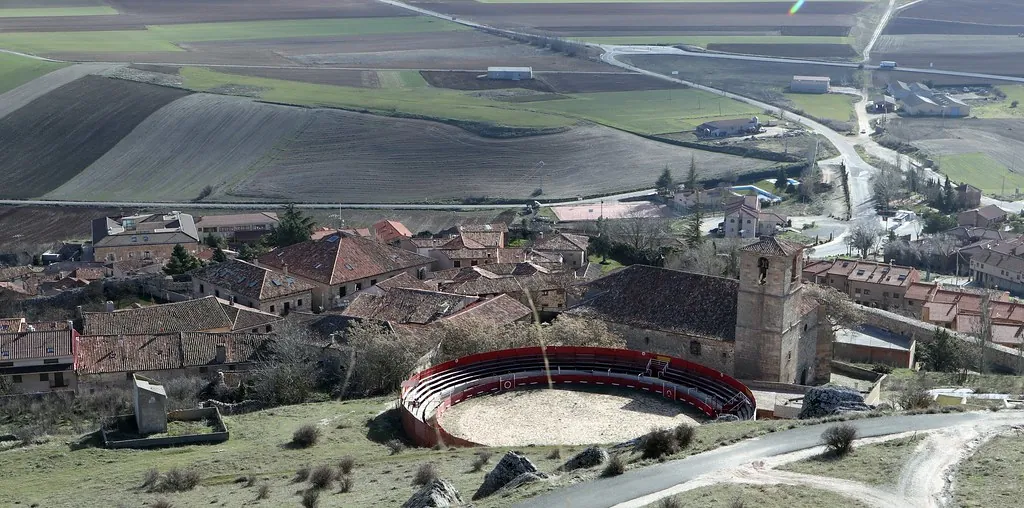
On the eastern side of the Sierra Norte of Guadalajara, San Andrés del Congosto sits quietly among low hills covered in holm oak and scrubland. With around 60 residents and an altitude of roughly 860 metres, it occupies a transitional zone between the plains of La Alcarria and the rising terrain that leads towards the Sistema Central.
Its setting explains much about its layout. The village is compact, with houses gathered along a handful of short streets that offer some protection from the wind. These streets face out towards farmland and grazing areas that have long supported local life. The absence of shops or bars is not a recent change but part of a gradual adjustment to a shrinking population, a pattern seen across many rural parts of inland Spain.
From the edges of the village, the surrounding landscape becomes easy to read. Nearby slopes shift between holm oak woods, patches of oak and open stretches of Mediterranean scrub. The scenery changes with the seasons, dry in summer and noticeably greener in spring. Agricultural tracks run through it all, still used to reach vegetable plots, animal enclosures and old fields that are now only worked occasionally.
Built in stone and habit
The architecture of San Andrés del Congosto reflects practicality rather than display. Most buildings are constructed with local stone, used both in walls and boundary enclosures. The houses are low in height, with little in the way of decorative detail. Everything points to a way of building designed to withstand the climate rather than stand out visually.
The parish church, dedicated to San Andrés Apóstol, occupies one of the most visible spots in the village. Its structure appears to rest on an older base, probably dating back to the 16th century, though later alterations have changed parts of its appearance. Even without detailed study, its scale says a lot about the place: a modest church suited to a small community.
Beyond the main cluster of houses, elements of the traditional rural landscape are still easy to identify. Stone pens, small threshing areas and paths linking former plots of farmland remain part of the terrain. Some are no longer in regular use, while others continue to serve occasional agricultural purposes.
Walking through working countryside
The paths that leave San Andrés del Congosto are not designed as marked tourist routes. Most began as agricultural or livestock tracks and are still used in that way today. Walking along them offers a direct way to experience the surrounding environment without any added infrastructure.
In a short distance, the terrain shifts noticeably. Holm oak woodland gives way to open clearings scented with thyme and rosemary, then to small ravines where vegetation becomes denser. This variety creates a landscape that feels both open and textured, shaped by long-term use rather than formal planning.
Birdlife is a constant presence. Large birds of prey can often be seen circling above the hills, taking advantage of thermal currents. This is a common sight across this part of the Sierra Norte, where the mix of open land and elevated ground provides suitable conditions for them.
From some of the higher points nearby, wide views open out across the surrounding valleys. On clear days, the transition between La Alcarria’s flatter terrain and the first elevations of the northern mountain system becomes especially clear. The village sits right at that threshold, and the scenery reflects it.
Local rhythms and quiet celebrations
San Andrés del Congosto follows a simple annual rhythm. The main date in the local calendar is the feast of San Andrés, held at the end of November. In a village of this size, celebrations tend to be organised by residents themselves, without large-scale events or outside crowds.
Summer brings a subtle shift. Houses that remain closed for much of the year reopen, and the population increases for a few weeks. The streets regain a little more movement, though the overall pace remains calm.
Daily life continues to be shaped by the same factors that have defined the village for decades: a small population, limited services and a close relationship with the surrounding land.
When the landscape changes
Spring and autumn are generally the most comfortable times to explore the area on foot. Temperatures are moderate, and the vegetation shows clear seasonal changes. In spring, the hills take on a greener tone, while autumn brings a more muted palette.
Summer can be hot during the day, although the altitude means that nights tend to cool down. Winter is cold, with frequent frosts and the occasional snowfall.
San Andrés del Congosto is not a place of major monuments or busy attractions. It can be explored quickly, yet that is not really the point. The village acts more as a gateway to a quieter stretch of the Sierra Norte, where the landscape and the steady rhythm of rural life still set the pace.