Full Article
about Semillas
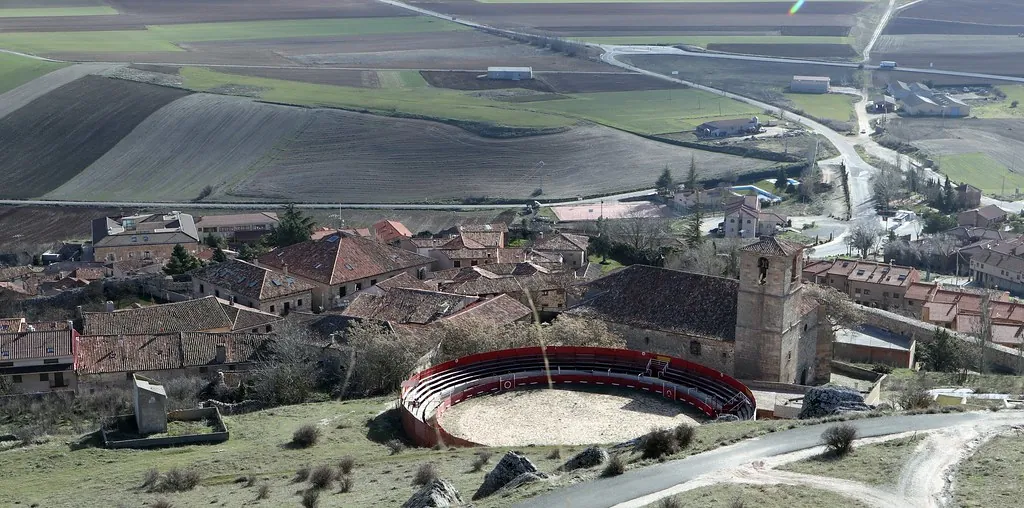
High-mountain municipality with black architecture; very sparsely populated
Hide article Read full article
A Small Settlement in the Northern Hills
At around 1,190 metres above sea level, in the Sierra Norte of Guadalajara, Semillas is one of those very small settlements that still hold on in the hills. Today the municipality has roughly 25 residents. It forms part of a human landscape that defines the north of the province: tiny villages set far apart from one another, places that have steadily lost population over the decades yet still retain a measure of local life.
The village stands on high ground, surrounded by wooded hills where Scots pine and juniper dominate. The scenery is not dramatic in an obvious way. It is restrained and open, with forested slopes, patches of pasture and tracks linking settlements that lie at considerable distances from each other. This wide spacing helps explain how the area functioned in the past. For much of the year, small communities remained relatively isolated, shaped by climate and geography as much as by custom.
Winters here are long and cold. Altitude and exposure define daily life, and the built environment reflects that reality. Semillas is less about sights in the conventional sense and more about understanding how a village adapts to its surroundings.
Traditional Mountain Architecture
The village core preserves the traditional mountain architecture of the sierra. Houses are built from stone masonry, sometimes reinforced with timber framing, and roofed with curved clay tiles. These are practical constructions designed for harsh winters: thick walls, few openings and orientations that seek out the sun.
Walking through the streets, the sense of compactness becomes clear. Buildings cluster together, creating shelter from wind and cold. Some façades feature wooden balconies or galleries facing south. In this part of the sierra, these spaces were used to dry produce such as grain, small firewood and even laundry during the winter months, taking advantage of sunlight while remaining protected from the wind.
At the centre of the settlement stands the parish church dedicated to San Pedro. Like many churches in villages across the region, it is simple in form. Its interest lies less in specific artistic features and more in what it represents: a gathering place for a community that was never large and is now very small. In villages such as Semillas, the church traditionally served as a focal point for social as well as religious life.
There are no grand monuments or carefully arranged viewpoints. The character of Semillas comes from the relationship between its buildings and the surrounding land. A short walk through its streets is enough to grasp how closely the settlement is tied to the terrain.
The Landscape Around Semillas
The municipality is made up mainly of woodland and small areas of pasture. Pine forests cover much of the slopes, mixed with juniper and low scrub in more exposed areas. The terrain is gently undulating, with shallow ravines and forest tracks that connect to other villages in the Sierra Norte.
Wildlife typical of inland Castile can be seen here. Roe deer and wild boar move through the woods, and birds of prey circle on the air currents above the valleys. Griffon vultures are frequently visible in the sky, particularly on clear days, gliding high above the hills.
Traditional paths linking Semillas with neighbouring settlements still exist. Many are used today to reach orchards, woodland or small plots of land, though they are not marked as official walking routes. Anyone planning a longer walk is advised to use a map or GPS for orientation. Distances between villages can be greater than they appear, and signage is limited.
In autumn, it is common to see people searching for mushrooms in the pine forests. As in much of the Sierra Norte, mushroom picking is regulated and there are many privately owned plots. It is sensible to check the rules in advance before collecting anything. The practice remains part of seasonal life in the area, reflecting an ongoing connection between residents and their environment.
Walking Through the Village
Semillas can be explored quickly. Its scale is modest, and the streets are few. There are no large landmarks to tick off, no designed viewpoints or interpretative centres. That simplicity is part of its identity.
A brief walk through the village, followed by a stroll along one of the tracks that leave the settlement, is usually enough to understand the setting. The transition from stone houses to open woodland happens almost immediately. Within minutes, the built space gives way to pasture and forest.
Silence is one of the most noticeable features. With so few inhabitants, everyday life unfolds at a slow pace. The layout of the village and the thickness of the surrounding woodland soften sound. It is a place where the focus shifts naturally to small details: the texture of stone walls, the angle of a roof, the direction of a path leading out towards the hills.
Everyday Life and Seasonal Traditions
There are no regular tourist services or businesses open year round in Semillas. Visitors typically arrive with their own provisions or rely on other villages in the area for somewhere to eat or buy supplies. This is not a destination built around tourism infrastructure, and expectations should be shaped accordingly.
The village festivals usually take place in summer. At that time, many people who have family homes here return for a few weeks. Celebrations are simple, linked mainly to the religious calendar and to shared meals among residents and those who come back during those days. The rhythm of the village changes noticeably. Streets that are quiet for much of the year fill with people reconnecting with neighbours and relatives, maintaining a bond with the place even if they now live elsewhere.
That seasonal return is common across the Sierra Norte of Guadalajara. Villages with very small permanent populations take on a different character in summer, when houses reopen and social life briefly intensifies. In Semillas, this shift is especially visible because of its size. A settlement of around 25 inhabitants feels markedly different when extended families gather again.
Semillas does not offer spectacle in the conventional sense. Its appeal lies in its scale, its architecture and its setting at 1,190 metres in the hills of northern Guadalajara. For those interested in how small rural communities have adapted to isolation, altitude and climate, it provides a clear example. A short visit is enough to understand its essentials: stone houses built for cold winters, forest tracks stretching between distant villages, and a way of life closely tied to the surrounding woodland.