Full Article
about Tamajón
Gateway to the Black Architecture; famous for its limestone Enchanted City
Hide article Read full article
A Small Mountain Village That Sets Its Own Pace
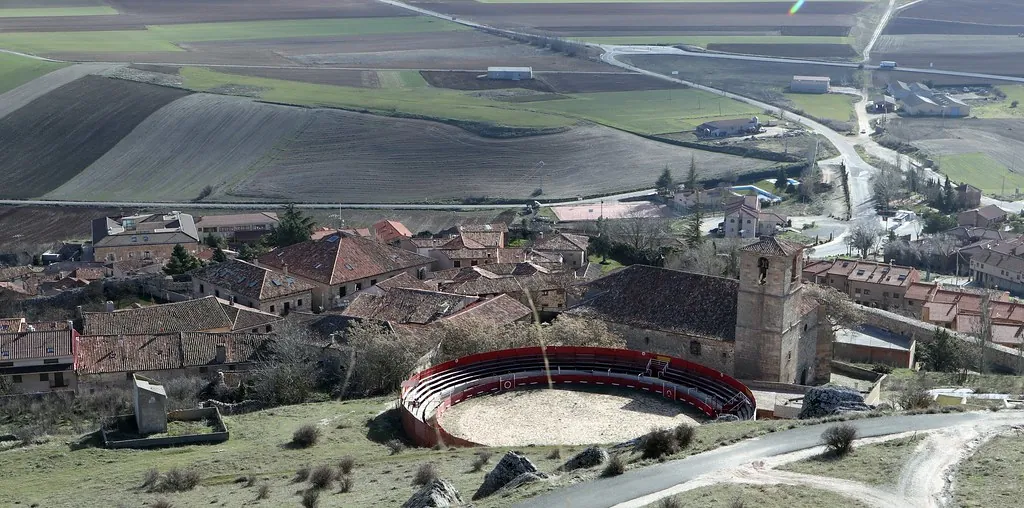
Tamajón is the sort of place where you stop to stretch your legs and end up staying longer than planned. Not because there is an endless list of sights, but because the pace shifts almost without noticing. Dark slate houses, quiet streets and that unmistakable mountain-village feel that does not try to impress anyone.
When talking about tourism in Tamajón, it helps to be clear from the outset. This is a small village in the Sierra Norte of Guadalajara, with just over 150 residents. It works better as a calm base for exploring the surrounding area than as a destination packed with monuments. Seen that way, its appeal makes sense.
Many of the houses are still built in the dark slate typical of the so‑called arquitectura negra, or “black architecture”, found across this part of the province. Sloping roofs, timber with little ornamentation and a practical approach shaped by long winters define the look. There are newer buildings, of course, but the overall feel remains coherent and grounded in local tradition.
The Heart of the Village
Start walking from the main square and within five or ten minutes you will have a good sense of the place. Short streets, the odd incline, neighbours greeting each other by name. It is compact and easy to take in.
At the centre stands the parish church of San Andrés, a 16th‑century building that dominates the scene. From the outside it is sober and restrained. Inside, if open, it reveals more character. The atmosphere is that of a rural church shaped gradually over centuries. There is a Baroque altarpiece, side chapels and small details that say a great deal about how village life has unfolded here over time.
It is not always open, but if the doors happen to be unlocked, it is worth stepping inside for a quiet look.
Walking Out into the Sierra Norte
The main reason many people find themselves in Tamajón lies beyond the village centre.
Here the Sierra Norte opens into wide valleys. Streams run clear after rainfall, and the hills are dotted with holm oaks, oaks and pines. The river Jarama flows relatively close by and forms part of the landscape that accompanies many of the walking routes in the area.
Paths leave directly from the village and have the feel of routes used for decades. Some were once livestock tracks, others linked neighbouring settlements. Today they offer straightforward walking without too many complications.
On clear days, lifting your gaze as you walk, the outline of Ocejón appears in the distance. It is the most recognisable mountain in this part of Guadalajara and becomes a constant point of reference when moving around the region. Its profile anchors the horizon and quietly orients the landscape.
Wildlife and the Sound of Very Little
This is not a natural park filled with viewing platforms and information boards every few metres. Things happen more discreetly here.
Early mornings and late afternoons are the best times to notice wildlife. Roe deer are often seen at the edges of fields. Birds of prey circle when the wind rises along the valleys. Then there are the smaller sounds: birds moving between dry‑stone walls, branches cracking as evening settles, water running through a nearby stream.
These details rarely make for dramatic photographs, yet they tend to linger longer in memory. Tamajón and its surroundings reward attention rather than spectacle.
Eating in the Area
Across this part of Guadalajara, cooking tends to be direct and filling, shaped by the mountain climate.
Roast lamb appears frequently on local menus. There are also hearty stews eaten with a spoon, potatoes with chorizo, seasonal mushrooms and dishes built around produce from the surrounding countryside. Local honey is easy to find, as are air‑cured sausages dried in the cold air of the sierra and cheeses made within the province.
It is not elaborate cooking. It is the sort of food that prepares you to head back out for a walk, or to linger over a long sobremesa, the unhurried conversation that follows a meal in Spain.
When Winter Changes the Scene
When snow falls, Tamajón feels like a different place. The dark slate of the rooftops contrasts sharply with the white covering, and the village grows even quieter.
Winter conditions here require a little common sense. Frosts are frequent in this part of the sierra, and some roads can become tricky if the weather turns. The landscape is striking under snow, but it comes with the realities of a mountain climate.
Local Festivals and Village Life
The village’s main celebrations revolve around San Andrés, its patron saint, at the end of November. As in many small Spanish villages, summer also brings more activity. Residents who live elsewhere return, and visitors arrive from across the region.
These are traditional village fiestas: processions, music, gatherings in the square and several days when life shifts outdoors. For a short period, the quiet rhythm of Tamajón becomes more animated, without losing its local character.
The Road to Tamajón
From the city of Guadalajara, Tamajón is reached via the CM‑101 heading north. The drive takes a little over an hour, following gentle bends through open stretches of sierra landscape.
It is not a road to rush. This is the kind of journey best enjoyed at a steady pace, taking in the valleys before continuing on. In this part of the Sierra Norte, the journey forms part of the plan rather than simply a way of getting there.
Tamajón does not compete with larger destinations. It does not attempt to dazzle with a long list of attractions. Instead, it offers a coherent slice of mountain life in Castilla La Mancha, shaped by slate, weather and time. For those looking to explore the Sierra Norte of Guadalajara at a slower rhythm, that is reason enough to stop.