Full Article
about Tordelrábano
Remote hamlet with a Romanesque church; total quiet
Ocultar artículo Leer artículo completo
The stone walls of Tordelrabano have witnessed something remarkable: a village that refused to die. At 1,070 metres above sea level, where winter winds whip across the Guadalajara mountains with enough force to make grown men weep, this tiny settlement of twelve permanent residents stands defiant against four decades of rural exodus.
The Architecture of Survival
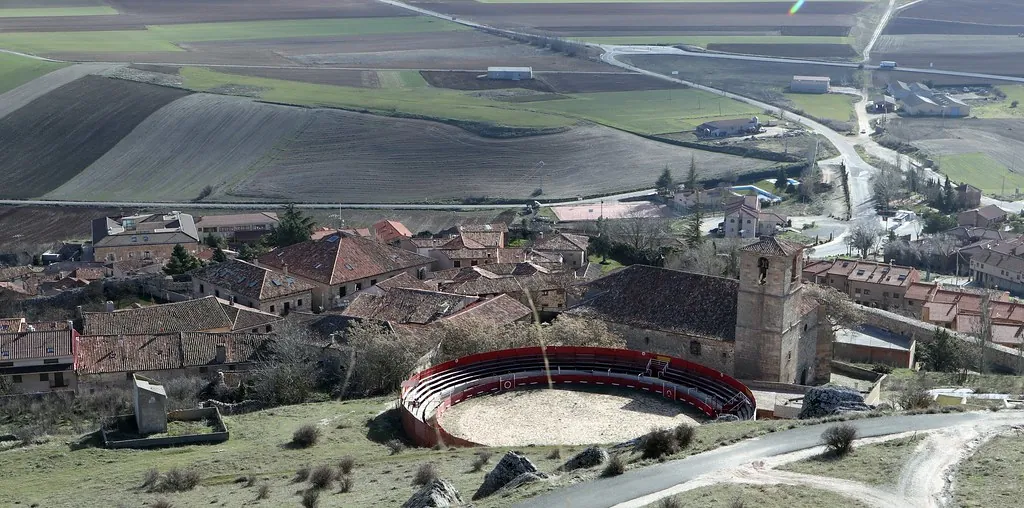
There's no grand plaza here, no medieval castle to photograph. Instead, Tordelrabano offers something far rarer: an intact example of Castilian mountain architecture that hasn't been gentrified for weekenders from Madrid. The houses, built from local limestone that glows amber in afternoon light, sit huddled together as if seeking warmth from each other. Their Arabic tiles, weathered to soft browns and greys, create a patchwork roofscape that speaks of centuries of repairs rather than wholesale renovation.
Walk the single main street at 3 pm on a Tuesday and you'll understand why the Spanish have a word for this particular quality of silence. The houses, many still bearing wooden doors reinforced with iron studs from the 19th century, stand empty but maintained. Their owners live in Guadalajara or Madrid, returning only for weekends or the August fiesta, leaving behind homes that feel like museums to a way of life that disappeared elsewhere in Spain sometime around 1985.
The church, diminutive and unremarkable from the outside, contains a 17th-century altarpiece that locals claim was saved from burning during the Civil War by being buried in a nearby field for three years. Whether apocryphal or not, the story captures something essential about Tordelrabano: here, survival trumps grandeur every time.
Walking Into the Past
The real monuments lie outside the village boundaries. Ancient shepherds' paths, worn smooth by centuries of hoof and boot, radiate outward into a landscape that changes character with every 100 metres of altitude gain. Below 900 metres, holm oaks and juniper dominate, their roots clutching at thin soils. Higher up, the vegetation shifts to hardy Scots pine and broom, survivors of summers that can reach 35°C and winters that regularly see -10°C.
These paths, largely unmarked and unmaintained, offer hiking of a sort that's become vanishingly rare in Europe. There are no interpretive panels, no wooden waymarks, no crowded car parks at trailheads. What you get instead is the opportunity to walk for three hours without encountering another human being, following routes that connected Tordelrabano to neighbouring villages long before asphalt arrived.
The most rewarding walk heads northwest toward the abandoned hamlet of Los Almadrones, three kilometres distant through forest that feels primeval despite being second-growth. Here, stone corrals stand empty, their walls gradually being dismantled by frost and gravity. In spring, these meadows explode with wild asparagus and the purple blooms of orchids that favour the limestone soils. Autumn brings a different kind of treasure: porcini and níscalos mushrooms that locals guard with the vigilance of dragon hoarding gold.
What Twelve People Eat
Let's be honest about the dining situation: Tordelrabano itself offers nothing. No bar, no restaurant, not even a village shop. The last commercial enterprise, a grocery run by María Luisa until her death in 2003, closed its doors and hasn't reopened. This is rural Spain at its most uncompromising – plan accordingly or go hungry.
The nearest food comes in Valdepeñas de la Sierra, twelve kilometres down a road that requires full concentration and preferably a vehicle with decent ground clearance. Here, Casa Manolo serves the kind of food that makes mockery of London's trendiest Spanish restaurants. Migas – fried breadcrumbs with garlic, peppers and chorizo – arrives in portions sized for people who've spent the morning herding sheep. The roasted lamb, cooked for six hours in a wood-fired oven, tastes of thyme and rosemary gathered from the surrounding hillsides. A three-course lunch with wine costs €14, roughly what you'd pay for a pint and half a packet of crisps back home.
For self-caterers, the Saturday market in Guadalajara (45 minutes drive) offers Manchego cheese at half London prices, local honey that actually tastes of the wildflowers blooming at 1,000 metres, and wine from vineyards that have never seen a chemical fertiliser. Buy supplies, pack a picnic, and discover why eating crisps on a mountain top tastes better than any Michelin-starred tasting menu.
The Seasonal Reality Check
Summer brings furnace heat that sends thermometer mercury soaring toward 40°C by midday. The stone houses, designed precisely for this climate, stay mercifully cool inside, but walking anywhere between 1 pm and 5 pm becomes an exercise in masochism. August also delivers something unexpected: the village's population swells to perhaps 150 as former residents return for the fiesta of San Bartolomé. Suddenly, there's music, laughter, and the smell of roasting meat drifting through streets that were silent in July. For three days, Tordelrabano lives again.
Winter tells a different story. Snow arrives as early as November and can linger until March. The access road, never municipal Spain's priority, becomes treacherous after the first snowfall. Ice lingers in north-facing gullies well into April. This is when the village's twelve residents earn their stripes – collecting firewood, clearing paths, helping each other through months when the nearest doctor sits 35 kilometres away in Molina de Aragón.
Spring and autumn provide the sweet spots. April brings wildflowers and temperatures perfect for walking. October serves up crisp mornings, clear skies, and the kind of light that makes photographers weep. These shoulder seasons also offer something increasingly precious: the village almost to yourself.
Getting There, Staying There
The drive from Madrid takes two hours via the A-2 motorway, then smaller roads that grow progressively narrower and more precipitous. Public transport exists in theory – a daily bus from Guadalajara that arrives at 6 pm and leaves at 6:15 am – but in practice, you'll need wheels. A ordinary car suffices in dry weather; winter demands something with four-wheel drive and snow tyres.
Accommodation means staying in one of three village houses renovated for rural tourism. None offer Wi-Fi reliable enough for Zoom calls, all require bringing your own towels, and hot water comes from solar panels that shrug apologetically during three days of cloud. Prices hover around €60 per night for a two-bedroom house, considerably less than a Travelodge on the M1 and infinitely more atmospheric.
Tordelrabano won't suit everyone. If your idea of rural Spain involves boutique hotels and artisanal gin, stay away. If you need constant connectivity and a flat white on every corner, this isn't your place. But for those willing to embrace a Spain that tourism forgot, where silence carries the weight of centuries and every stone tells a story of stubborn survival, this tiny village offers something no amount of development could create: authentic solitude in a landscape that changes those who experience it.