Full Article
about Torremocha de Jadraque
Small farming village near Jadraque; Cañamares River setting
Hide article Read full article
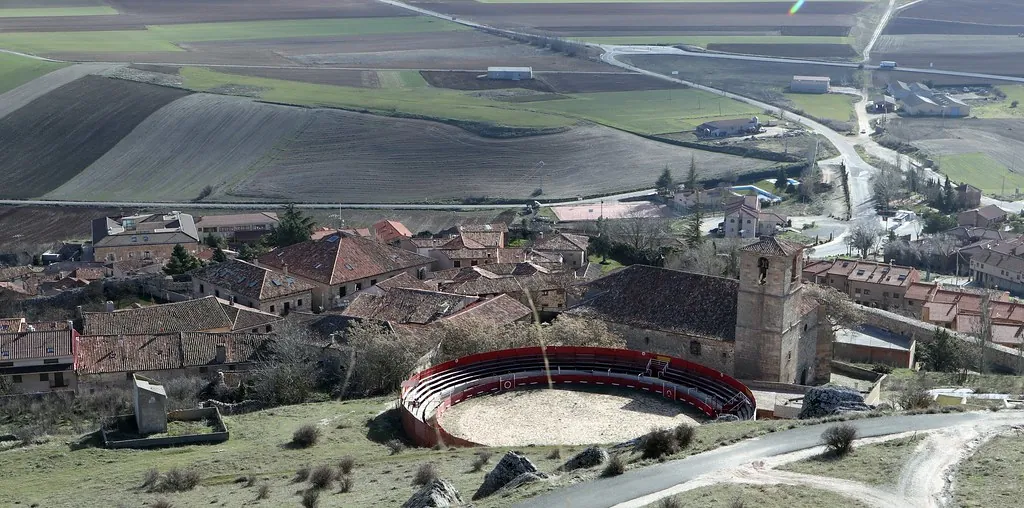
High in the Serranía de Guadalajara, at around 930 metres above sea level, Torremocha de Jadraque sits beneath an open sky that seems to stretch without interruption. From this elevated position, the view takes in a landscape that has altered little over the decades: clusters of stone and adobe houses scattered across terrain that appears to resist the pull of abandonment. With roughly thirty registered residents, the village reflects a way of life that still keeps standing the traces of Spain’s interior, a reality now unfamiliar to many.
Arrival brings a quiet that feels almost audible. Wind moves through branches, footsteps crunch against dirt tracks, and little else disturbs the stillness. There are no open shops or services, no obvious starting point marked by a signboard. Instead, narrow paths wind between dry-stone walls and silent structures. Torremocha does not invite hurried sightseeing or a checklist of attractions. What draws attention are the marks of the past on every corner and the sense of being in a place set apart from the rush of modern life.
From various high points, wide panoramas unfold over nearby valleys and mountains. On clear days, the outline of Ocejón cuts across the horizon, its profile accompanying the unhurried rhythm of the surrounding landscape. In autumn, mist often settles along the slopes, giving the scene the appearance of a wash of greys and ochres. Traditional tracks, once used for livestock and seasonal migrations along Spain’s historic drovers’ roads, still shape the connections between villages and their land. They are not signposted routes, yet they carry their own history underfoot.
Architecture Shaped by Climate and Land
The built fabric of Torremocha de Jadraque speaks of adaptation. Houses constructed from stone and adobe cluster along narrow streets designed to limit exposure to the cold winds that sweep down from the sierra. Many retain heavy wooden doors aged by time, conical chimneys and enclosed yards that hint at the agricultural and livestock activities which sustained the community. Evidence of that past remains visible in walls, doorways and scattered remnants on the ground.
The parish church dedicated to San Miguel stands out as one of the few buildings with a clear presence within the village centre. Its structure is simple, its façade marked by functional austerity. Thick walls and small windows reflect practical considerations rather than ornament. Nearby, the remains of pens and auxiliary constructions can still be seen, offering insight into how these rural communities managed their resources until only a few decades ago.
Nature, however, defines the village more strongly than any single building. Low woodland dotted with holm oaks surrounds the settlement. From higher ground, the irregular line of the serrated landscape becomes clear. On bright days, the distinctive silhouette of Ocejón and other nearby peaks emerges sharply, like notes set against a mountainous stave.
Ancient Paths and Open Skies
For those who prefer to explore on foot, Torremocha offers old tracks that connect to neighbouring hamlets or simply wander through scrubland and low forest. There are no officially marked trails. These are historic routes where the passage of animals and carts can still be traced in the ground. Carrying a map or GPS is advisable, as some turnings are easily missed and paths can divide without warning, creating confusion for anyone unfamiliar with the area.
Cliffs near the village provide refuge for birds of prey, including golden eagles and black vultures. The absence of light pollution makes clear nights particularly suited to stargazing, even with nothing more than binoculars. The quiet of the surroundings sharpens the senses. Silence is broken only by the occasional call of a blackbird or the subtle creak of woodland in the wind.
Those interested in everyday history may find particular interest in walking among empty houses and disused enclosures, imagining life here a few generations ago. Architectural photography is especially rewarding in the early morning or at dusk, when soft light draws out the textures of stone and adobe, emphasising surfaces shaped by weather and time.
Food and Simple Pleasures
Given the lack of commercial activity within the village itself, visitors generally bring provisions or head to nearby municipalities where small bars or restaurants still prepare traditional mountain fare. Typical dishes include cordero asado, roast lamb slow-cooked in the oven, migas made from fried breadcrumbs often combined with local ingredients, and gachas, a hearty flour-based dish associated with rural cooking. Artisanal products such as honey and local cheeses complement this straightforward but filling cuisine.
The experience of eating in this part of Castilla La Mancha is closely tied to its landscape and climate. Recipes are shaped by the need for sustenance during cold winters and long working days in the countryside. Even when enjoyed elsewhere in the region, these dishes echo the rhythms of villages like Torremocha de Jadraque.
Traditions with a Family Feel
With so few permanent residents, traditional celebrations are limited and often take on an intimate character. Patron saint festivities once coincided with religious dates during the warmer months, when those who had moved away would return to reconnect with their roots and spend time with those who remained. Such gatherings were as much reunions as religious observances.
San Isidro, celebrated on 15 May and associated with farming communities across Spain, used to hold particular importance. In agricultural villages, it marked a moment to honour the land and those who worked it. In places as sparsely populated as Torremocha de Jadraque, however, the continuity of these festivities has become uncertain, reflecting the demographic changes that have reshaped much of inland Spain.
Torremocha de Jadraque does not present itself as a destination of grand monuments or organised attractions. Its appeal lies in continuity and stillness, in the endurance of stone walls and winding tracks. Set high in the Serranía de Guadalajara, it offers open horizons, unmarked paths and a glimpse into a way of life that persists quietly in the hills of Castilla La Mancha.