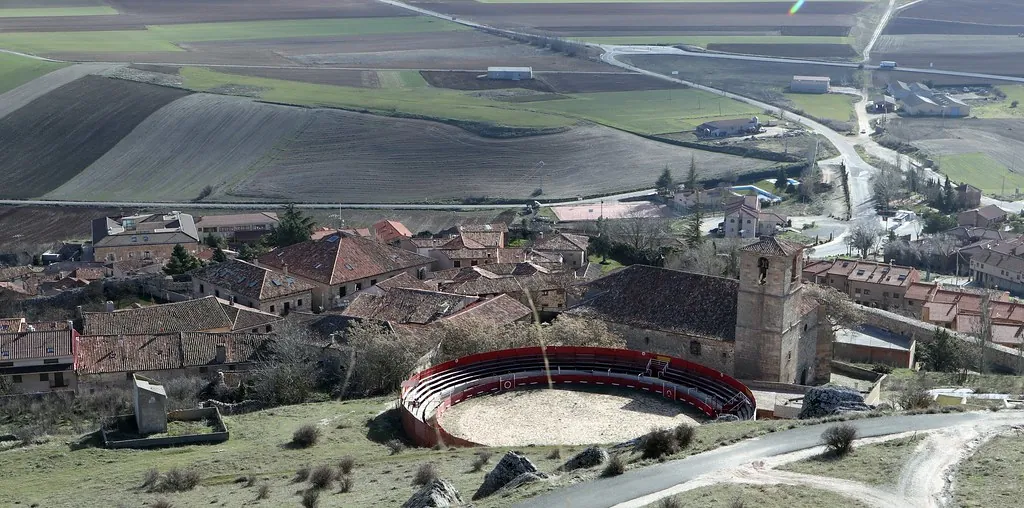
Vista aérea de Torremocha del Campo
Instituto Geográfico Nacional · CC-BY 4.0 scne.es
Castilla-La Mancha · Land of Don Quixote

Torremocha del Campo

At 1,050 metres, Torremocha del Campo sits higher than Ben Nevis’s summit. Morning coffee here often comes with a view of clouds parked below the v...

193 inhabitants · INE 2025
1080m Altitude

Why Visit

Mountain Church of the Assumption Hiking

Best Time to Visit

summer

Assumption Festival (August) agosto

Things to See & Do
in Torremocha del Campo

Heritage

  • Church of the Assumption
  • Chapel of Solitude

Activities

  • Hiking
  • Route stop

Festivals
& & Traditions

Fecha agosto

Fiestas de la Asunción (agosto)

Las fiestas locales son el momento perfecto para vivir la autenticidad de Torremocha del Campo.

Full Article
about Torremocha del Campo

Municipality made up of several hamlets; located on the A-2.

Ocultar artículo Leer artículo completo

The Village Above the Clouds

At 1,050 metres, Torremocha del Campo sits higher than Ben Nevis’s summit. Morning coffee here often comes with a view of clouds parked below the village like grounded aircraft, and the air carries the peppery scent of resin that sticks to walking boots for days. The 220 residents have no supermarket, no cash machine, and only one road in that twists through the Sierra de Altomira for twelve kilometres before coughing you out onto the CM-101. Mobile signal drops out halfway up the climb; by the time the stone houses appear, Google Maps has given up and the only voice left is the wind threading through Aleppo pines.

Stone, Timber and the Winter That Bites

The town plan is a single loop. Calle Real climbs past the church of Nuestra Señora de la Asunción—built in 1642 from irregular chunks of local granite, its bell tower more functional than pretty—then spills into a tiny plaza where the ayuntamiento flies a flag that’s been bleached chlorine-white by altitude sun. Houses are two-storey, wooden-balconied, roofed with curved Arab tiles that rattle like loose change in storms. Walls are thigh-thick; winters touch –12 °C and snow can cut the village off for two days. If you arrive between December and February, carry chains or rent a car with winter tyres; the council grades the road, but not before breakfast.

There is no hotel. The nearest beds are in Tamajón, 19 km down the mountain, or in the scattered casas rurales that locals rent by the night. Expect €70–€90 for a two-bedroom house with firewood included (bring your own kindling; newsagents don’t exist). Most visitors day-trip from Guadalajara, 55 minutes away, stock up at the Consum in Cogolludo and treat Torremocha as a picnic stop. That works, provided you remember to haul your rubbish back down—bins are removed after the fiestas when the village empties again.

Walking Without Waymarks

Trail infrastructure is refreshingly amateur. A pine board beside the church shows three hand-drawn routes: the 4 km “Ruta de la Cueva”, the 7 km “Robleón Loop”, and the 11 km “Cuerda del Altomira” ridge walk. None is signposted after the first 300 metres; instead you follow stone cairns the size of grapefruit and trust that the boot prints ahead of you knew where they were going. The payoff is silence thick enough to hear your own pulse, plus regular sightings of roe deer and, if you start early, the lazy drift of griffon vires circling on thermals.

Spring is gilt-edged: wild rosemary flowers in April, turning the understory a bruised violet, and daytime temperatures hover around 18 °C before the sun drops and you remember it’s still a mile above sea level. Summer is the reverse—mornings are perfect for walking, but by 2 p.m. the village empties into shade and even the dogs refuse to move. Autumn brings boletes and trumpets de la mort mushrooms; locals forage at dawn and will point out the edible varieties if you ask before they vanish into wicker baskets.

What Passes for Lunch

There is one bar, Casa Alonso, open Friday to Sunday and whenever Paco feels like it. The menu is written on a chalkboard that hasn’t changed in six years: migas serranas (breadcrumbs fried with garlic, grapes and chorizo, €7), conejo al ajillo (rabbit braised in vinegar and bay, €9), and a half-litre of Mahou that costs €2.50—cash only. If the shutter is down, your options are the packet of crisps you brought or the wild asparagus you picked on the walk. Mid-August fiestas change everything: temporary stalls sell deep-fried calamari sandwiches and sticky discs of torrija, the population quadruples, and someone’s uncle will hand you a plastic cup of cloudy vermouth at 11 a.m. Enjoy it, but don’t expect the same hospitality in March when the place is down to its winter skeleton.

The Upside of Emptiness

Critics call Torremocha a postcard of rural decline: half the houses are shuttered, the school closed in 2008, and the average age must be sixty-something. Yet that emptiness is precisely what grants walkers right-of-way across private land, lets photographers set up tripods in the middle of the lane, and gives night skies unspoiled by streetlights—Orion looks close enough to snag on a rooftop tile. If you want gift shops, audio guides or artisan ice cream, stay on the A-2 motorway. If you want to remember how Europe sounded before engines, climb the Sierra and arrive just after the church bell tolls seven; the echo rolls around the valley like a slow-motion drum.

Getting There, Getting Out

From Madrid, take the A-2 to Guadalajara, then the CM-101 north for 38 km. The turn-off is marked “Torremocha 12 km” but the sign is small and bent; miss it and you’ll end up in Sigüenza wondering where the mountains went. Buses reach Tamajón on schooldays only; after that you’re hitching or walking uphill for three hours. Fill the tank before leaving the motorway—villages don’t do petrol stations and the nearest 24-hour pump is 35 km away.

Leave early, pack water, and don’t trust the weather app: mountain clouds form in minutes. If the barrier at the edge of the road is closed when you descend, it means snow forecast; turn round and try again in April. Otherwise, pull over at the first lay-by, kill the engine, and listen to the pines creak. That sound is the village’s real monument—and, for the moment, admission is still free.

Key Facts

Region
Castilla-La Mancha
District
Sierra Norte
INE Code
19282
Coast
No
Mountain
Yes
Season
summer

Livability & Services

Key data for living or remote work

2024
Connectivity5G available
TransportTrain 10 km away
HealthcareHealth center
Housing~5€/m² rent · Affordable
Sources: INE, CNMC, Ministry of Health, AEMET

Official Data

Institutional records and open data (when available).

  • LOS CASTILLEJOS
    bic Genérico ~2.9 km
  • EL CASTRO JUNTO AL PUEBLO
    bic Genérico ~3.5 km
  • CASTILLO. PELEGRINA
    bic Genérico ~3.9 km
  • POTERNA NE DEL CASTILLO
    bic Genérico ~3.9 km
  • MURALLA
    bic Genérico ~4 km
  • CASA C / CAPITÁN ARTURO CALDERÓN Nº17. PELEGRINA
    bic Genérico ~3.9 km
Ver más (1)
  • ABRIGO DE LOS FORESTALES
    bic Genérico

Planning Your Visit?

Discover more villages in the Sierra Norte.

View full region →

More villages in Sierra Norte

Traveler Reviews