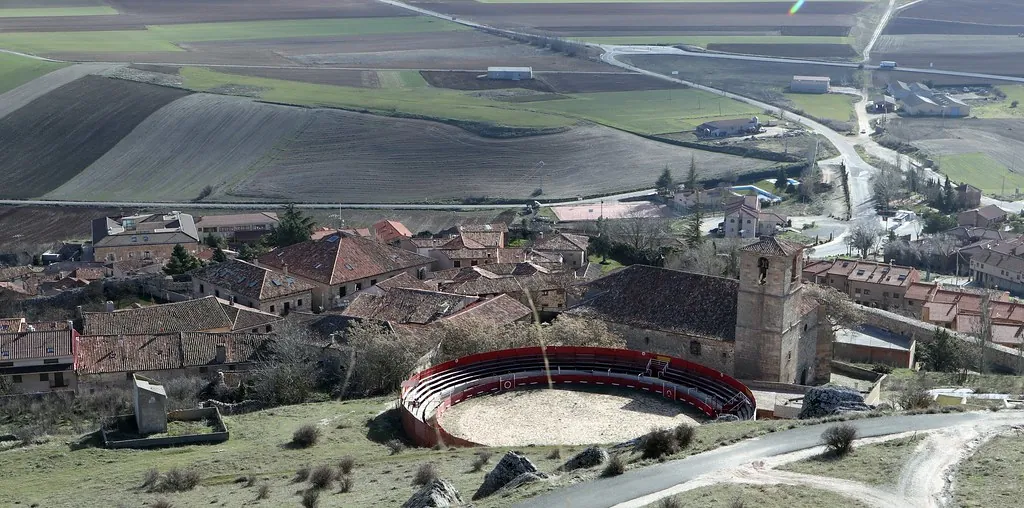
Vista aérea de Valdesotos
Instituto Geográfico Nacional · CC-BY 4.0 scne.es
Castilla-La Mancha · Land of Don Quixote

Valdesotos

The morning mist clings to Valdesotos at 844 metres, wrapping stone houses so tightly that only the church tower pierces through. Twenty-three perm...

35 inhabitants · INE 2025
840m Altitude

Why Visit

Mountain Medieval bridge River swimming (regulated)

Best Time to Visit

summer

Feast of the Virgen de la Soledad (August) agosto

Things to See & Do
in Valdesotos

Heritage

  • Medieval bridge
  • Chorro de Valdesotos waterfall

Activities

  • River swimming (regulated)
  • Hiking

Festivals
& & Traditions

Fecha agosto

Fiestas de la Virgen de la Soledad (agosto)

Las fiestas locales son el momento perfecto para vivir la autenticidad de Valdesotos.

Full Article
about Valdesotos

Village with a medieval bridge over the Jarama; gateway to the Chorro de Valdesotos

Ocultar artículo Leer artículo completo

The morning mist clings to Valdesotos at 844 metres, wrapping stone houses so tightly that only the church tower pierces through. Twenty-three permanent residents share these narrow lanes with roving chickens and the occasional wild boar that wanders down from the oak forests above. Silence isn't merely golden here—it's the village's primary currency, broken only by church bells marking hours that seem to stretch longer than elsewhere in Spain.

Stone Against Sky

Valdesotos squats on its mountainside like something half-grown from the rock itself. Slate roofs angle sharply against winter snow loads, their dark planes catching morning frost well into April. The altitude transforms everything: summer evenings require jumpers when Madrid swelters forty kilometres south, while winter arrives early enough to catch autumn hikers off-guard with sudden flurries.

The architecture tells its own story of survival. Walls built from local quartzite stand a metre thick, their irregular courses pieced together without mortar fancy enough for cathedrals but sturdy enough for centuries. Wooden balconies—those that haven't collapsed into rubble—project precariously over lanes barely two metres wide. Look closely and you'll spot the tell-tale signs: newer cement patching ancient stone, satellite dishes bolted onto 17th-century facades, the uncomfortable marriage of preservation and practicality that defines Spain's dying villages.

Walking these streets takes twenty minutes at most, though lingering reveals details easily missed. The parish church's bell tower leans slightly left, a casualty of ground shifting beneath foundations. One house displays 1923 carved above its doorframe, marking reconstruction after a fire that nearly erased the village entirely. Another stands hollow, its roof timbers long since vanished, stone skeleton open to sky—yet someone still whitewashes the interior walls each spring, maintaining a ghost of domesticity.

Forests Without Footprints

Beyond the final stone wall, proper wilderness begins. Holm oaks and Scots pines cloak valleys so thoroughly that midday feels like dusk beneath their canopy. Wild boar tracks cross human paths with casual indifference; their owners emerge at dusk to raid vegetable patches belonging to weekenders who've underestimated rural realities. Roe deer flash white rumps through undergrowth, while griffon vultures circle thermals above ridges where golden eagles nest.

The walking here demands respect. What appears a gentle slope on maps reveals itself as thigh-burning ascents over loose shale. Distances deceive: a kilometre through these mountains equals three on level ground, particularly when autumn rains turn paths into streams. Mobile signals vanish within minutes of leaving the village—something to remember when that "short circular route" takes four hours instead of two.

Yet the rewards justify effort. From Cerro del Caloco's 1,200-metre summit, the view stretches across three provinces: Guadalajara's serrated ridges northward, Madrid's distant skyline glinting southwest, the patchwork plains of La Mancha rolling south until sky swallows land. October brings the spectacle worth travelling for—whole slopes burning orange and crimson as oak leaves turn, the forest floor carpeted with mushrooms pushing through leaf litter.

The Mushroom Economy

October weekends transform Valdesotos. Cars line the single approach road as Madrid families arrive with wicker baskets and grandfather's mushroom knife. The níscalo—saffron milk cap—draws them first, its orange cap vivid against brown earth. Find one and you've found twenty, their mycelium spreading beneath pine needles in golden chains. Boletus edulis commands higher prices at city markets, but locals value the humble níscalo's delicate flavour, sautéed simply with garlic and parsley.

Rules exist, though enforcement proves difficult across 3,000 hectares of municipal forest. Collection limits—two kilograms daily per person—sound generous until you watch professionals filling sack after sack at dawn. Plastic bags remain technically illegal; breathable baskets spread spores while you walk, ensuring future harvests. The reality? Supermarket carriers bulge with illegally-gathered booty, their owners glancing nervously at passing Guardia Civil vehicles.

Knowledge separates life from death here. Every autumn brings casualties: the Russian enthusiast who confused death cap for Caesar's mushroom, the German couple collecting everything orange assuming colour coding works in nature. Local wisdom says if you can't identify it by smell alone, leave it growing. The hospital in Guadalajara keeps permanent stomach-pump ready from September through November.

Feeding Body and Soul

Valdesotos offers no restaurants, no bars, no shops. Zero. The last village store closed in 1998; its stone shell now houses someone's vintage tractor collection. This presents practical challenges for visitors expecting rural Spain's usual tapas-and-beer hospitality. Self-catering becomes essential, though "catering" stretches definition when the nearest supermarket sits thirty-five minutes away in Tamajón.

The Saturday morning market in Molina de Aragón—forty minutes northwest—supplies weekenders stocking holiday homes. Locals buy entire lambs from neighbouring farmers, animals that grazed these very mountains until yesterday. The speciality here is ternasco—milk-fed lamb roasted until bones caramelise, flesh pulling away with theatrical ease. Game appears seasonally: wild boar sausages studded with peppercorns, partridge pâté sealed with clarified butter, venison haunches hung until mould blooms white across their surface.

Wine comes from neighbouring vineyards at 900 metres, the altitude creating Tempranillo with surprising acidity. These aren't Rioja's polished offerings but honest country wines—earthy, sometimes rustic, improving dramatically when decanted and served slightly cool. The local cooperative sells direct from stainless steel tanks; bring your own five-litre demijohn and leave €12 poorer but immeasurably happier.

When Return Becomes Reality

Access presents Valdesotos' fundamental challenge. The approach road from Tamajón climbs 400 metres in twelve kilometres, switchbacks carved into cliff faces with minimal safety barriers. Winter transforms this into something approaching an Olympic luge track; ice forms in permanent shade, while sudden snowfalls leave residents—those brave enough to stay—cut off for days. Four-wheel drive becomes essential rather than aspirational from November through March.

Summer brings different hazards. The same road narrows further when tourist cars meet delivery vans, reversing required for fifty-metre stretches where stone walls leave millimetres to spare. Meeting a timber lorry descending loaded with pine logs focuses the mind wonderfully on mortality and the wisdom of comprehensive insurance.

Yet perhaps these difficulties serve purpose, filtering visitors to those who truly belong here. Valdesotos doesn't want coach parties or stag weekends. It wants walkers who appreciate silence broken only by boot tread on forest paths. It wants photographers patient enough to wait three hours for perfect light across slate roofs. It wants people who understand that twenty-three souls maintaining life at 844 metres represents something precious—fragile, fading, but still fighting against the gravity of abandonment pulling Spain's mountain villages toward extinction.

The village will test you. It offers no comfort for soft expectations, no concessions to urban impatience. But stay past sunset, when last light catches stone walls glowing amber and the Milky Wheel arches overhead with starlight undimmed by human habitation, and Valdesotos reveals its quiet truth. Some places don't need saving—they need understanding, respect, and the occasional visitor willing to make the journey for something beyond Instagram validation.

Key Facts

Region
Castilla-La Mancha
District
Sierra Norte
INE Code
19307
Coast
No
Mountain
Yes
Season
summer

Livability & Services

Key data for living or remote work

2024
Housing~5€/m² rent · Affordable
Sources: INE, CNMC, Ministry of Health, AEMET

Official Data

Institutional records and open data (when available).

  • MONASTERIO DE BONAVAL
    bic Monumento ~1.8 km

Planning Your Visit?

Discover more villages in the Sierra Norte.

View full region →

More villages in Sierra Norte

Traveler Reviews