Full Article
about Zarzuela de Jadraque
Mountain village with a long winemaking tradition; peaceful setting
Hide article Read full article
A Small Settlement in the High Sierra
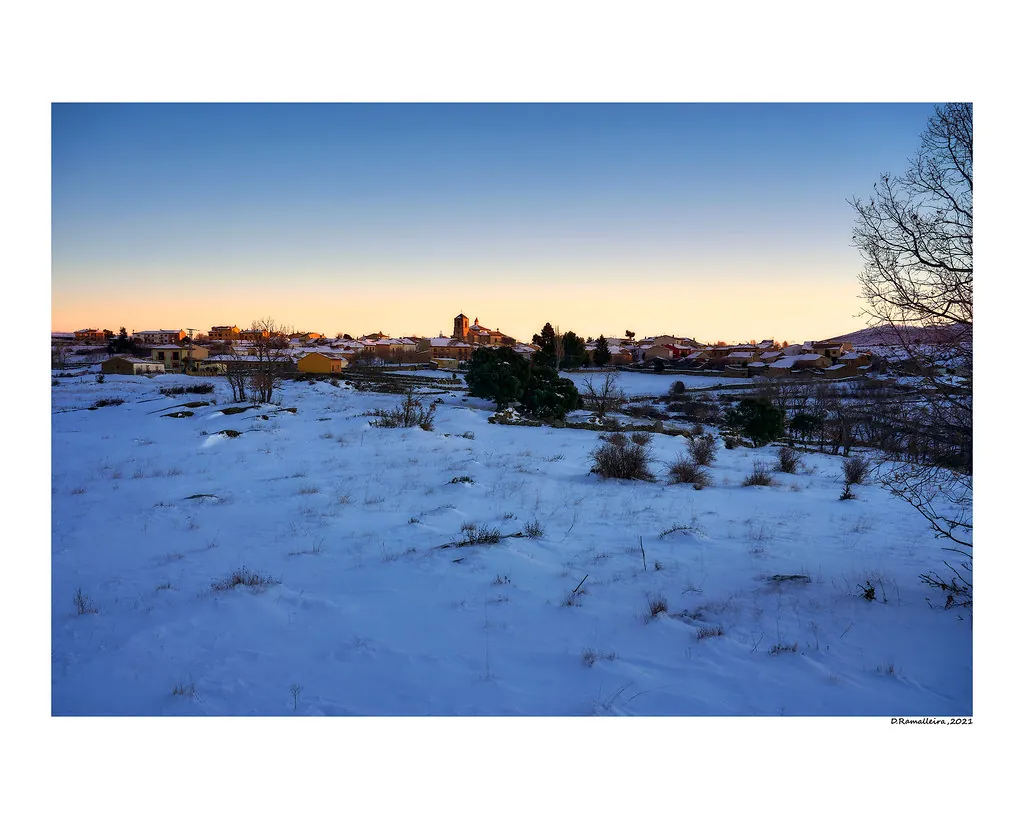
Zarzuela de Jadraque lies at the northern edge of the province of Guadalajara, within the Sierra Norte and close to the ridges of the Sierra de Ayllón. Its location defines it. Set more than a thousand metres above sea level, this is a small settlement surrounded by scrubland, grazing fields and open slopes where livestock farming has set the pace of life for generations.
The population today barely rises above a few dozen residents, a figure that speaks clearly of the village’s scale. There is no sense of expansion or suburban growth. Instead, Zarzuela de Jadraque reflects a long-established rural pattern, shaped by altitude, climate and the demands of pastoral work.
The original settlement followed a simple logic: to live close to pasture and near the tracks that linked one mountain community to another. For a long time, daily life revolved around the movement of flocks, small-scale subsistence farming and exchanges with neighbouring villages. These activities structured the rhythm of the year and tied families to the surrounding land.
Stone Houses Built for the Climate
The architecture in Zarzuela de Jadraque is typical of this part of Guadalajara. Houses are built with masonry walls and tiled roofs, their compact forms designed to withstand cold, windy winters at altitude. Function dictated appearance.
Some homes still retain wooden galleries or corridors facing towards the sun. These spaces were practical rather than decorative. They served for drying herbs, storing firewood or sheltering certain domestic tasks from the worst of the weather. Even today, they offer a glimpse of how closely daily routines were adapted to the seasons.
The village layout is simple. A main street runs through the centre, with a handful of short offshoots branching away. There is no large central square and no complex urban plan. Growth took place gradually, according to need, rather than through any formal design. The result is a compact cluster of buildings that feels closely tied to its surroundings.
The Church of the Asunción
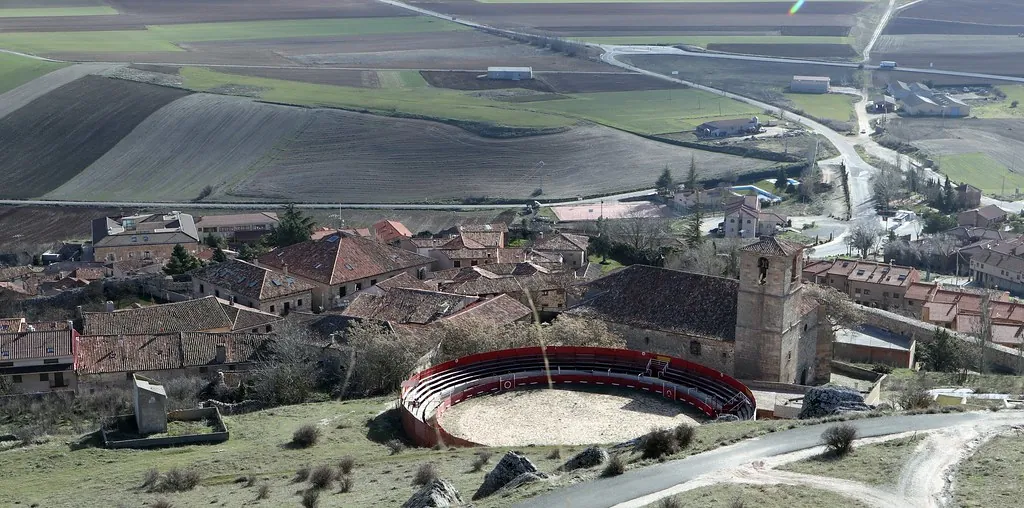
At the heart of the village stands the parish church, dedicated to the Asunción, the Assumption of the Virgin Mary. The building appears to date from the 16th century, although later alterations are likely, which is common in rural churches across the region.
The tower is plain in style, and the bell gable combines stone and brick. Its artistic interest is described as modest, yet its importance within the community goes beyond architecture. The church remains a meeting point for religious celebrations and for festivities marked in the local calendar.
In villages of this size, such buildings continue to play a social role that extends beyond worship. They provide a focal point, particularly at moments in the year when former residents return and the population briefly increases.
Traditional Paths and Open Landscape
Around Zarzuela de Jadraque, a network of traditional paths still traces routes that were once essential. For centuries, these tracks connected vegetable plots, meadows and grazing areas. Many remain passable on foot, offering a direct way to explore the surrounding countryside.
The landscape alternates between slopes covered in rockrose and thyme and open stretches of pasture. In spring, the scent of aromatic plants spreads across the hillsides. Autumn brings another seasonal habit: mushroom gathering. This activity forms part of local custom, although it requires proper knowledge in order to distinguish between species.
Birdlife is another noticeable feature of these open sierras. Birds of prey are relatively easy to spot, often seen circling above ravines and hills that frame the village. The terrain, with its wide views and sparse tree cover, makes such sightings more likely than in denser woodland.
The overall impression is of space and exposure. The altitude, the vegetation and the broad slopes all reinforce the sense of being in a high mountain environment, even though the settlement itself remains small.
August Festivities and the Return of Families
The main annual celebration usually takes place in August and is linked to the dedication of the Asunción. As in many very small villages in Spain, these dates coincide with the temporary return of residents and families who live elsewhere for most of the year.
For a few days, Zarzuela de Jadraque regains an atmosphere that recalls times when its population was larger. The streets see more movement, and houses that remain closed for much of the year open again.
The festivities retain a strongly local character. They include religious acts, gatherings among neighbours and activities organised by those spending the summer in the village. There is no suggestion of large-scale events or outside spectacle. Instead, the focus remains on reunion and continuity, reinforcing ties between people and place.
Practical Notes for Visiting
Zarzuela de Jadraque is located in the Sierra Norte of Guadalajara. It is reached by road from the provincial capital after a long drive along regional routes. The journey itself underlines the village’s somewhat remote position.
The settlement is small and can be explored in a short time. There are very limited services within the village, so it is advisable to bring necessary supplies from larger towns in the surrounding area.
In return, visitors encounter one of those places where rural life in the mountain sierra can still be sensed with little mediation. The scale, the silence and the continuity of traditional paths all contribute to that impression. Zarzuela de Jadraque does not present monuments of grand scale or elaborate attractions. Its character lies instead in its altitude, its pastoral history and its enduring connection to the landscape of the Sierra Norte.