Full Article
about Polígono de Toledo (Barrio)
Modern industrial neighborhood in the city of Toledo; wide avenues and green areas
Hide article Read full article
By mid-afternoon, when the sun drops low and the tarmac still holds the day’s heat, Polígono de Toledo fills with familiar sounds: footballs striking metal goalposts, conversations stretching out on park benches. Brick façades reflect a reddish glow, and between one block and the next stand rows of young trees that offer what shade they can in summer.
The neighbourhood, known to many locals simply as el Polígono, lies to the east of Toledo’s historic centre. There are no medieval alleyways here, no carved stone doorways. Instead, the landscape is shaped by broad avenues, large roundabouts and residential buildings constructed when Toledo began expanding outwards in the final decades of the twentieth century. Today, more than twenty thousand people live here. The impression is of a district that works primarily for those who call it home, moving to its own daily rhythm.
Getting from here to the old quarter is straightforward. The bus journey usually takes a little over fifteen minutes to reach the area near the river, though extra time helps during rush hour or on busy tourist days. Driving is not always the best option either, as parking close to the city walls can turn into a lengthy loop.
A Neighbourhood Built for Living
Life in Polígono unfolds more in its squares than at scenic viewpoints. In the morning, shopping trolleys cross wide avenues. By late afternoon, teenagers gather on sports courts while parents talk as the light fades.
Green spaces are scattered between the housing blocks. These are not vast urban parks, but open areas with gravel paths, benches and playgrounds. When a breeze rises from the Tagus, it is immediately noticeable. The treetops sway, and there is a dry scent of earth mixed with freshly watered grass that seems to settle as evening approaches.
Summer requires a little strategy. The heat lingers between the buildings at midday, and long walks along the avenues can feel heavy under the sun. Parks are best sought out later in the day, when temperatures begin to drop and more people drift outside.
This is not a part of Toledo designed for monument-hunting. It is a place where daily routines set the pace, where neighbours recognise one another, and where the public spaces matter more than any single landmark.
Close to the Tagus and the Wider City
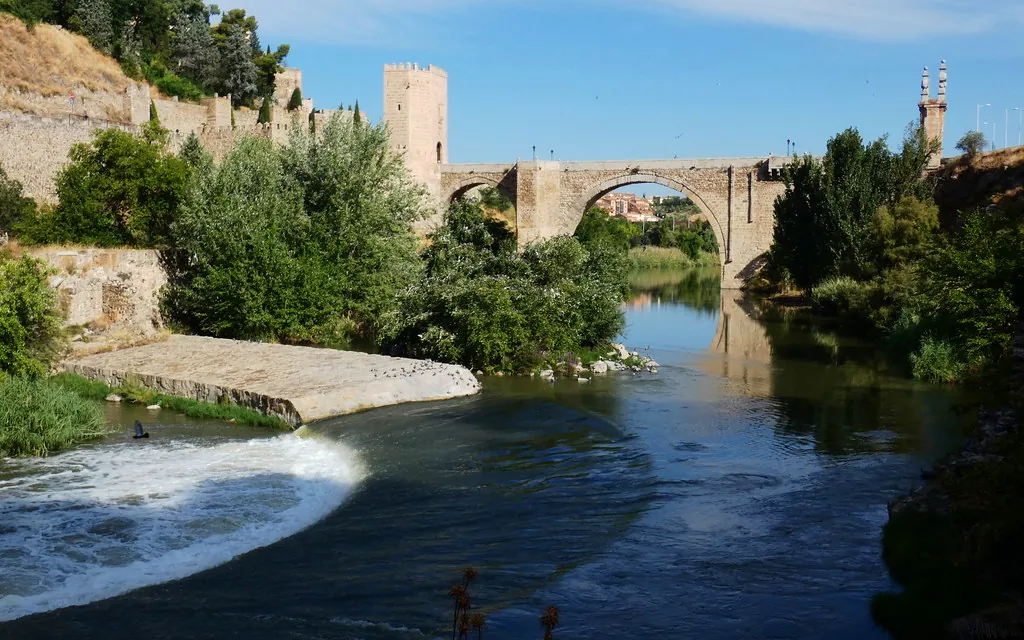
From within the neighbourhood, Toledo’s monumental skyline is out of sight. The Tagus River, however, is relatively close. A short drive leads down towards the area of the historic bridges, from where paths follow the course of the water around the city.
These riverside walks are quiet. Vegetable plots and earthen embankments line certain stretches, and there are sections where birdsong carries more clearly than traffic. Spring alters the scene noticeably. The riverbanks turn green and the temperature allows for long walks without the harsher heat that defines Toledo’s summer.
Water is essential if setting out on foot here, particularly between June and September. Long sections offer little shade and no fountains. Preparation makes the difference between a pleasant ramble and a tiring one.
The connection between Polígono and the rest of Toledo works both ways. Residents head into the old town for work or errands; visitors based here can reach the historic centre with relative ease. Yet the district retains its own character, separate from the stone façades and steep lanes that draw most travellers to the city.
A Practical Base for Exploring the Province
Many people use Polígono as a calm base while visiting Toledo. Roads leading south towards the Montes de Toledo are quickly accessible from here, as are routes to smaller towns across the province. In these places, the pace slows further. Large main squares, stone town halls and bars where time seems to pass a little more gently define the atmosphere.
For such excursions, a car becomes almost essential. Public transport connects well with the city itself, but reaching smaller villages often means coordinating timetables or facing long walks from drop-off points. Those with their own vehicle have more freedom to explore the surrounding countryside and return to the quieter routine of the neighbourhood at the end of the day.
Polígono’s appeal in this sense is practical rather than picturesque. It offers space, residential calm and straightforward access to main roads. For travellers who prefer to stay outside the busiest areas yet remain within easy reach, that balance can work well.
Eating the Way the Neighbourhood Eats
Along the main streets, bars and cafés serve food that feels immediately recognisable within Toledo. Hearty stews appear when colder weather arrives. Shared plates are common, and traditional dishes that have featured on local menus for years continue to anchor the offerings.
It is not unusual to see carcamusas included in set lunch menus. This Toledo speciality, typically made with pork and tomato, has long been associated with the city. Game dishes appear when the season allows, reflecting the wider culinary traditions of Castilla La Mancha.
In many neighbourhood bakeries, mazapán takes pride of place as festive periods approach. The sweet scent of almond drifts out onto the pavement, signalling celebrations ahead. Mazapán is closely linked to Toledo’s identity, and its presence in shop windows connects Polígono to the wider city’s traditions.
Food here mirrors daily life: straightforward, rooted in local custom, and shaped by the seasons.
Summer Festivities and Local Identity
Toledo’s best-known celebrations remain concentrated within the city walls. During Corpus, the entire historic centre transforms for several days. Streets are decorated, and the atmosphere shifts dramatically.
Polígono, however, has its own energy when summer festivities arrive. Stages appear in open squares, stalls line certain streets, music continues late into the night and bunting stretches overhead. These events are not designed for passing visitors. They belong to the people who live here year-round.
That is perhaps the key to understanding the neighbourhood. Polígono de Toledo makes the most sense when experienced without hurry at the end of the day, as parks begin to fill and the sun drops behind the brick apartment blocks. There are no grand postcard views to take away. Instead, there is a clear sense of how Toledo feels once you step outside the historic centre and into the rhythms of everyday life.