Full Article
about Agudo
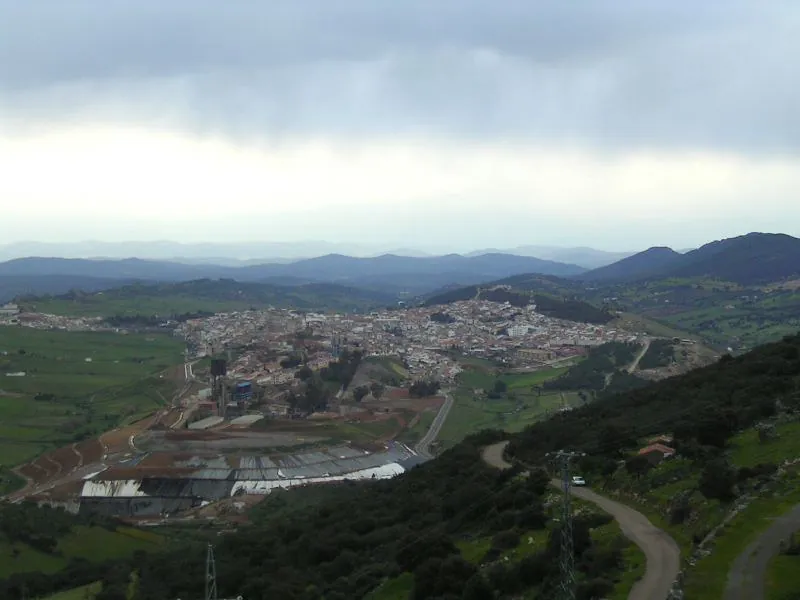
Border town with Extremadura, ringed by hills and olive groves; its old quarter keeps the area’s traditional architecture.
Ocultar artículo Leer artículo completo
The church bell strikes noon as an elderly man in a beret shuffles across Plaza de Santiago, his walking stick tapping against cobblestones laid centuries ago. Above him, swifts dart between terracotta rooftops, their cries echoing off whitewashed walls that have seen Moorish traders, Castilian shepherds, and now the occasional curious traveller seeking something beyond Spain's coastal clichés.
Agudo sits 600 metres above sea level, where the flat ochre plains of La Mancha begin their gentle climb towards Sierra Morena. This modest transition creates a landscape that confounds expectations. The village isn't perched dramatically on a crag nor buried in some inaccessible valley. Instead, it occupies a subtle rise that breaks the horizon just enough to offer views across the Valle de Alcudia, where wheat fields alternate with ancient holm oak dehesas that have sustained livestock since medieval times.
The Architecture of Everyday Life
The Iglesia de Santiago Apóstol dominates the main square, its tower visible from anywhere in the old quarter. Built in stages between the 16th and 18th centuries, the church shows its evolutionary history in stone. The original Gothic portal sits somewhat awkwardly beside later Baroque additions, while the bell tower – added in 1734 after earthquake damage – leans slightly westward, a quirk that locals claim helps it catch the afternoon breeze.
Wandering the narrow streets reveals domestic architecture adapted to extremes. Walls nearly a metre thick keep interiors cool during July's 40-degree heat, while small windows positioned high under the eaves allow hot air to escape. Many houses still feature the traditional layout: animal quarters on the ground floor, living areas above, and a bodega dug into the rock beneath. These underground cellars, identifiable by their heavy wooden doors flush with the street, once produced rough red wine sold to merchants travelling the ancient route between Toledo and Córdoba.
The town's name – meaning 'sharp' or 'pointed' in Spanish – derives not from any dramatic peak but from the series of gentle hills that surround it. These elevations, rarely exceeding 100 metres above the valley floor, nevertheless provided natural defence and explains why human settlement persisted here through Roman, Visigothic, and Moorish periods. Archaeological digs in 2018 uncovered a small Islamic watchtower beneath the current town hall, its stones later incorporated into Christian foundations.
Working the Land
Agriculture remains the primary occupation, though the methods have evolved. Drive the CM-412 out of town at dawn and you'll meet tractors heading to fields where their grandfathers used mules. The transition happened relatively recently; several farmers still keep donkeys for accessing steep olive terraces where machines cannot venture.
The surrounding countryside offers excellent walking, though it demands self-sufficiency. Marked trails exist, but they're poorly maintained and maps from the tourist office date to 2009. Better to download GPS tracks from the Spanish hiking federation website before arriving. A rewarding half-day circuit heads south from the cemetery, following an old livestock trail through dehesa to the abandoned Cortijo del Cuervo, where ruined farm buildings provide shelter for lunch. The return passes through fields of cereal crops that turn from green to gold between May and June, creating waves of colour that inspired Cervantes during his time in neighbouring villages.
Wildlife enthusiasts should bring binoculars. The valley supports one of Spain's highest densities of imperial eagles, though you'll need patience and preferably a local guide. Juan Antonio, who runs the village's only taxi service, moonlights as a birdwatching guide during spring weekends. His rates – €30 per person for a three-hour dawn session – include transport to a hide where sightings are virtually guaranteed between March and May.
What to Eat and Where
Forget sophisticated dining. Agudo's culinary scene consists of three bars, one restaurant, and numerous family kitchens where grandmothers still cook recipes passed down orally. The bars open early for workers, serving strong coffee and tostada with local olive oil from 6:30 am. By 10 am they're full of farmers discussing rainfall statistics and wheat prices.
Bar Central, on the plaza's north side, serves the best tortilla española in the province – thick, slightly runny, and made with eggs from village hens. Ask Antonio behind the bar for the migas manchegas, breadcrumbs fried with garlic and chorizo, traditionally eaten with grapes. It's heavy eating for British stomachs, but perfect after a morning's walking.
The weekend restaurant, simply called El Mesón, occupies a 17th-century house with tables arranged around a central courtyard. Their speciality is perdiz estofada – partridge stewed with white wine and bay leaves. The birds come from local hunters during autumn and winter; outside these seasons, the menu shifts to rabbit and pork dishes. A three-course meal with wine costs around €18, though portions are generous enough that two could share.
Visit during mushroom season – October through November following autumn rains – and you'll find locals emerging from the surrounding hills with baskets of níscalos and gurumelos. The town hosts a mycology weekend each November with guided forays and tasting menus. Warning: Spanish foraging laws are strict. Picking without permission on private land incurs heavy fines, and several species resemble edible varieties but prove lethal. Join an organised group rather than attempting solo exploration.
Practicalities Without the Package
Reaching Agudo requires determination. There's no train station; the nearest is at Manzanares, 45 minutes away by infrequent bus. Driving from Madrid takes two hours via the A-4, then the CM-412 regional road that winds through olive groves and past the occasional shepherd with his flock. The final approach involves several sharp bends unsuitable for large motorhomes.
Accommodation options remain limited. Las Cañadillas offers four rural apartments in converted agricultural buildings two kilometres outside town. Each sleeps four and includes a small kitchen, essential since nowhere serves breakfast before 9 am. Prices fluctuate seasonally from €60-90 per night. Alternatively, Casa Rural El Pósito occupies a restored grain store in the village centre, with simpler rooms from €35 including basic breakfast.
The village wakes early and sleeps correspondingly early. By 10 pm the streets are empty except for summer weekends when temperatures make nighttime socialising preferable. Plan accordingly – the petrol station closes at 8 pm, and the small supermarket shuts for siesta between 2-5 pm. These rhythms aren't performed for tourists; they're simply how life functions when summer temperatures regularly exceed 35 degrees and winter mornings start at minus five.
Agudo won't change your life. It offers no Instagram moments, no boutique hotels, no Michelin stars. What it provides is something increasingly rare – a Spanish village that continues being Spanish, where the morning coffee comes with local gossip rather than froth art, and where the landscape changes subtly with seasons rather than being landscaped for effect. Come prepared for that reality, and the rewards prove considerable. Come seeking rustic charm, and you'll leave disappointed, probably before the church bell tolls for evening mass.