Full Article
about Almadenejos
Small town historically tied to mercury mining; it keeps industrial-archaeology remains and a one-off wall.
Ocultar artículo Leer artículo completo
Dawn at 744 Metres
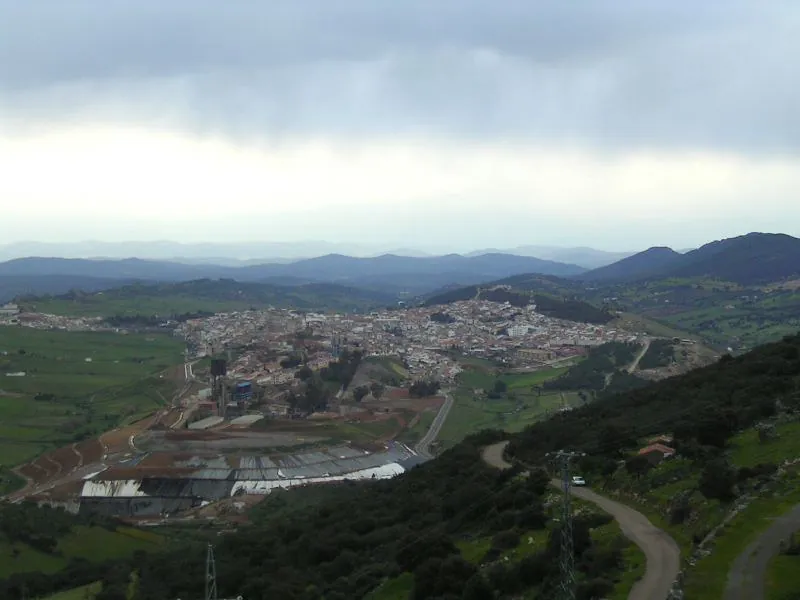
The church bell strikes seven but the sun's already been up for an hour, sliding across dehesa oak trees that have stood longer than any living soul in Almadenejos. At 744 metres above sea level, this Ciudad Real village gets first light before Madrid's airport control tower, yet none of the 400-odd residents appear rushed. They're gathered in the only bar, debating yesterday's rainfall measurement over cortados while their dogs nap outside, tethered to benches that have seen better decades.
This is Spain's interior stripped bare: no tour buses, no souvenir shops, no multilingual menus. Just a grid of whitewashed houses with terracotta roofs that turn ochre at sunset, surrounded by more oak trees than people. The nearest traffic lights require a 40-minute drive to Almadén. Here, the loudest noise at midday is usually a tractor changing gear or the click of dominoes hitting a wooden table.
The Valley That Time Forgot to Flatten
The Valle de Alcudia stretches south towards Sierra Morena like a rumpled blanket, its folds hiding medieval livestock routes that once connected Extremadura with northern pastures. These drove roads, wider than most British A-roads, remain etched into the landscape – grassy corridors where Iberian pigs now forage for acorns instead of Roman legions marching north. Driving the CM-4107 that snakes through the valley feels like trespassing on a private estate; you'll pass through three gates, each requiring you to stop, unlatch, drive through, and close behind you. Nobody checks, but everyone does it anyway.
The dehesa itself operates as a 3,000-year-old solar panel. Holm and cork oaks spaced just far enough apart create a canopy that keeps the ground cool enough for grass to grow through summer drought. This agricultural hack supports everything from black Iberian pigs to imperial eagles, though you'll need binoculars and patience for the latter. Local farmer José María can identify eagle territories by the white splashes on tree trunks – "better than any GPS," he claims, though his directions involve "turn left at the burnt eucalyptus" and landmarks invisible to outsiders.
When the Mines Closed, the Valley Stayed Open
Mercury mining in neighbouring Almadén dominated the region's economy for two millennia until the last shaft closed in 2003. The closure should have emptied these villages, yet Almadenejos kept breathing. Young people still leave – the nearest university is an hour away in Ciudad Real – but some return, drawn by cheap housing and space unavailable in cities where a garage costs more than an entire house here. The old miner's bar in Almadén displays helmets and carbide lamps, but in Almadenejos they just kept the original décor: faded bullfighting posters and a television that shows football on Saturdays, telenovelas during the week.
The economic transition happened quietly. Locals who once earned danger money underground now work seasonal jobs: dehesa maintenance, wild boar hunting parties, mushroom picking permits, or the mercury museum tour when cruise coaches venture inland from Seville. A former miner called Pepe runs weekend walks pointing out Roman slag heaps, his stories punctuated by rolling cigarettes with fingers still stained red from cinnabar ore. He charges twenty euros for three hours, payable in cash or local wine.
Eating What the Forest Drops
Food here follows the agricultural calendar with military precision. October means setas de cardo – giant oyster mushrooms that grow on dead oak – sautéed with garlic and local olive oil that costs £4 a litre from the cooperative. January brings calçots-style onions grilled over vine prunings, dipped in romesco thick enough to mortar bricks. Spring delivers baby lamb that never saw a freezer, roasted with nothing but salt and rosemary that grows wild along every roadside.
The village bar serves lunch from 2pm sharp. Arrive at 2.45 and the kitchen's closing; the owner's sister needs to collect children from school. Daily specials appear on a chalkboard that hasn't changed position since 1987: gazpacho manchego (nothing like Andalusian cousin – this is game stew with flatbread), migas (fried breadcrumbs with chorizo, essentially Spanish bubble and squeak), and judías blancas con conejo that tastes like someone's grandmother spent all morning shelling beans. Which she probably did. Three courses with wine costs €12. They don't take cards. They don't need to – half the clientele pay monthly tabs settled when pensions arrive.
Practicalities for the Stubborn Traveller
Getting here requires commitment. The nearest airport is Madrid, three hours north via the A-4 motorway that follows the old silver route to Seville. Hire cars are essential – public transport involves a train to Almadenejos-Almadén station (ten kilometres away, one taxi serves both towns, €12 if Miguel feels like working). The road from Almadén to Almadenejos climbs 200 metres in five kilometres, twisting through cork forest where wild boar regularly total cars driven by outsiders who assume Spanish wildlife respects Highway Code.
Accommodation options fit on one hand. El Amanecer del Valle sits on the village edge, four rooms in a converted farmhouse with a pool that overlooks dehesa stretching to Portugal. Prices start at €70 including breakfast featuring eggs from chickens you can see pecking outside. The owners speak enough English to explain hunting seasons but not enough to recommend TripAdvisor restaurants – mainly because there aren't any. Alternative options involve renting village houses through the local council for €30 nightly, minimum three nights. Keys get picked up from the bar; payment happens whenever someone remembers to ask.
Weather demands respect. Summer temperatures hit 40°C by noon – sensible people schedule walks for 7am or 7pm, spending midday indoors or in the pool. Winter brings sharp frosts and occasional snow that melts by lunchtime but makes roads treacherous for drivers who've never changed to winter tyres (everyone local keeps chains in boots from November onwards). Spring and autumn provide the sweet spot: 20-25°C days, cool nights, and dehesa colours shifting from green to gold to fire.
The Exit Strategy
Leave on a Sunday morning and the village feels abandoned. Church bells ring but nobody appears; they're already inside, or sleeping off Saturday's wedding, or tending animals that don't recognise weekends. The bar owner waves from across the square – whether greeting or farewell remains unclear. Driving back through the valley gates requires the same stop-start ritual, each closure feeling like sealing a time capsule.
Three kilometres out, mobile signal returns. Emails ping. The 21st century reasserts itself with notifications and deadlines and traffic jams waiting near the capital. But the dehesa oaks recede in the rear-view mirror unchanged, their shadows marking time the way they always have – slowly, deliberately, indifferent to whether anyone notices.