Full Article
about Almodóvar del Campo
One of Spain’s largest municipalities; known for its bullfighting tradition and as the birthplace of San Juan de Ávila.
Hide article Read full article
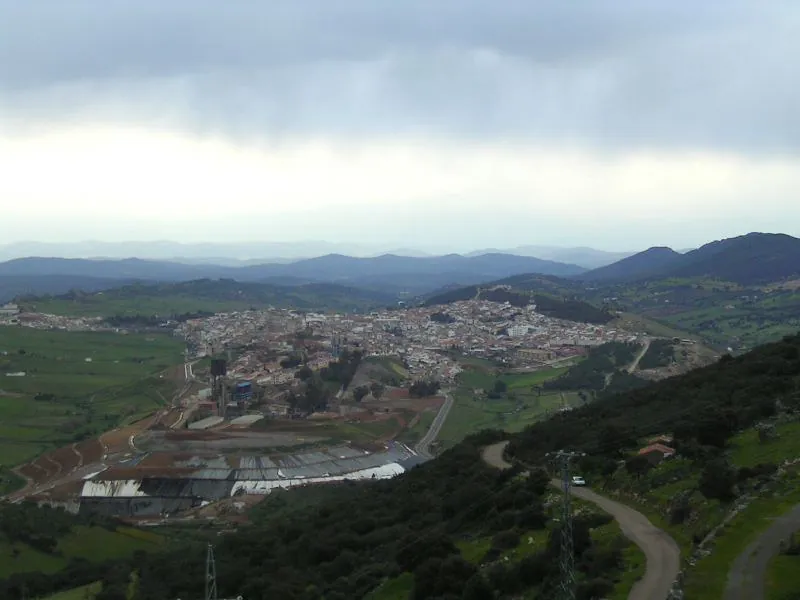
The scent of fresh bread mixes with damp earth on the morning air in Almodóvar del Campo. From the castle hill, the land stretches south into the Valle de Alcudia—long fields, scattered olive groves, wind turbines still against the sky. In the plaza, coffee comes in thick glass tumblers. People cross from one pavement to the other without hurry, a rhythm from a time when everything sat within walking distance.
The curve of an old crater
Local accounts say the town was built inside an ancient volcanic crater. The shape becomes clear from the castle ruins. Streets curve, neighbourhoods lean into the slope, and to the west lies the Laguna de Almodóvar, a sheet of water that shifts from grey to green with the light.
History has left its layers here. The Romans came for the Sisapo mines. Later, the Order of Calatrava built the fortress on the hill. Parts of the walls remain, along with a tower and a wide view over the plain. On clear days, Sierra Morena is a dark line on the horizon.
Make the climb early or late. The sun hits hard on that slope, and shade is scarce between ten and five.
Wood and light inside the church
The Iglesia de Nuestra Señora de la Asunción looks restrained from outside, almost austere. Thick walls and a simple entrance give little away. Inside, the air changes. A Mudéjar wooden ceiling spreads overhead in a pattern of stars that fades into shadow. Sunlight through the windows fills the space with floating dust.
Around midday, it often smells of extinguished candles and warm stone. In one side chapel, a Pietà holds wildflowers brought in from the fields.
Opening times can be fluid; doors may close for services or at midday. Check at the bar on the plaza if you find it locked.
A house, a museum, old pages
On Calle de San Juan de Ávila stands the house where the preacher was born. The building holds objects linked to his life. Voices drop naturally inside, absorbed by thick walls and old tiles.
A few streets away is the Museo Palmero, a private collection built over decades. It gathers painting and sculpture from different periods. The rooms carry the scent of wood polish and old books, with lighting that asks you to slow down.
Then there is the Biblioteca Cervantina. It keeps thousands of editions of Don Quixote. Some are modern, others printed on yellowed paper with nineteenth-century engravings. Opening an older volume releases that soft smell of ink and aged paper.
From the pan to the plaza
Food stays close to the land here. Migas appear on tables when the weather turns cooler, made with stale bread, garlic and panceta, all brought together slowly in a deep pan. Tiznao combines shredded salt cod with pepper and olive oil, carrying a faint smoky note.
At summer’s end, during the fiestas, local groups set up around the bullring. Nights fill with pasodobles from loudspeakers and long conversations that stretch into early hours. These are local days, shaped by residents and families who return for it.
When to walk, when to wait
Spring brings green and yellow to the countryside. The paths near the lagoon feel manageable then, unlike in high summer. Carry water; you won’t find fuentes on those tracks.
August is dry and hot. Streets can feel empty by day, life shifting into evening when the heat breaks.
September gains energy with the fiestas and their encierros. For a quieter visit, choose a different week; these days draw crowds and change the town’s pace.
Before you leave, go back to the castle hill at sunset. Wind often stirs the dry grasses between stones. Below, lights come on in windows while distant wind turbines blink red against a darkening sky.