Full Article
about Cabezarrubias del Puerto
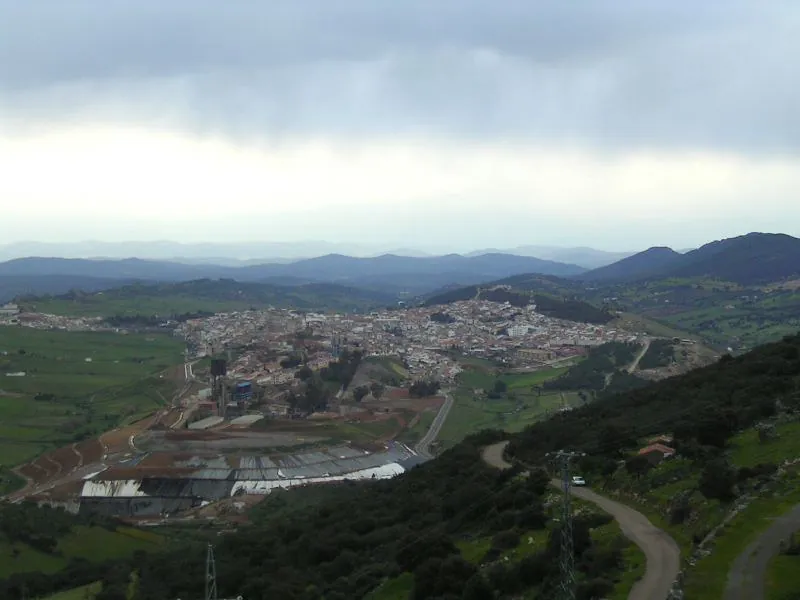
Set in the Sierra Morena with mountain scenery; ideal for nature lovers and rugged trails.
Hide article Read full article
A Village That Doesn’t Try to Impress
Some places work like those roadside bars where lorry drivers pull in. From the outside they barely register, yet once you sit down for a while, you understand why people keep returning. Tourism in Cabezarrubias del Puerto has something of that same logic. There are no headline attractions or grand monuments. Just a village in the Valle de Alcudia where life moves at its own steady rhythm.
Cabezarrubias del Puerto has around 480 residents and sits just over 700 metres above sea level. Livestock farming still sets the tone. You notice it in the pens and sheds, in the trailers parked along the streets, and in a calm that is not designed for visitors. It is simply the pace of agricultural work. Coming from a city can feel like switching off your phone for a while. At first it is slightly unsettling. Then it becomes a relief.
The village has long been linked to the area’s natural passes and to transhumance, the seasonal movement of livestock between grazing grounds. The landscape makes that history easy to grasp. Open dehesas stretch outwards, with holm oaks spaced as if placed by hand, and flocks moving slowly across the fields. It is not a landscape of sudden shifts. It changes gradually, the way an old jacket fades over the years.
Quiet Corners and Open Skies
At the centre of the village stands the church of San Pedro Apóstol. It is not the kind of building that leaves you speechless. What it does have is the solid presence of a real village church, a place that feels woven into daily life. It brings to mind an old family house that may not be grand, yet clearly belongs exactly where it stands.
Walking through the streets reveals traditional Manchegan houses. Whitewashed walls, large wooden gates and interior courtyards hidden from view define much of the architecture. Many were built with the climate in mind. Summers are long, winters dry. The approach is practical rather than decorative, with little added that might demand extra upkeep.
Beyond the houses, the surrounding countryside shapes the experience more than any single building. The dehesa of the Valle de Alcudia opens around the village like an uneven carpet. In spring, green arrives suddenly, almost as if dry ground has been watered back to life. By late summer the tones shift towards gold.
Among the holm oaks it is common to see livestock, especially Merino sheep, along with cattle moving at an unhurried pace. Birdwatchers would do well to bring binoculars. Black storks and herons sometimes cross the sky. There are no visitor centres or explanatory panels. It is closer to sitting on a bench and waiting to see what happens.
Walking and Cycling the Valle de Alcudia
The area around Cabezarrubias del Puerto is threaded with rural tracks. Some circle the village, others head towards the low hills of the comarca. A walk here feels similar to strolling on the edge of a large town on a Sunday afternoon: quiet, the occasional distant car, wide stretches of countryside in every direction.
Secondary roads in the area are also suitable for cycling. These are not demanding mountain passes or technical routes. They are gentle rides where the rhythm comes from pedalling, stopping to take in the view, and setting off again.
Certain tracks connect Cabezarrubias del Puerto with other villages in the Valle de Alcudia, such as Almadenejos and Brazatortas. Each retains the character of a livestock community where buildings respond more to necessity than appearance. Function tends to come first.
Local food reflects that rural background. Products made from sheep’s milk are common, along with traditionally cured embutidos. Game dishes prepared according to long-standing recipes also feature in the area. The cooking is hearty, the kind that calls for bread and, afterwards, a proper siesta.
San Pedro and Shared Tables
When the festivities dedicated to San Pedro Apóstol arrive, usually in August, the atmosphere shifts. Many residents who live elsewhere return for those days. The population grows and the streets take on a different energy.
Processions, popular music and extended family gatherings shape the celebrations. Tables are pushed together and conversations last for hours. Rather than an event designed with visitors in mind, it feels like a large homecoming.
Romerías and other open-air celebrations are also part of local tradition. Masses held in the countryside, dusty tracks and holm oaks offering shade form scenes that could belong to an old black-and-white photograph, except that here they are still part of the present.
Reaching Cabezarrubias del Puerto
Cabezarrubias del Puerto lies around 80 kilometres south-west of Ciudad Real. The usual approach is via the N‑420 from Puertollano. From there, quiet roads connect with other villages across the Valle de Alcudia.
It is not a place that demands a full weekend devoted solely to the village itself. Instead, it fits naturally into a wider journey through the comarca. Stopping for a few hours, walking along the rural tracks and getting a sense of how this part of the valley works can be enough. Sometimes understanding the rhythm of a place is the main reason to pause.