Full Article
about Chillón
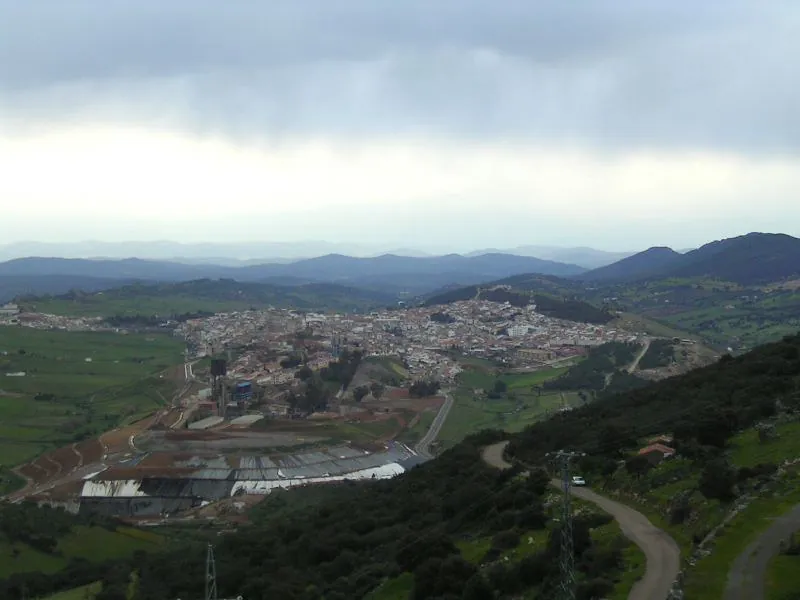
A town with a mining past and distinctive architecture; its highlights are the church with a Mudejar ceiling and the ethnographic museum.
Ocultar artículo Leer artículo completo
The bronze bull on Chillón's main square faces west, towards the setting sun and the endless dehesa beyond. It's not a monument to bravado, but to something more enduring: the transhumant routes that have funnelled livestock through this valley for eight centuries. Stand here at dawn and you might still hear the soft clop of hooves as local farmers move their cattle between seasonal pastures, continuing a practice that shaped every stone and street of this 1,772-soul village.
At 515 metres above sea level, Chillón sits just high enough to catch the evening breeze that drifts across the Valle de Alcudia. The altitude matters more than you'd think. Summer nights cool to 18°C while Madrid still swelters at 28°C, and winter mornings bring proper frost that silver-plates the holm oaks. It's this intermediate climate—neither sierra harsh nor plain oppressive—that made the village a natural stopping point for shepherds walking their flocks between summer pastures in the north and winter grazing in Andalucía.
The Architecture of Movement
The old town's layout betrays its origins as a service station for nomads. Streets narrow and widen without logic until you realise they follow the funnel patterns that once guided sheep into holding pens. The Church of Nuestra Señora de la Asunción dominates the skyline not through grandeur but necessity: its robust tower doubled as a lookout for approaching herds and, occasionally, bandits. Inside, the 17th-century retablo glows with the deep reds and ochres of local clay, colours that reappear in every sunset visible through the west door.
The houses speak the same language of transience. Massive ground-floor portals—wide enough for a fully-laden mule—open onto courtyards where animals once sheltered overnight. Look closer and you'll see iron rings set into the walls at knee height, still used by the occasional traveller who arrives on horseback rather than in a Seat León. Many façades retain their original ochre wash, mixed with local earth and lime, which explains why the village appears to grow directly from the soil it stands on.
What Grows Between the Oaks
The dehesa surrounding Chillón isn't wilderness—it's a 400-year-old agricultural system that makes Swiss efficiency look amateur. Each holm oak supports exactly 0.7 sheep per hectare, a ratio calculated through trial, error and the occasional famine. Visit in October and you'll find villagers harvesting acorns to fatten Iberian pigs, a practice that produces jamón with the nutty sweetness that commands £80 a kilo in Borough Market. The same pigs root beneath the same trees their great-great-grandpigs knew, creating a taste of place that no amount of agricultural technology has managed to replicate.
Spring transforms the dehesa into something approaching a botanical riot. Wild asparagus pushes through the grass, followed by the tiny white flowers that local shepherds call "pan de Dios"—God's bread—because sheep that eat them produce the sweetest milk. The village women still wander out at dawn with wicker baskets, competing with partridges for the best shoots. Ask at the Bar Central and someone might sell you a bundle for €3, though they'll look baffled when you explain what London restaurants charge for the same stems.
The Gastronomy of Scarcity
Chillón's cooking evolved from what travellers could carry. Migas ruleras—literally "crumbs from the road"—started as fried bread mixed with whatever chorizo remained edible after a week herding sheep. The local version uses day-old pan de pueblo, coarse pork sausage and just enough sweet paprika to mask any questionable flavours. It's served with a fried egg and grapes, creating the sort of carbohydrate-heavy breakfast that makes perfect sense when you're walking 30 kilometres before lunch.
Gazpacho manchego bears no relation to its Andalusian cousin. This is hunter's food: rabbit (or hare, if you're lucky) stewed with flatbread in an iron pot over an open fire. The bread dissolves into the broth, creating something between soup and stew that tastes profoundly of smoke and thyme. Order it at Casa Paco on Plaza de España—they'll ask if you want it "seco" or "con caldo". Choose the latter unless you enjoy chewing what resembles wet cardboard.
The cheese deserves special mention. Manchego curado from the dairy on Calle San Pedro ages for 12 months in local caves, developing crystals that crunch like sea salt between your teeth. It's milder than versions exported to the UK, with a sheepy sweetness that pairs surprisingly well with the local tempranillo. Buy it on Friday morning when the producer delivers; by Monday only the commercial stuff remains.
When the Village Remembers How to Party
August's fiesta patronal transforms Chillón into something unrecognisable to its weekday self. The population quadruples as descendants return from Madrid and Barcelona, occupying every spare room and converting garages into temporary bars. The vaquilla—loose young bulls running through the streets—happens not for tourists but because this is how the village has tested courage since records began. British visitors describe it as "San Fermín without the sangria-soaked chaos," which misses the point entirely. This isn't performance but memory made flesh, a reenactment of the moment when livestock arrived and young men proved they were ready to shoulder adult responsibility.
The September romería to the Virgen de la Sierra involves carrying the statue six kilometres uphill, then eating lunch beneath the same holm oaks that shade summer livestock. The walk takes two hours if you're fit, three if you stop to admire the view that stretches south towards the Sierra Morena. The ermita itself is nothing special—a whitewashed cube with a red tile roof—but the location explains everything about why people stay in places like Chillón. On a clear day you can see the transhumant routes radiating out like spokes, connecting this spot to every corner of Iberia.
Practicalities for the Curious
Getting here requires commitment. Madrid's Barajas airport sits 200 kilometres north; the drive takes two and a half hours on the A-4, then 45 minutes of increasingly winding roads that demand full attention after dark. The last 30 kilometres follow the CM-412, unlit and populated by wild boar who regard tarmac as their personal territory. Arrive during daylight or risk explaining to your insurance company why a 200-kilogram jabali now resembles an oversized furry speed bump.
Accommodation options remain limited. The single hotel—Hostal La Dehesa—offers eight rooms above a restaurant that serves decent food but closes unpredictably. Book directly by phone (they don't do online) and don't expect English. Alternative: ask at the ayuntamiento about casa rural rentals. These village houses sleep four to six, cost €60-80 per night and come with fully-equipped kitchens, essential because everything except Bar Central shuts from 14:00-17:00.
Bring cash. The Caja Rural ATM on Calle Real rejects foreign cards with the sort of mechanical indifference that suggests personal vendetta. The nearest reliable machine sits 25 kilometres away in Villanueva de los Infantes—close enough unless you need petrol on a Sunday afternoon, when the sole garage operates on the Spanish equivalent of British bank holiday hours.
Visit in May when the dehesa flowers carpet the ground beneath the oaks, or October when acorns crunch underfoot and the air smells of woodsmoke and curing ham. Avoid August unless you've booked accommodation and enjoy sharing restaurants with three generations of Spanish families who've been holidaying here since Franco was in short trousers. Winter brings crystal-clear days when you can see forever, but also temperatures that drop to -5°C and heating systems designed for milder Mediterranean winters.
Chillón won't change your life. It offers no Instagram moments or bucket-list experiences, just the slower rhythm of a place where lunch still lasts two hours and the barman remembers how you take your coffee after three days. Come for that, or don't come at all.