Full Article
about Mestanza
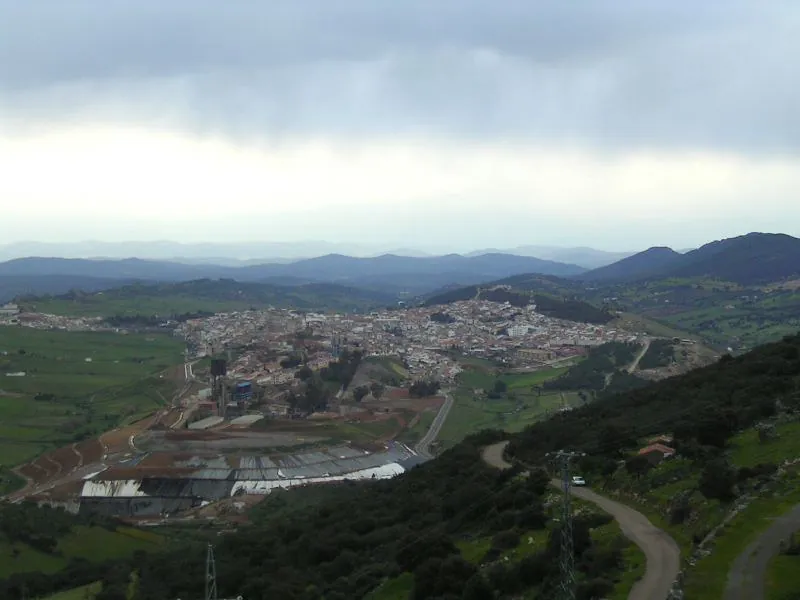
Mountain village overlooking the Montoro reservoir; ideal for hunting and water sports in rugged country.
Hide article Read full article
At that hour when the sun only just brushes the rooftops, Mestanza is still half asleep. A door opens somewhere, a shutter snaps up, and the faint smell of extinguished firewood lingers in the cool morning air. The silence in the square does not last long. Before long, someone crosses it at an unhurried pace.
Tourism in Mestanza means understanding a small village in the Valle de Alcudia, in the south of Castilla La Mancha, where the landscape shapes everything more than any plan does. The village sits at around 740 metres above sea level, surrounded by dehesa, a traditional landscape of scattered holm oaks, open pasture and farmland. Stone walls break up the land, and dirt tracks drift off between estates without urgency. For a long time, life here revolved around livestock and mining. Both are still present if you take the time to notice.
The heart of the village
The church of Nuestra Señora de la Asunción stands at the centre without drawing attention to itself. Its pale stone and restrained proportions give it a quiet presence. Inside, there are religious images and elements still used by locals during annual celebrations, without excessive decoration.
The surrounding streets can be covered in a matter of minutes. Whitewashed houses line the way, their wooden gates darkened with age. Iron grilles cast thin shadows across façades in the late afternoon light. From the outside, inner courtyards are mostly hidden. Now and then a fig tree or a vine appears, climbing up a wall and hinting at the space within.
The dehesa of the Valle de Alcudia
The landscape around Mestanza explains much of its character. The dehesa covers a large part of the municipality. Low holm oaks dot reddish soil, and the grass shifts in colour with the seasons.
In winter, the ground often carries the damp smell left by rain. In summer, the air turns dry and the most constant sound is that of insects moving through the grass. It is not unusual to see livestock grazing in the distance, or to come across deer and wild boar at dawn, especially along quieter paths.
Birds of prey are part of the sky here. With binoculars and some patience, spring and autumn can bring the sight of vultures circling above the slopes or eagles riding thermal currents.
Traces of mining
On some hillsides, the remains of the area’s mining past still appear. Metal structures, sealed mine shafts and banks of disturbed earth now partly covered by vegetation. They are not always marked, so it is wise to approach with care.
Mining provided work for many local people for decades. Today it remains mostly in the memories of older residents and in these scattered fragments across the countryside.
Paths around Mestanza
The surroundings are best explored on foot or by mountain bike. There are farm tracks and paths used by herders that cross estates and areas of scrubland. Some run close to fenced land, so gates should be left as they are found.
The best times of day tend to be early morning or late afternoon. In summer, the heat builds from midday onwards and there is little shade beyond the holm oaks.
From certain higher points in the Sierra de la Solana, depending on how far you go, the valley opens out completely. Patches of green dehesa spread across the land, pale tracks draw soft lines through it, and far in the distance, mountain ranges close off the horizon.
Festivals and the rhythm of the year
In August, the pace of the village changes during the festivities dedicated to Nuestra Señora de la Asunción. There are processions, music and gatherings in the square as night falls. The population grows at this time, as many people who live elsewhere return to the village.
In January, the tradition of the San Antón bonfires continues. As evening arrives, fires are lit in different spots and people gather around them while smoke rises slowly into the cold air.
Outside these dates, Mestanza keeps a steady rhythm. There is little rush and few distractions. The appeal lies more in walking through the surrounding landscape and sitting for a while in the square as the light begins to fade than in ticking off sights. Time here is measured differently, and it shows.