Full Article
about Villanueva de San Carlos
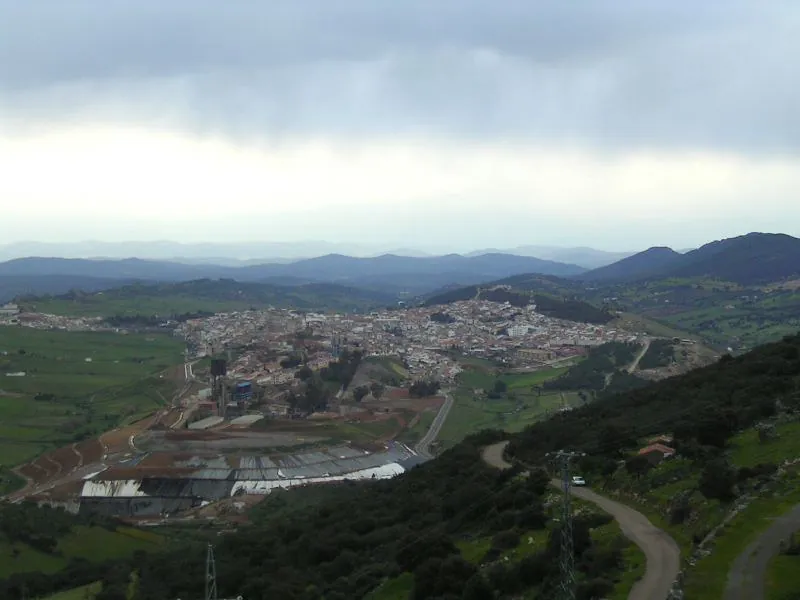
Small rural municipality near Puertollano; transition zone to the sierra with olive grove and scrubland landscapes.
Hide article Read full article
A small place, easy to take in
If you pass through Villanueva de San Carlos, the practical side is simple from the start. You can leave the car on any wide street near the entrance without much thought. There are no regulated parking zones and very little traffic. Within half an hour, it is perfectly possible to have walked around the whole village. After that, it becomes a question of whether to linger a little longer or continue towards other parts of southern Ciudad Real.
Just over 250 people live here, and that scale defines the experience. The streets are straight, the houses are low and whitewashed, and during the week there is a noticeable quietness. There are no large monuments or museums waiting to be explored. What you see is exactly what is on offer.
Many visitors arrive from Almagro, which sits relatively close by road and has a far more active visitor scene. Villanueva de San Carlos works better as a brief stop or a calm detour if you are already travelling through the area.
A short walk through the centre
The centre of the village revolves around the parish church. It is modest and familiar in style, similar to many churches found across this part of the province. There is a simple façade, a small square in front, and not much else competing for attention nearby. It does not take long to take it in.
From there, the visit becomes less about ticking off sights and more about wandering. Two or three streets are enough to get a feel for the place. As you walk, you will notice large wooden gates, interior courtyards and some older houses with attached yards. These details hint at a time when the village relied more heavily on agriculture.
Around the edges of the built-up area, traces of that past are still visible. There are storage buildings, threshing floors and other agricultural structures close to the village itself. They are not presented as attractions, but they form part of the everyday landscape.
There is no historic quarter filled with landmark buildings, and nothing that demands a long stop. In twenty to thirty minutes, you will have seen the essentials and understood the rhythm of the place.
Open land and a volcanic past
The surroundings are where Villanueva de San Carlos becomes a little more interesting. The village is set amid open countryside: cultivated fields, agricultural tracks and gentle hills. It is easy terrain for walking if you enjoy a straightforward stroll without technical difficulty.
This part of Ciudad Real belongs to an ancient volcanic area. Across the wider comarca, there are numerous small formations and volcanic lagoons scattered through the landscape. They are not always obvious if you do not know where to look, but the reddish soil and the soft undulations in the terrain are linked to that geological origin.
There are no marked walking routes as such. The paths are mainly used for farming, so it is important to respect gates and private land. The experience is informal, closer to a quiet ramble than a structured hike.
A brief stop within a wider route
Villanueva de San Carlos tends to make more sense when seen as part of a broader itinerary. Nearby Almagro offers more heritage and activity, providing a contrast to the stillness here. Beyond that, the surrounding areas of Campo de Calatrava and Valle de Alcudia are dotted with small villages where the landscape often takes precedence over built attractions.
If the volcanic side of the province is of interest, it helps to check a map before setting out. Many of the lagoons and crater-like formations lie along secondary tracks and are not always clearly signposted. Finding them often requires a bit of preparation rather than relying on directions once you are on the road.
In that sense, Villanueva de San Carlos acts as a pause rather than a destination in its own right. It fits naturally into a slower journey through rural Castilla La Mancha.
Summer gatherings and local rhythm
The main celebrations in the village usually take place in summer, when residents who live elsewhere return. At that time, the population briefly grows and the atmosphere shifts. There are religious events, some evening music and gatherings in the main square.
The scale remains small. There are no large stages or extensive programmes, just the kind of local festivities that bring people together for a few days. It reflects the size of the village and its close-knit character.
A simple kind of visit
Villanueva de San Carlos suits a very specific type of stop. It is a place to arrive without expectations of major sights or a packed schedule. You park, walk for a while, take in the quiet streets and the surrounding countryside, and then decide what comes next.
For travellers looking for monuments or a wide range of activities, it will feel limited. In that case, it makes sense to continue a few kilometres further to places with more to see. For those already nearby who want a calm, uncomplicated pause, it fits easily into the day without needing much planning.