Full Article
about Adradas
Small rural settlement in the central part of the province with modest traditional architecture.
Hide article Read full article
Midday Stillness in Adradas
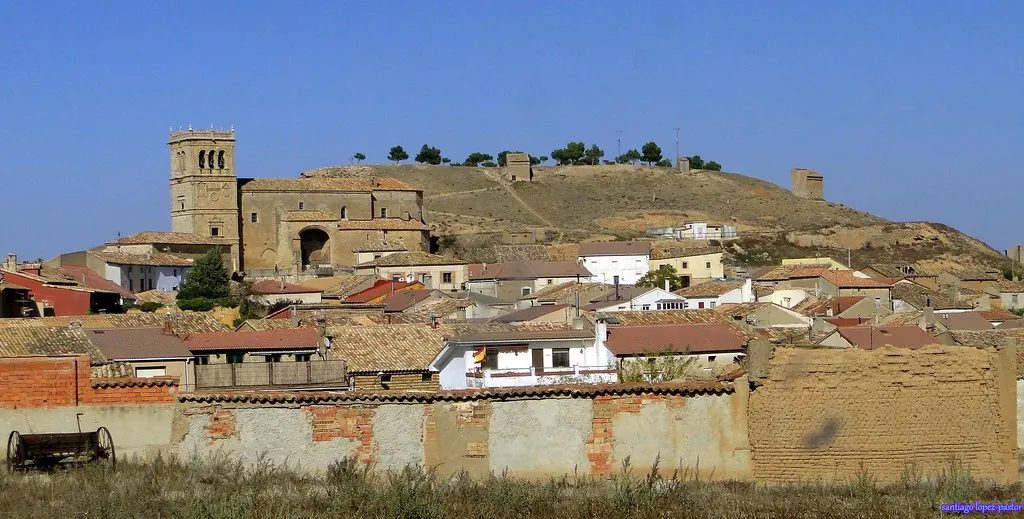
At midday, when the sun falls almost vertically on the rooftops, Adradas grows quiet. Light bounces off pale stone façades and the metal sheets of old farm buildings, and there is little to hear beyond a distant dog or the wind slipping between barns. With around 65 registered residents in the comarca of Almazán, this is a village where the countryside still sets the pace of the day.
The houses gather without much ceremony along a handful of short streets. Stone walls, wooden gates slightly bowed with age, and courtyards where tools are still kept speak of a working past that has not entirely disappeared. Some homes are maintained and lived in. Others have been closed for years, their uneven roof tiles and grass pushing up by the doorway quietly giving them away.
There is no sense of spectacle here. Adradas feels shaped by routine and weather rather than by visitors, and that is part of its character.
San Pedro and the Small Heart of the Village
Near the square stands the parish church of San Pedro. Built in limestone, it is a sober structure with a simple tower visible from the surrounding fields. Like many churches in this part of Soria province, it appears to have undergone several alterations over the centuries. Inside, elements from different periods have been preserved, though the overall impression remains restrained.
The square itself is modest. A bench in the shade, a whitewashed façade or two, and the particular silence of small villages when several minutes pass without anyone crossing the space. It is the sort of quiet that makes small sounds stand out: a door closing, a swallow cutting through the air, footsteps on stone.
Adradas does not present a defined historic quarter or grand civic buildings. The church and the square form a simple centre, more practical than ornamental, and life radiates outward from there into the fields.
Where the Fields Begin
The landscape begins almost as soon as the last house ends. Within a few steps, open farmland takes over, stretching towards the horizon. Cereal crops dominate, mainly wheat and barley, occasionally interrupted by solitary holm oaks or small clusters of juniper.
This is the Meseta, the high plateau that shapes much of inland Spain, and the sense of space is immediate. The terrain around Adradas is practically flat, and the sky often feels larger than the village itself.
The seasons transform the scene. In spring, green covers the fields and the wind moves through young ears of grain in steady waves. By summer, everything turns a pale yellow and the heat settles heavily over the plain. At midday, the light can be stark and unyielding. Winter brings a different mood. Fog sometimes rolls in, or a snowfall softens the edges of roofs and fields, leaving the village half erased in shades of grey.
For those walking beyond the built-up area during the warmer months, it is wise to carry water and wear a hat. Shade is scarce once you leave the village streets.
Farm Tracks and Unhurried Walks
Several agricultural tracks lead out from Adradas, linking it with neighbouring villages or with cultivated plots. These are not marked hiking routes. They are dirt tracks used by tractors and by residents heading to their land.
Even so, they work well for an unhurried walk. The ground is largely level, so there is little difficulty in covering a few kilometres at a steady pace. The dominant sound is often the wind brushing through cereal crops, a steady, almost hypnotic background.
If venturing far from the village, it is sensible to keep your intended route clear on a mobile phone or map. Many of the crossroads between tracks look similar, and the open landscape offers few obvious landmarks. Orientation here depends more on attention than on signposts.
There are no designated viewpoints or visitor facilities along these paths. What they offer instead is continuity with daily rural life. At certain times of year you may see agricultural work underway, though at others the fields appear still and empty.
Wide Skies and Passing Birds
One of Adradas’ defining features is its sky. When the weather is clear, it stretches uninterrupted in all directions. With patience, birds of prey such as kites and buzzards can be seen circling above the fields. In certain seasons, flocks of other birds pass through, using these open lands as a stopping point on their journeys.
The early morning tends to be the calmest moment to observe movement. Later, as the sun intensifies, the landscape often seems to pause. Activity diminishes, and the stillness of midday returns.
There are no hides, interpretation panels or organised wildlife routes. Birdwatching here is informal and dependent on time and luck. The simplicity of the setting is part of the appeal.
Eating in the Area
Adradas is small and does not have bars or restaurants operating on a continuous basis. For a hot meal or a longer sit-down, there are generally more options in Almazán or in other nearby villages.
The cooking in this part of Soria is robust and closely tied to agricultural life. Expect hearty stews, lamb dishes, and traditional recipes shaped by the rhythms of field work and cold winters. It is food designed to sustain rather than to impress.
Planning ahead makes sense if visiting for several hours, particularly outside peak holiday periods, as services within the village itself are limited.
When to Visit
Adradas changes markedly with the calendar. In summer, the heat can become intense from midday onwards, so arriving early or later in the afternoon is more comfortable. The light at these times softens the outlines of houses and fields.
Winter brings a quieter atmosphere still. On foggy days, the edge of the fields can almost disappear, and the village seems suspended in a muted landscape. Snow, when it comes, alters colours and sound alike.
For those interested in seeing the countryside at its liveliest, spring is often the most rewarding season. The cereal is green, there is more movement in the fields, and temperatures remain relatively mild.
Adradas does not offer major monuments or a defined tourist scene. It works better as a pause, a place to stop and look around. Here, the wind across the plateau and the expanse of cultivated land carry as much presence as the houses themselves. In the comarca of Almazán, villages like this show how closely built space and landscape are intertwined, and how the rhythm of the countryside continues to shape daily life.