Full Article
about Almazán
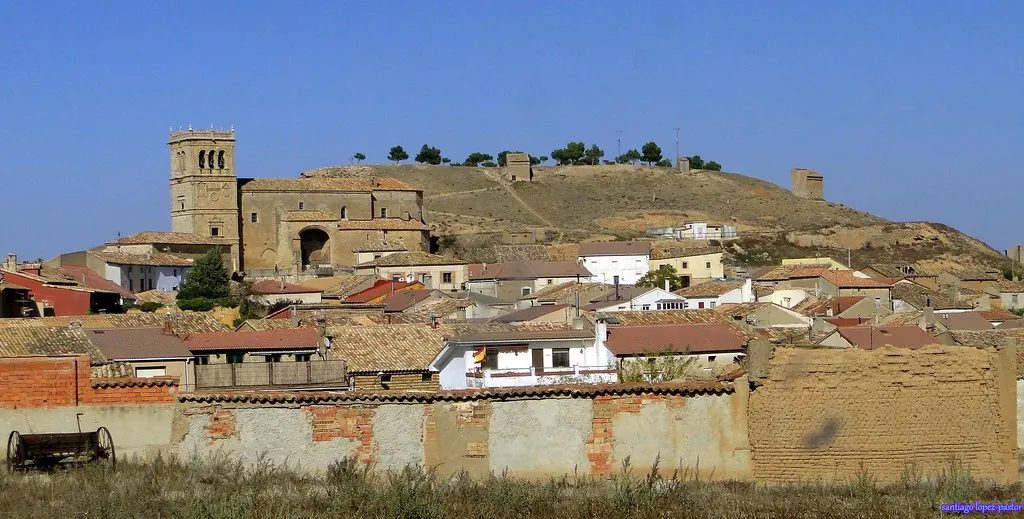
Walled historic town on the banks of the Duero with notable Romanesque and Baroque heritage.
Ocultar artículo Leer artículo completo
At 960 metres above sea level, Almazán’s evening air arrives with a snap sharp enough to make a Londoner reach for a second jumper—even in July. The town sits on a ridge above the young Duero, ringed by cereal plains that glow bronze after harvest. Stand on the medieval bridge at dusk and the only sound is water against stone, plus the occasional clatter of a metal shutter as someone closes up for the night. Noise travels upwards here; conversations drift from balconies, not traffic.
Stone, Sky and Silence
The walled centre is compact enough to cross in ten minutes, yet the gradients are gentle. Three gates remain of the original defensive circuit: Puerta de Herreros, its arch still tall enough for a hay wain; Puerta del Mercado, where Tuesday’s produce stalls set up before most visitors have finished coffee; and a third, nameless gap used by teenagers as a shortcut to the football pitch. Between them, the streets keep their medieval width—two people, or one reluctant Seat Ibiza, can just squeeze through.
San Miguel, the twelfth-century parish church, charges no entry fee and keeps its doors unlocked. Inside, the dome-on-pendentives is considered a Castilian first; the carved capitals show Daniel among lions that look more like overfed Labradors. Light is thin and northern, the sort painters left Paris for. Take five minutes and the eye adjusts: vegetable dyes in the frescoes, chisel marks on the columns, the faint smell of paraffin from the caretaker’s heater.
Opposite, the Renaissance palace of the Hurtado de Mendoza family sports a granite escutcheon pock-marked by nineteenth-century target practice. The building is now council offices; ring the bell at 11 a.m. and a clerk will let you into the courtyard to photograph the balcony—no gift shop, no audio guide, just a polite request not to tread on the geraniums.
What Passes for Action
Market day brings the place alive. Farmers park pickups on the verge outside the walls and sell garlic ropes, pale green lettuces and jars of honey labelled only “mil flores”. Prices are felt-tip on cardboard; change is counted out of leather pouches. By 1 p.m. the square smells of churros and diesel, and the one cash machine—inside a bank that still closes for siesta—has usually run dry. Bring euros.
Food is serious business. Chuletón, a T-bone the size of a steering wheel, appears on every second table at Mesón Castilla on Calle Mayor. One steak feeds two hungry walkers and costs €32; order it “al punto” if you like it pink, “bien hecho” if you miss British shoe leather. House Ribera del Duero is poured from a plain jug and tastes of blackberries and graphite; the bill rarely tops €25 a head even with pudding. Mid-week, kitchens close by 10 p.m.—book if you want dinner later than a Bristol carvery.
For lunch, the bar of Hotel Villa de Almazán does a “pitufo” (literally “Smurf”) sandwich: a six-inch roll of jamón ibérico for €3.50, served with a napkin and industrial-strength coffee. Vegetarians cope best on tortilla Thursdays; vegans should pack snacks.
Walking Without a Crowd
South of the river, a gravel track follows the Duero for 7 km to the ruined Ermita de San Saturio. The path is flat, shared with shepherd dogs and the occasional tractor; kingfishers flash turquoise above the water. Spring brings storks clacking on chimney nests, autumn a waft of fermenting grapes from an unmarked vineyard whose owner offers passing hikers a slosh of last year’s vintage in a plastic measuring jug—refusal is taken as British standoffishness.
Northwards, the meseta proper begins. A signed circuit climbs gently through wheat stubble to the Cerro de Castillo, 1,150 m, where the views open onto a horizon so wide it feels cartographic. The round trip takes ninety minutes; take water, there is no café at the top. In winter the same trail can be white with frost at 11 a.m.; sturdy boots and a windproof are essential November to March.
Getting There, Getting Stuck, Getting Out
Ryanair flies Stansted to Zaragoza three times a week; from the airport’s deserted hire-car desk it is 105 km of empty dual carriageway to Almazán. The last 12 km roll through sunflower fields that look like a Hockney sketch when the heads are turned north. Trains exist but require saintly patience: one daily service from Madrid Chamartín to Soria, then a 35-minute taxi at €40. There is no Uber, no bus onward on Sundays, and the town taxi driver likes to spend weekends fishing.
Accommodation is straightforward. Hotel Villa de Almazán has 38 rooms overlooking the river; doubles from €55 including garage parking and Wi-Fi that remembers dial-up fondly. The smarter rooms have balconies wide enough for evening wine, though you will need to supply your own corkscrew—reception keeps one, but it is usually lent to the chef. The only alternative is a pensión above the butcher’s on Plaza Mayor; cheaper, cleaner, and awakened at 6 a.m. by the delivery van reversing over a manhole.
The Honest Bit
Almazán is not undiscovered; it is simply ignored. Spanish families pass through on the way to the costas, pause for coffee, and leave. That leaves the town blissfully quiet—and occasionally closed. Monday is still the official day off; half the bars pull steel shutters even in high season. If you crave nightlife, artisan gin or boutique shopping, stay in Madrid. If the cathedral-sized silence of the meseta after sundown feels unnerving, bring company. Rain arrives horizontally on spring afternoons, and winter fog can trap you for days; check the Soria weather app before committing.
Yet for walkers, history buffs or anyone who suspects modern Spain has forgotten its indoor voice, Almazán offers a palate-cleanser. Buy sheep cheese from the market, walk the walls at sunset, and listen to the swifts slicing the sky above the Duero. Then drive back to Zaragoza before the Tuesday market ends and the cash machine gives up for good.