Full Article
about Baraona
Known as the place of the witches for its legends and set on a high moor
Ocultar artículo Leer artículo completo
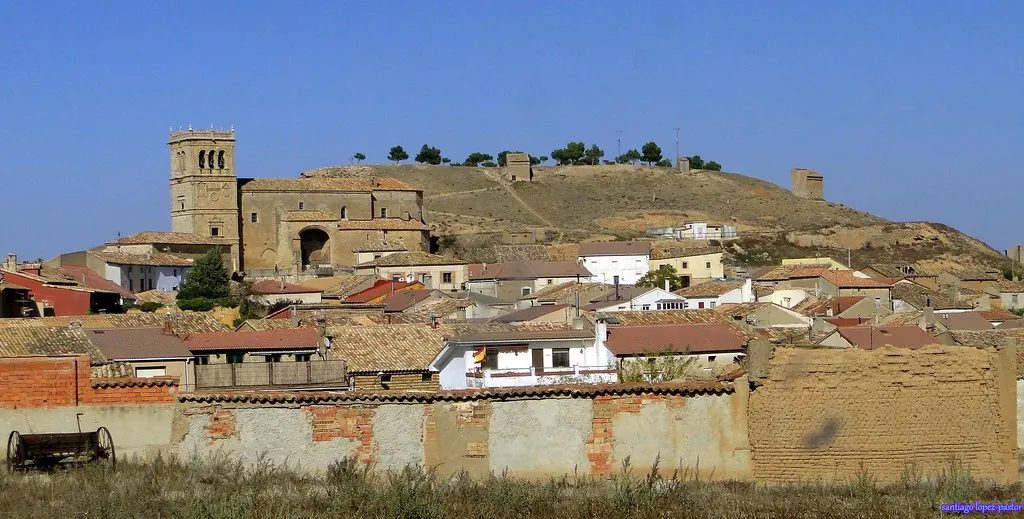
The wind hits first. At 1,118 metres above sea level, it arrives across the cereal plains of Almazán with nothing to break it, rattling the shutters of stone houses that have faced the same blast since the 1500s. Baraona, a single-cluster village in the province of Soria, doesn’t so much announce itself as allow you to stumble upon it—usually after a 25-minute detour from the A-15, half an hour’s drive south of the regional capital.
A horizon measured in wheat
From the last crest of the CM-4118 the view unfurls like a beige ocean. Wheat and barley alternate with fallow squares of dusty limestone, the colours shifting from silver-green in April to toasted biscuit by July. The only vertical punctuation is the squat tower of the Iglesia de San Pedro, locked except for Sunday mass at 11 a.m., when the bell toll carries farther than the priest’s voice. Ask in the bar for the key and someone’s cousin usually materialises within ten minutes; tip him with a coffee and he’ll point out the 14th-century corbels carved into the apse, recycled from an earlier mosque when the frontier between Christian and Muslim Spain lay only a day’s ride south.
The village layout obeys climate, not planners. Streets are arm-thin alleys that kink every twenty metres, designed to baffle the wind; houses turn their backs to the west and present only stone and adobe to the afternoon sun. Rooflines sit low, eaves almost touching across the lane, so winter snow slides off before it can accumulate. Peer above doorways and you’ll still find the iron rings once used to hitch mules after the harvest—now repurposed as plant-pot brackets by retirees who have swapped the Madrid suburbs for a slower pulse.
Walking without waymarks
Baraona does not trade in postcard monuments; it trades in space. A lattice of unmarked farm tracks radiates for kilometres, graded by tractors rather than tourism boards. Head east on the lane past the abandoned threshing floor and you reach the Arroyo de Valdelavilla, a seasonal stream that in May fills enough to reflect the sky like polished pewter. Continue another forty minutes and you hit the hamlet of Fuentebarría—population eight—where the bar opens only when the owner feels like it. Carry water; there is no shop.
Cyclists find the same grid of caminos, hard-packed and roller-coaster gentle. A circular loop south through Villaseca de Arciel, then back via the pine ridge of Monte de San Ginés, clocks in at 34 km with 420 m of ascent—middling effort, big-sky reward. Expect to share the road with more hoopoes (the salmon-pink birds that stab the verges for beetles) than cars.
What you’ll eat and when you’ll eat it
Inside the village, food service is limited to Bar Centro, open 07:00–15:00 and 19:00–22:00, closed Monday. Coffee is €1.20, a caña of lager €1.50, and the handwritten menú del día €12 for three courses including wine. Expect migas—fried breadcrumbs laced with garlic and grapes—followed by cordero asado, lamb slow-cooked in a wood-fired oven until the knuckle bones protrude like ivory pegs. Vegetarians get tortilla, salad and sympathetic shrugs.
For anything more ambitious, drive 12 km to Ólvega, where Asador Casa José holds a Michelin Bib for roast suckling pig and will sell you half a portion if you ask politely (€18). Mushroom season changes the menu: September rains bring boletus and níscalos, and every household guards its secret spots. Restaurants buy from foragers who appear after dusk; if you fancy joining them, you’ll need a permit from the regional office in Soria city (€10 online) and the humility to accept that locals know more than your River Cottage guidebook.
Seasons that rearrange the timetable
Winter arrives early. The first frost often lands in mid-October, and by December the CM-4118 is gritted only after 10 cm of snow has fallen—so check the Soria traffic Twitter feed before setting out. Daytime temperatures can stay below freezing for a week, but the air is so dry that roads clear under weak sun by noon. The reward is silence: no agricultural machinery, no tourists, just the crunch of boots on frozen topsoil and the occasional clatter of a griffon vulture overhead.
Spring is the briefest season. By late March the wheat is already ankle-high, and almond trees explode into blossom for exactly seven days. Come in late April and you’ll see villagers walking the fields with plastic bottles lashed to sticks—giant lollypop devices used to smear pesticide on the creeping asphodel that can choke a cereal crop. Photographers arrive for the poppy blooms that scar the verges red, then leave before the north wind returns.
Summer is reliable, almost boringly so: 30 °C by noon, 15 °C after midnight, no rain for eight weeks. Families from Madrid fill second homes during school holidays, doubling the population and filling the single playground with bilingual chatter. August brings the fiestas patronales: Saturday night outdoor dance, Sunday morning procession, Monday lunchtime paella cooked in a pan wide enough to require a canoe paddle for stirring. Accommodation books up six weeks ahead—plan accordingly.
Beds, bills and bad phone signal
There is no hotel in Baraona. The municipality offers two rural casas that sleep four each: Casa del Cura (€90 per night, minimum two nights) and Casa de la Plaza (€80). Both have wood-burning stoves, patchy 4G and televisions that pick up three Spanish channels—bring a book. Keys are collected from the ayuntamiento in Ólvega; office shuts at 14:00 sharp.
Cash still rules. Bar Centro accepts cards only above €20, and the nearest ATM is in Ólvega, so fill your wallet before arrival. Petrol is similarly distant: the village pump closed in 2008, so check the gauge on the way up the hill.
A parting note
Baraona will not change your life. It offers no souvenir stalls, no audio guides, no sunrise yoga on the battlements. What it does offer is a calibrated sense of scale: how big the sky can feel, how slowly an afternoon can pass, how much noise one lark can make above an otherwise silent plain. If that sounds like enough, come. If not, the motorway back to the city is only 25 minutes away—though the wind will still find you on the ridge.