Full Article
about Barca
Duero riverside municipality with a museum devoted to traditional pottery
Ocultar artículo Leer artículo completo
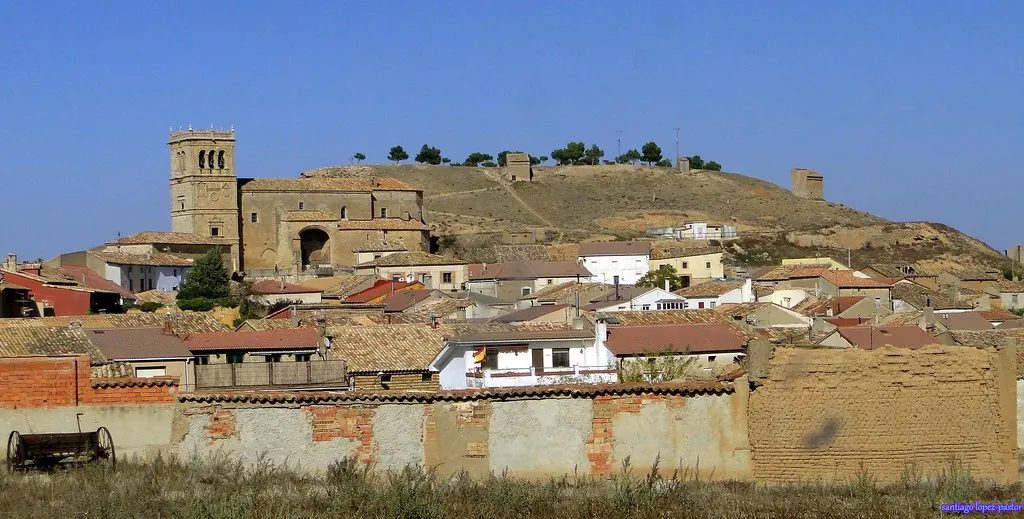
The cereal fields start just beyond the last house. No fence, no sign—just wheat meeting stone as abruptly as the sea meets a harbour wall. At 965 metres above sea level, Barca sits on the southern lip of Spain’s meseta, the high plateau that most travellers cross at 120 km/h on the way to somewhere else. Pull off the N-111, however, and the village materialises like a mirage: one street, one church tower, and a horizon so wide it feels mildly intrusive.
Stone, adobe, and the colour of dry earth dominate the architecture. Walls are thick enough to swallow sound; doorways are scaled for ox-carts, not SUVs. The houses turn their backs to the prevailing wind, so the main street feels oddly hushed even when the flags on the balconies are snapping. Chimneys are topped with curved tiles—little black ships giving the place its name, locals insist, though no river has run here since the Middle Ages.
A village that measures time by grain, not clocks
Barca’s calendar is still agricultural. In late June the wheat bleaches to the colour of pale straw; by mid-July combine harvesters crawl across the plain like bright beetles, leaving perfect rectangles of stubble that smell faintly of biscuits. August brings the fiestas patronales, when the population triples. Emigrants who left for Zaragoza, Madrid or Norwich return with British-registered cars and toddlers who speak more English than Spanish. A marquee goes up beside the church, the village brass band plays pasodobles slightly flat, and at 3 a.m. someone’s uncle fries migas—breadcrumbs studded with pancetta and grapes—in a pan the size of a satellite dish. By the second week of August it is over: the marquee is folded, the cousins drive north, and Barca drops back to its winter cadence of about a hundred souls.
There is no bar, no shop, no ATM. The nearest loaf of bread is ten kilometres away in Almazán, a market town that also provides a small Saturday farmers’ market and a 24-hour medical centre. Mobile reception in Barca is patchy; 4G arrives on the ridge above the cemetery and disappears again near the football field (gravel pitch, no changing rooms). Visitors who need caffeine should bring a thermos or knock on the door of the house with the blue shutter—María Carmen usually has a kettle on and charges 80 céntimos for a coffee, biscuits optional.
Walking without way-markers
What Barca does offer is space. A lattice of farm tracks radiates into the steppe, wide enough for a tractor tyre and edged with poppies in May. One hour’s gentle walking south brings you to the ruins of a Roman watchtower; another 45 minutes reaches a stone shepherd’s hut whose roof collapsed during the 1958 blizzards. The ground is never steep, but the altitude makes 10 km feel like 12. Carry more water than you think necessary—there is no tree cover between February and November, and summer temperatures touch 36 °C by 11 a.m. In winter the same paths can be glazed with ice; if snow arrives the village is cut off for a day or two until a council plough cuts a single lane on the SO-820.
Cyclists on gravel bikes enjoy the caminos vecinal; the surface is hard-packed clay until it isn’t, at which point you’ll be pushing through sand and congratulating yourself on packing 35 mm tyres. Road cyclists usually link Barca with the quieter C-122 towards Medinaceli, a 62 km loop that gains 700 m and delivers views across three provinces. Carry a spare tube—thorns from the retama shrub are needle-sharp and love a Schwalbe Marathon.
Birds, not selfies
Wildlife rewards patience. At dawn in April the male great bustard throws his neck backwards until it touches his tail, then snaps upright with a sound like a wet towel flicked against a wall. You will need binoculars: the birds feed 400 metres from the track and take off like freight aircraft if you step off the path. Calandra larks hover overhead singing a frantic, metallic rattle; on windy afternoons harriers quarter the fields, wings in a permanent V-shape. None of this is advertised—there is no hides, no entrance fee, no glossy leaflet. The birds are simply there, going about their business while you stand in a wheat field feeling mildly euphoric.
Eating, eventually
Barca itself has no catering, but Almazán (ten minutes by car) delivers solid Castilian calories. Order the ternasco—milk-fed lamb roasted in a wood-fired oven until the skin shatters like caramelised sugar. A quarter kilo portion costs around €16 and arrives with only a lemon wedge and a dish of rock salt; chips are considered an affectation. Local wine is clarete, a pale, spicy blend that tastes halfway between a rosé and a light red. If the waiter asks “¿Con limón?” say yes: a sliver of lemon peel flattens the alcohol and makes a second bottle almost sensible. Vegetarians should head for the pimientos rellenos—red peppers stuffed with mushroom rice and baked under a blanket of manchego. Pudding is usually cuajada, sheep’s-milk curd with a drizzle of honey; it sets your teeth on edge in the best possible way.
When to come, when to stay away
May and early June are the kindest months: temperatures hover around 22 °C, the wheat is green-shot with crimson poppies, and village elders still sit outside at 7 p.m. to debate rainfall statistics. September offers the same weather minus the flowers, plus the grape harvest in nearby Valdeprado. July and August are furnace-hot; walking is restricted to the two hours after sunrise and the ninety minutes before sunset. Mid-winter can be spectacular—snow on the plain, stone walls pink in the low sun—but accommodation within 30 km is limited to three rural casas rurales that close if the owner suspects a cold snap. Check the forecast before you book; if the phrase “alerta naranja” appears anywhere, stay home.
The practical bits, woven in
Driving from Madrid takes 2 h 15 m on the A-2, then the N-111 north past Almazán. Petrol stations are scarce south of the A-2—fill up in Medinaceli or arrive with half a tank. Buses run twice daily from Soria to Almazán (€3.20, 35 min) but not the final 10 km to Barca; you will need to pre-book a taxi (Radio Taxi Almazán, +34 975 32 12 12, roughly €22). There is no accommodation in the village itself; the closest options are in Almazán (Hotel Villa de Almazán, doubles from €55, decent Wi-Fi, no restaurant Sunday nights) or the converted farmhouse of La Dehesa de Barca three kilometres west (two apartments, €90 for four people, minimum two nights, bring groceries).
Bring cash—many nearby towns still view chip-and-PIN with suspicion—and download an offline map before you arrive. Google’s cartography is accurate; what it cannot show is the way the landscape erases sound, so that a lorry on the distant N-111 feels like it is driving through your own skull. That silence is Barca’s main offering. It costs nothing, demands everything, and leaves most visitors wondering why they ever hurried through Spain in the first place.