Full Article
about Cubo de la Solana
Municipality with several hamlets and stone manor houses near the Duero.
Hide article Read full article
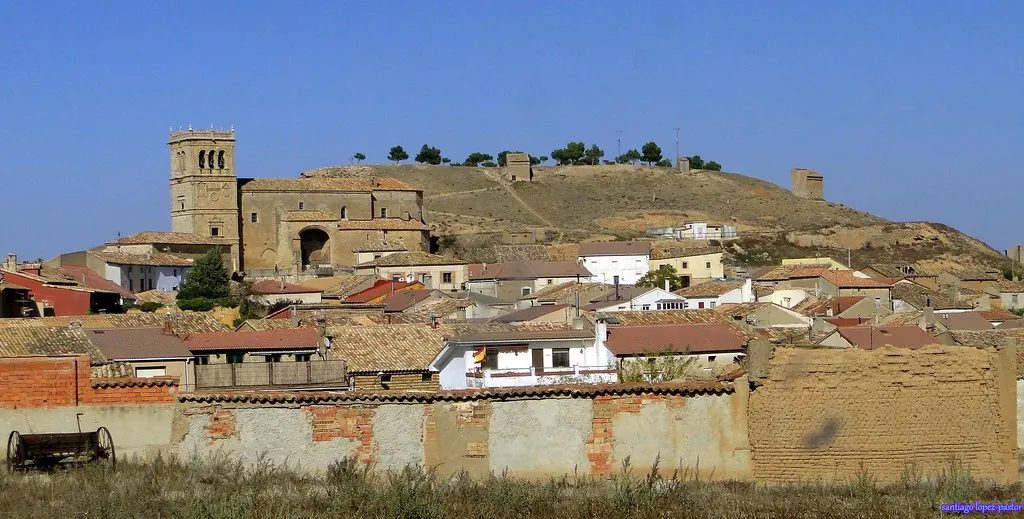
Cubo de la Solana sits on the Soria plateau, within the Almazán district. The land here is open, a succession of gentle rises and shallow valleys given over almost entirely to cereal fields. Around 170 people live at just over 1,000 metres of altitude. That height is felt in the wind that sweeps across the plains and in winters that are long and sharp. Life in the village still moves to the rhythm of the agricultural calendar.
The name likely refers to the sunny orientation of the settlement. In this part of the province, that was a practical consideration. Maximising sunlight mattered for houses built to withstand the cold. The village layout shows this logic: short streets with houses of stone, adobe, and some timber framing, all materials suited to the continental climate.
The parish church of San Pedro anchors the village. Its tower is the first thing you see when approaching along the farm tracks. The building itself is not grand, but its position at the centre is. The interior is typically closed outside of mass, which is standard for villages with a small, year-round population.
A landscape shaped by grain
The setting is unequivocally agricultural. Fields press against the village on all sides, their colour shifting decisively with the seasons—vivid green in spring, a dry gold by late summer. There are no forests to speak of, only isolated holm oaks and patches of juniper on the higher plains. The sense of space is what defines it.
Birds of prey use the thermals over the open ground. It’s common to see red kites circling or kestrels hovering above the stubble. On days when the air is clear, the eastern horizon is lined with the distant, blue-grey shapes of the Iberian System sierras. They are a reminder that this flat expanse eventually gives way to the mountains of eastern Soria.
Walking the farm tracks
A network of unpaved farm tracks leads out from the village. They are not waymarked hiking routes; they follow the old lines of access to the fields. Walking them is the best way to understand the structure of this land—the size of the plots, the subtle variations in soil, and how closely the houses relate to the worked earth.
Good orientation is useful. The terrain is simple but vast, and distances can be deceptive with so few landmarks beyond the church tower. Move quietly and you’ll see more wildlife. Always walk around the edges of cultivated land, not through it.
The point here isn’t to reach a specific viewpoint or feature. It’s to read the landscape itself. The geometric grid of agriculture seems uniform from a distance, but a slower pace reveals its details and its dependence on the village.
Practicalities for a visit
Cubo de la Solana is a small village with limited services. Do not expect shops or bars to be open outside of conventional hours; this is typical for Soria’s smaller settlements. You can walk every street in under an hour.
A visit here works best combined with other points in the Almazán district, or as the start or end point for a longer walk across the plateau. The interest isn’t in a list of monuments. It’s in seeing the agricultural system that has sustained these communities for generations—the open fields, the seasonal cycles, and the wind that never quite stops.
This is rural Soria without decoration. Its character comes from the breadth of the sky, the seasonal turn of the crops, and the quiet persistence of farming life. If you expect spectacle, you may find it too quiet. If you take time to watch the light move across the fields or follow a track to its end, you’ll leave with a clearer sense of how this high plateau works.