Full Article
about Maján
Nearly abandoned village on the high plateau
Hide article Read full article
Where the village meets the horizon
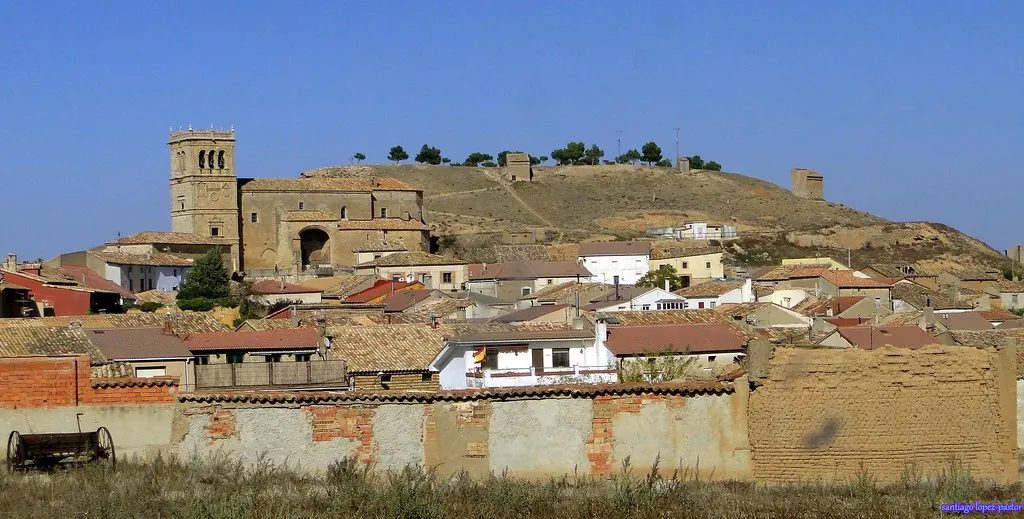
Late in the afternoon, when the sun begins to drop over the plain and the air carries the dry scent of earth and stubble, Maján comes into view. First the low lines of its houses appear, then the tower of the church, outlined against the open sky of the Sorian plateau. Silence here is not simply the absence of noise. It is the sound of wind moving across fields.
Maján, in the comarca of Almazán in the province of Soria, is now home to barely a dozen residents. A small cluster of stone and adobe houses, a few animal pens, and beyond them kilometres of cereal crops. The scale of the landscape defines everything.
Walking through the village brings a strong sense of space. The streets are short, yet they quickly give way to open land: gentle undulations of cultivated ground and a wide sky that turns completely dark at night. In many corners there are still traces of past agricultural work. Hand-built stone walls, wooden doors worn by the sun, and small underground cellars once used to store wine or grain remain part of the scene.
The church and the houses facing the fields
At the centre stands the parish church of San Pedro. Its tower is plain and undecorated, the kind built more for orientation than display. It is often closed, which is common in villages of this size, yet it continues to set the visual rhythm of Maján. From almost anywhere, the tower is visible.
The houses cluster around it along very short streets. Some are still inhabited, while others show the slow wear left by depopulation: collapsed roofs, gates that no longer open, courtyards where tall grass grows through the summer. Between them are stone corrals and former agricultural buildings that reflect how life here once revolved entirely around the land.
Approaching on foot along any of the tracks that circle the village, Maján’s relationship with its surroundings becomes clear. It is a compact group of rooftops enclosed by cereal fields that shift in colour with the seasons. Bright green in spring, golden in July, and ochre tones when the land is left fallow.
Tracks through open farmland
Several agricultural tracks extend from Maján, linking it with other villages in the area. These are not marked walking routes or designed for visitors. They are working paths used by farmers. Even so, they can be explored on foot or by bicycle if approached with care and with the help of a map or GPS. The landscape is very uniform, and it is easy to lose sight of the village.
Early morning and late afternoon are usually the calmest times to walk here. At those hours the wind often eases, and birds of prey can often be seen gliding over the open fields. In summer, the middle of the day is best avoided. There is almost no shade, and the heat falls directly across the plain.
After dark, when the sky is clear, the darkness is nearly complete. There is no lighting beyond a few street lamps within the village, so the stars become visible as soon as you step a short distance away from the houses.
A place without services
Maján has no shops, bars or accommodation. This is important to bear in mind before visiting. Anyone planning to spend several hours walking in the surrounding countryside will usually need to bring water and food from larger villages in the comarca.
This lack of services also explains the pace of life. For much of the year, the streets remain almost empty, and activity is limited to those who continue to work the land nearby.
When the village fills again
In summer, especially in August, Maján changes slightly. Some houses reopen and families return, maintaining their connection to the village even if they live elsewhere. Religious celebrations linked to the local calendar usually take place during this period, including a mass and a small procession through the streets. These are simple gatherings, intended more for neighbours and relatives than for attracting visitors.
Getting there and what to expect
Maján lies within the province of Soria, in the comarca of Almazán. The usual way to reach it is by car, first passing through Almazán and then continuing along local roads. There is no regular public transport to the village.
It helps to arrive with a clear idea of what Maján is: a very small settlement, without tourist infrastructure, surrounded by open countryside. For that reason, it works best as a short stop during a wider route through the area, or as a place to pause for a while, walk the nearby tracks, and experience the particular kind of silence that defines this part of the plateau.