Full Article
about Matamala de Almazán
Municipality surrounded by vast resin-producing pine forests and mushrooms.
Hide article Read full article
Morning stillness on the plateau
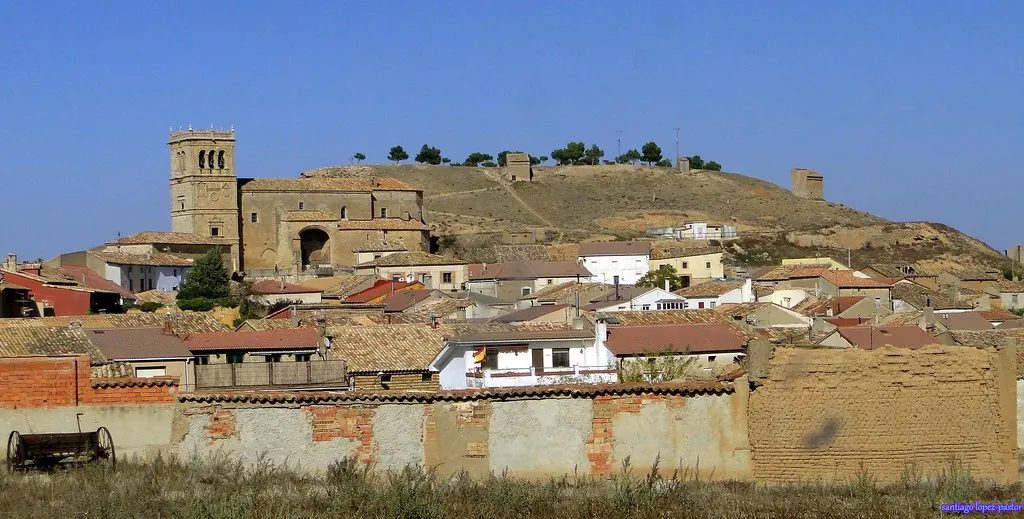
Early in the morning, when cold air still drifts down from the high plains, Matamala de Almazán is almost completely silent. A car might pass along the local road and quickly fade from view. From the junction, a short turn leads into the village: adobe and stone houses, façades slightly worn by long winters, and above the rooftops the pale bell tower of the church marking the centre.
Life here keeps a rural pace. There are no shop windows or steady traffic. What carries across the streets are the sounds of cockerels, the clang of a metal gate in a yard, and the wind moving through the branches of the holm oaks that surround the settlement.
It is a place that does not try to draw attention to itself. The layout, the materials, even the quiet all point to a way of living shaped by the land and the seasons rather than by visitors.
The church at the centre
The Iglesia de la Inmaculada stands in the most visible part of the village. The current building is usually dated to around the 16th century, though its appearance reflects the gradual repairs typical of many churches in the province of Soria. The stonework is uneven, the joints are open in places, and the bell tower is simple but visible from almost any street.
The door is usually closed, which is common in villages of this size. When it does open, generally during celebrations or when people return in summer, the interior reveals itself as restrained. There are modest altarpieces and the familiar scent of old wood and wax that lingers in many rural churches.
The building acts as a reference point more than a monument. Streets seem to orient themselves around it, and its tower remains the one constant visible above the low roofs.
Short streets and underground cellars
Matamala can be walked in a matter of minutes, though it rewards a slower pace. The streets follow an irregular layout, shaped by the terrain rather than any strict plan. Some houses still have thick rendered adobe walls and small windows, designed to withstand the harsh winters typical of Soria.
On the edges of the village, entrances appear that lead to old underground cellars. From the outside they are barely noticeable: small doors, low mounds covered in grass. For decades these spaces formed part of the village’s domestic economy, linked to cereal farming, to wine made for personal consumption, and to livestock.
In several yards, structures used to store machinery or shelter animals are still standing. They are modest details, easy to overlook, but they offer a clear sense of how daily life was organised here until relatively recently.
Walking through these streets is less about seeing landmarks and more about noticing traces. The materials, the scale of the buildings, and the way everything sits close to the ground all reflect practical decisions shaped by climate and work.
Paths through cereal fields and holm oaks
Beyond the village, agricultural tracks begin almost immediately. These are wide, pale dirt paths that cut through fields of wheat and barley. In summer, colour dominates: intense yellows that ripple in the wind, producing a dry, constant rustling sound.
The terrain is largely flat, which makes walking straightforward. In spring it is not unusual to see lapwings or kites flying above the crops, and towards evening the light drops low across the plain, stretching shadows and softening the landscape.
Shade is scarce, and in the height of summer the heat can be strong in this part of Soria. For that reason, early morning and late afternoon are the most comfortable times to be out. At those hours, the same fields take on a different character, quieter and less exposed.
The presence of holm oaks around the village adds contrast to the open fields. Their darker tones break up the lighter colours of the cereal land and provide a sense of enclosure at the edges of the settlement.
A small village with few services
Matamala de Almazán has a very small population, and that is reflected in everyday practicalities. There are hardly any permanent services. For shopping or a busier atmosphere, it is normal to head to larger towns in the surrounding area.
In summer, the mood shifts slightly. Families who have homes here return, bringing more activity. Yards are opened, chairs appear outside in the evening, and conversations carry through the streets again.
The village’s patronal festivities usually take place towards the end of summer, when more people are back. These days centre on neighbours coming together, with music and shared meals forming part of the gatherings.
Even then, the scale remains small. Nothing feels overrun or staged. The changes are noticeable mainly because of how quiet the rest of the year can be.
When to come
Each season shows a different side of Matamala. In July and August, the landscape is defined by ripe cereal crops. Autumn brings ochre tones, and in wetter years some people head into nearby woodland to look for mushrooms, an activity taken seriously here and one that requires good knowledge of the terrain.
Winter can be harsh. Wind sweeps across the plain, and many houses remain closed for weeks at a time.
For those wanting to see the village with a bit more life, the most rewarding period tends to be between late spring and early autumn. Doors are open more often, and the surrounding countryside is fully active with agricultural work.
Matamala de Almazán does not present itself as a destination filled with sights or structured experiences. Its appeal lies in its stillness, its working landscape, and the sense of continuity in how the village functions. Spending time here means adjusting to that rhythm, even briefly, and noticing what emerges when very little is competing for attention.