Full Article
about Morón de Almazán
Known for its Renaissance Plaza Mayor, one of the most beautiful in the province.
Hide article Read full article
A Village on the High Plain
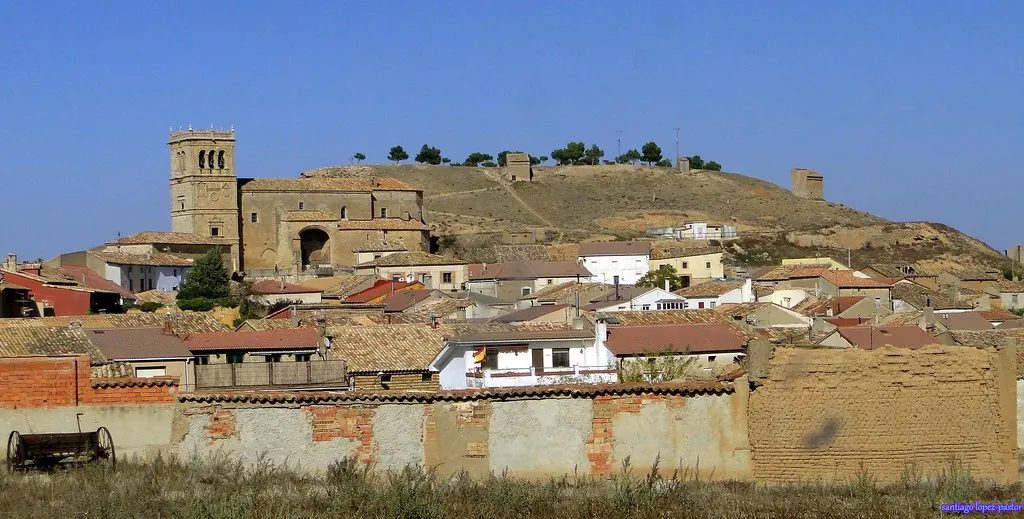
Early in the morning, as the light begins to rise from the paramera, the high, open plateau typical of this part of inland Spain, Morón de Almazán sounds like open countryside. A car passes slowly. Wind moves through the surrounding pines. If you stand still for a moment, you might catch the beat of wings as a bird of prey crosses the fields.
The village sits at over 1,000 metres above sea level, and you feel that height straight away. The air is dry and clear. Even in summer, mornings tend to start with a jacket. There are fewer than two hundred residents, and daily life keeps the steady rhythm of a place that still looks towards the land for its bearings.
Houses cluster along short streets, their thick stone walls built to withstand long winters and sharp winds. Wooden gates, darkened by time, open onto courtyards and storage spaces. There are no grand architectural statements here, but plenty of small details that show how generations have lived and worked in this corner of the province of Soria.
San Andrés and the Social Centre
The parish church of San Andrés rises in simple masonry, solid and somewhat austere, in keeping with many churches across this part of Soria. Its presence anchors the village. Inside, the space is plain and cool, with that particular freshness found in stone churches even at the height of August.
Around the church stand several of the oldest houses. Some retain wrought iron balconies and wooden eaves that cast shade onto the street during the middle hours of the day. As evening falls, this area becomes a natural meeting point. Neighbours step out to take the air, exchange a few words, and linger as the light softens.
Morón de Almazán does not revolve around busy squares or a packed calendar of events. Instead, its centre of gravity is quieter, shaped by habit and proximity. The church and its surrounding streets form the heart of that everyday life.
Streets, Barns and Rural Structures
A short walk through Morón makes its agricultural character clear. On the edges of the built-up area stand pajares, traditional barns for storing hay and grain, along with corrals and the occasional circular dovecote, a type especially associated with this province. Many no longer serve their original purpose, yet they remain part of the village landscape, reminders of a time when livestock and crops structured the year.
The streets are narrow and gently sloping. If the aim is simply to wander, it makes sense to leave the car at the entrance. The village can be covered on foot in a short time, and this avoids awkward manoeuvres between façades that stand very close together.
There is no need for a fixed route. The scale is small enough to encourage unhurried exploration. A turn down one lane might reveal an old doorway with a heavy lintel; another might open onto a view of fields stretching beyond the last houses. The transition from village to countryside happens quickly.
The Paramera Landscape
Beyond Morón de Almazán, the landscape opens out almost at once. Broad fields, long horizons and a silence characteristic of much of inland Soria define the surroundings. In spring, green spreads between plots of cereal. By late summer, the palette shifts towards golds and ochres as the crops mature and are harvested.
Several agricultural tracks leave the village in different directions. They are not marked walking routes, but can be followed on foot or by bicycle with a map or GPS. The surfaces are straightforward, though the wind can blow strongly across the plateau. What appears to be a short outing may demand more effort when gusts pick up.
Those who set out early may notice large birds moving across the fields. In this area, species linked to open spaces still survive, although observing them requires patience and a respectful distance. The sense of scale, with sky occupying as much of the view as land, is part of what defines the paramera.
This is a landscape that changes subtly rather than dramatically. Light plays a significant role. Morning brings sharp contrasts and long shadows; late afternoon softens the lines of fields and tracks. The experience is less about specific landmarks and more about space and atmosphere.
Close to Almazán
A short distance away lies Almazán, which acts as the local hub for the area. There, the scene shifts. Walls, busier streets and clear traces of a medieval past give it a different feel from Morón’s small scale. Many residents of Morón de Almazán head to Almazán for day-to-day errands and services.
For anyone travelling through this part of Soria, combining the two places makes sense. Morón reflects the modest scale of villages on the paramera. Almazán gathers together more services and a broader historic centre. The contrast helps to place Morón in context, showing how these small settlements relate to a larger town nearby.
Dark Nights and Clear Skies
When night falls, the lack of lighting in the surrounding area becomes evident. Drive a few minutes along any of the secondary roads and the sky opens up. On clear nights, the Milky Way can be seen with striking clarity, a sight that has become increasingly rare in more densely populated areas.
Winter temperatures drop easily below freezing, and the wind can be harsh. Anyone planning a walk in the surrounding countryside at that time of year should check the forecast beforehand. In contrast, spring evenings and early autumn afternoons are often the most rewarding moments to explore at a relaxed pace. The air is milder, the light gentler, and the plateau shows its colours without the extremes of summer heat or winter cold.
Morón de Almazán does not offer headline attractions or constant activity. What it provides is something quieter: a small village, open fields and a way of life closely tied to the land. For some travellers, that is precisely the appeal when turning off the main road and heading into the high plains of Castilla Leon.


