Full Article
about Nolay
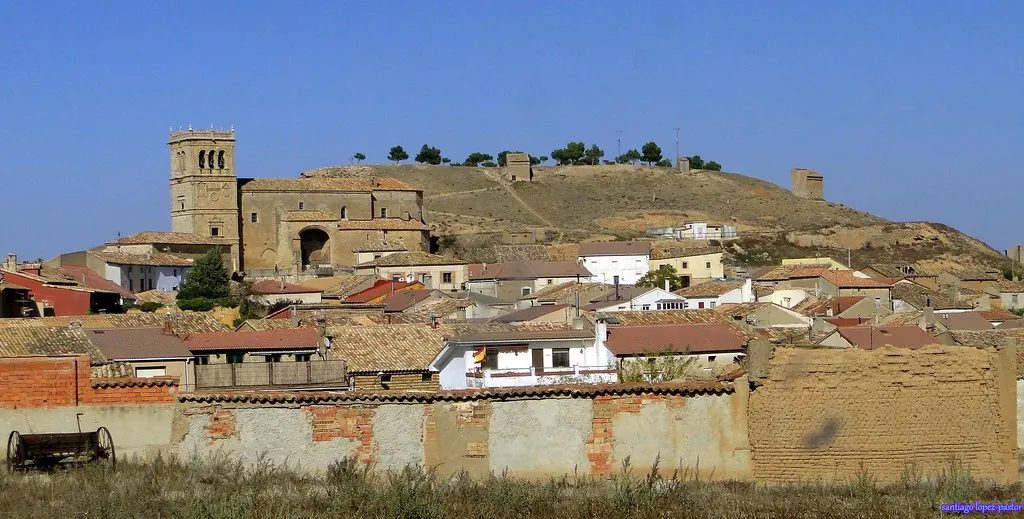
Agricultural village with a remodeled Romanesque church
Hide article Read full article
Some villages are reached almost by accident. You are driving along the secondary roads of Soria, glance at the map and think, let’s see what’s around here. Tourism in Nolay works much like that. It is not a place you arrive at thanks to large roadside signs, but one that appears when you drift away from the main route.
Nolay lies in the province of Soria, within the comarca of Almazán, in Castilla y León. Today it has around 45 inhabitants. The village sits at more than 1,000 metres above sea level and has the restrained character common to many settlements in Soria: stone and adobe houses, short streets, and plenty of quiet. It is not the silence of a museum, but the kind that remains when very few cars pass through and daily life moves at its own pace.
The Road In and First Impressions
The drive to Nolay crosses open cereal fields. At first glance the landscape can seem austere, almost too simple. Once you step out of the car and take a slower look, it begins to show more nuance.
Most visitors arrive via local roads from Almazán or from the area around San Esteban de Gormaz. The final kilometres set the tone: long straight stretches, the occasional slight rise where the plain opens out before you, and then, suddenly, the cluster of houses.
After parking and stepping out, one detail stands out. There is no background noise. No steady traffic, no café terraces, no constant movement. Only the wind if it is blowing, and perhaps a dog barking somewhere in the distance.
San Clemente and the Village Streets
The centre of Nolay is small and can be covered in a short walk. The most recognisable landmark is the parish church of San Clemente, usually dated to around the 16th century. It is not a monumental building, nor does it try to be. The façade is sober, the wooden door visibly worn, and the bell tower rises just above the rooftops.
Around it stand the village’s traditional houses. Thick walls, large gates and simple balconies define their appearance. Some properties are carefully maintained, while others show the gradual wear typical of places with a small permanent population.
There are no new housing developments and no streets redesigned to look good in photographs. What you see is what has remained over time. That continuity is part of the appeal.
A stroll through the lanes does not take long, yet it offers a clear sense of how this part of rural Soria has evolved. The scale is modest. Everything feels close at hand.
Walking Beyond the Houses
As soon as you leave the built-up area, agricultural tracks begin. There are no tourist signposts or marked routes with posts in the ground. These are the paths traditionally used to reach the surrounding fields.
Anyone who enjoys uncomplicated walks will find several tracks running between cereal fields and small areas of scrubland. Dry-stone walls appear here and there, marking out plots of land. They were built from the stones uncovered while working the fields, practical solutions that now form part of the landscape.
The terrain is open, so the horizon stretches far into the distance. In the evening the light shifts quickly and the scene becomes more layered than it first appeared. Colours soften, shadows lengthen and the wide plain gains depth.
This area forms part of what is known as steppe-like cereal countryside. Certain bird species typical of these environments can sometimes be seen, such as harriers, or even a great bustard if luck is on your side. Sightings depend very much on the time of year and on how undisturbed the fields are that day.
There are no facilities or visitor centres waiting at the end of the track. The experience is simply about walking, looking and letting the scale of the landscape sink in.
Food and Practicalities
It is important to be clear about one thing: Nolay does not have bars or shops. The village is very small and everyday life works differently here.
Anyone planning to stop for a meal or a drink should do so in nearby towns such as Almazán or San Esteban de Gormaz. Both have more activity and a solid tradition of local cooking. In this part of Soria, lamb remains a staple, alongside hearty dishes suited to the climate and the agricultural setting.
Nolay itself offers no tourist services. A visit is usually brief and self-directed. The village suits those who are comfortable with simplicity and do not expect organised activities.
Summer Festivities and a Change of Pace
For much of the year Nolay is extremely quiet. In summer, however, the atmosphere shifts slightly. August usually brings the fiestas in honour of San Clemente, when many former residents return for a few days.
These celebrations are modest in scale. There is typically a mass, a simple procession and shared meals among neighbours and relatives. The focus is on reunion rather than spectacle. It is less a festival designed to attract visitors and more an opportunity for the community to come back together.
During those days the streets regain some of the movement that defines village life in earlier decades. Conversations stretch out in the open air and houses that remain closed for much of the year are opened again.
Is It Worth the Detour?
The answer depends entirely on what you are looking for.
Anyone expecting major monuments, museums or a programme of activities will find that Nolay runs out of options quickly. The church of San Clemente and a short walk through the streets can be seen in a limited amount of time.
For travellers interested in villages that have kept their original layout with few alterations, Nolay holds a certain appeal. Its scale, its altitude above 1,000 metres, and its setting among open cereal fields help explain the character of this corner of Soria.
A visit here resembles a call to a relative’s house in a small village. You take a brief walk, sit for a while looking at the landscape, and gain a clearer sense of how this part of the province feels. Nothing more elaborate is required.