Full Article
about Soliedra
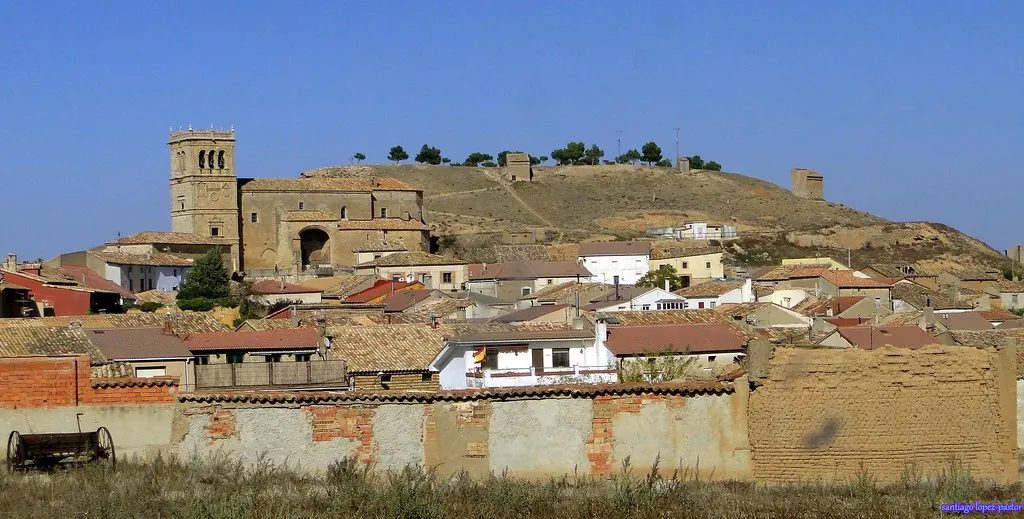
Small village with a curious church that has lantern remains
Hide article Read full article
A small village on the Sorian plateau
Soliedra is one of those very small villages that still hold on in the Almazán area, in the south of the province of Soria. It sits on a gentle rise overlooking wide cereal fields typical of Spain’s central plateau, at close to a thousand metres above sea level. In this part of Castilla y León, distances between settlements begin to stretch out, and Soliedra fits that pattern: isolated, quiet and sparsely populated.
The current population amounts to just a few dozen residents, a figure that reflects a broader reality across many small villages in this province. Depopulation here is not an abstract idea. It shows itself in shuttered houses, empty outbuildings and a silence that dominates most of the day. Even so, the layout of the village still follows the traditional pattern of cereal-farming communities in the area: short streets, buildings made of stone and adobe, and auxiliary structures linked to agricultural life.
Rather than a conventional tourist destination, Soliedra offers a way to understand how these inland villages of Soria have functioned over centuries. Its interest lies less in attractions and more in the continuity of a rural way of life.
The village and its built heritage
The main building in Soliedra is the parish church dedicated to the Asunción. Like many churches in small towns across Soria, it is a restrained structure built with local materials and altered at different points in its history. Its presence dominates the small square and it remains the place where people gather during local celebrations.
Walking through the streets reveals clear examples of rural architecture from the region. Houses typically have two storeys, thick walls of stone or rammed earth, and adjoining spaces that once served for animals or storage. Some façades still display details from earlier periods, such as carved doorways or stone coats of arms, although it is not always easy to date them precisely.
On the edges of the village, there are traditional wine cellars dug into small earthen slopes. These underground spaces are common across the Almazán area and are linked to a long-standing practice of domestic wine production, which for centuries formed part of the local economy.
The landscape surrounding Soliedra is characteristic of the cereal-growing plateau. Large plots stretch towards open horizons, with very few trees except along field boundaries or in nearby gullies. The overall impression is one of space and exposure, shaped by agriculture and the seasons.
Walking the surrounding countryside
There are no marked hiking routes or visitor infrastructure in Soliedra, but a network of agricultural tracks leads out from the village in several directions. These paths, used by farmers, allow for walks of several kilometres through cereal fields and over small rises that offer broad views across the plain.
The appeal here is less about specific routes and more about atmosphere. In spring and early summer, the fields change colour quickly as crops grow and mature. By winter, the landscape becomes more austere, and the wind often takes centre stage. Wildlife is present in subtle ways: partridges are common, hares occasionally cross the tracks, and birds of prey can be seen gliding above the fields.
Night-time is another notable aspect of the area. With very little artificial lighting and a significant distance from large urban centres, the sky can be seen clearly on cloudless nights. The darkness is part of the experience, reinforcing the sense of being far from busier places.
Traditions and everyday life
The main festivities in Soliedra take place in summer. As in many small villages, these dates coincide with the return of former residents and descendants who now live elsewhere. During those days, the village regains some of its energy. There is a mass, shared meals and gatherings that continue in the square or inside homes.
For the rest of the year, life is calm. Daily routines revolve around maintaining houses, working the surrounding land and travelling to larger towns in the area for services. This rhythm reflects a way of life that has adapted to a much smaller population while still holding onto its traditions.
Getting there and what to keep in mind
Soliedra lies a short distance from Almazán, which acts as the local hub where most services are concentrated. From there, access is via local roads that cross farmland and connect several small villages.
It is important to be aware that there are no shops or services in Soliedra itself. Anyone planning to spend time walking in the area should bring water and something to eat.
The village centre can be explored quickly. What tends to matter more is taking time to notice the details: the old houses, the wine cellars and the direct relationship between the settlement and the agricultural landscape that surrounds it.