Full Article
about Taroda
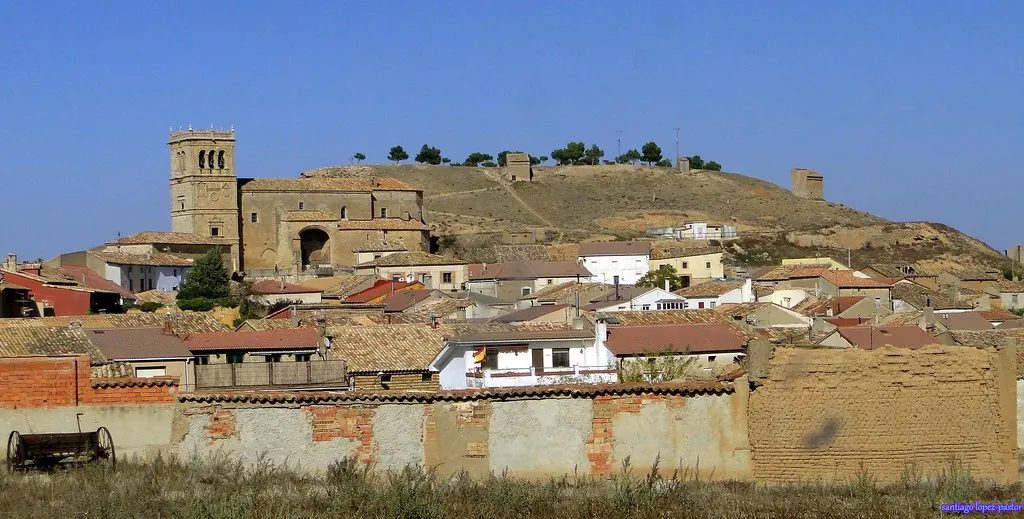
Village set on a hilltop overlooking the region
Hide article Read full article
A Village That Keeps Its Own Time
Taroda is the sort of place where you might glance at your phone to check for signal, just out of curiosity. Not because you urgently need it, but because it feels like the kind of village where the outside world fades into the background. Tourism in Taroda is about exactly that: stopping for a while in a genuinely small village, one that continues at its own pace while everything around it has shifted.
It sits in the comarca of Almazán, in the province of Soria, and has barely around fifty residents. There are no shops, no signs designed with visitors in mind, and very little sense of hurry. Stone and adobe houses line short streets. Farmyards that have seen decades of use still stand. Cereal fields begin almost as soon as you step beyond the last buildings.
Anyone looking for bustle or a packed itinerary would be better off continuing elsewhere. Taroda operates on a different level, where silence carries more weight than any schedule.
A Brief Walk Through Taroda
The parish church dedicated to San Miguel is the most recognisable building in the village. Compared with many churches in Soria, it is not especially old. Its construction is relatively recent by provincial standards. The façade is simple, with a modest bell gable and unadorned walls.
Inside, the same restraint continues. There are no elaborate altarpieces or monumental surprises. Instead, the space is small and calm, lit by narrow windows. On cloudy days, which are common in this part of Soria, the light filters in softly and leaves the interior in gentle half-shadow.
The rest of Taroda can be explored quickly. The streets are short and direct. Houses still display old tools, heavy wooden gates or small inner courtyards. This is not a place of headline monuments. It rewards attention to detail: a façade repaired several times over the years, a wall blending stone and mud, a corral that remains in use.
Beyond the last houses, open fields begin almost immediately. The landscape is unmistakably rural Soria, with cereal crops, long horizons and shifting colours depending on the season. In spring, the fields lean towards green. After harvest, the land turns golden and dusty. From any slight rise nearby, there are gentle undulations to the west and open plains stretching east.
Walking the Fields and Watching the Sky
The most logical thing to do here is to head out along one of the agricultural tracks that leave the village. There is nothing complicated about them. They are dirt paths used by tractors, running straight through cultivated plots.
While walking, it is possible to spot partridges moving between low plants or a bird of prey circling above the fields. It does not happen every time, yet this part of Soria still supports a good amount of wildlife.
For anyone interested in landscape photography, Taroda is a place where the sky sets the tone. At sunrise and towards evening, the light stretches across the fields, making everything feel larger than it is. The horizon seems to expand, and the changing colours become the main event.
Then there is the simplest plan of all: stopping for a while. Mobile coverage reaches many parts of the village only intermittently, so it is common to put the phone away and sit quietly for a few minutes, listening to the wind. It sounds trivial, yet it is surprisingly difficult to find places where this happens naturally.
If you want to eat out or buy supplies, you will need to travel to nearby towns in the comarca. That is where the more classic Sorian cooking appears: migas made from fried breadcrumbs, hearty stews and slow-roasted meats. In autumn, mushroom picking is common in nearby areas with more woodland, and it remains a familiar seasonal activity across the province.
San Miguel and Village Gatherings
In August, Taroda changes slightly. Many residents who live elsewhere return for a few days, and the village celebrates its fiestas dedicated to San Miguel.
These are not large-scale events. There are no grand stages or long programmes packed with activities. The days tend to revolve around a procession, shared meals between families and gatherings of people who make the effort to return at least once a year. It feels more like a reunion than a spectacle.
Throughout the year, smaller religious celebrations continue to mark the local calendar. Over time, participation has gradually declined, but they still form part of village life.
Practical Things to Keep in Mind
Taroda is small and can be seen quickly. A simple stroll around the village centre takes less than an hour and covers almost everything.
For that reason, many visitors combine it with other villages in the area or with a visit to Almazán. Taroda works better as a brief stop than as a full-day destination.
The climate also plays a decisive role. Wind is a frequent presence, and winters in this part of Soria are serious. Expect dry cold, frequent frosts and very short days. Summer brings the opposite pattern: heat during daylight hours and noticeably cooler nights.
These conditions have helped preserve the village’s unaltered feel. Taroda has not been reshaped to impress anyone. It remains what it has long been: a small agricultural settlement in the Soria countryside.
Arrive, walk its few streets, look out over the fields, and it becomes easy to understand how life has unfolded here for generations. Sometimes that quiet understanding is reason enough to stop.