Full Article
about Viana de Duero
Duero-side village with a Romanesque church
Hide article Read full article
A village that eases the pace
Some places seem to work like switching your phone off for a while, everything drops a couple of gears. Viana de Duero feels a bit like that. The approach gives the sense of a road losing its hurry, similar to leaving a city on a Sunday afternoon as the landscape begins to stretch out.
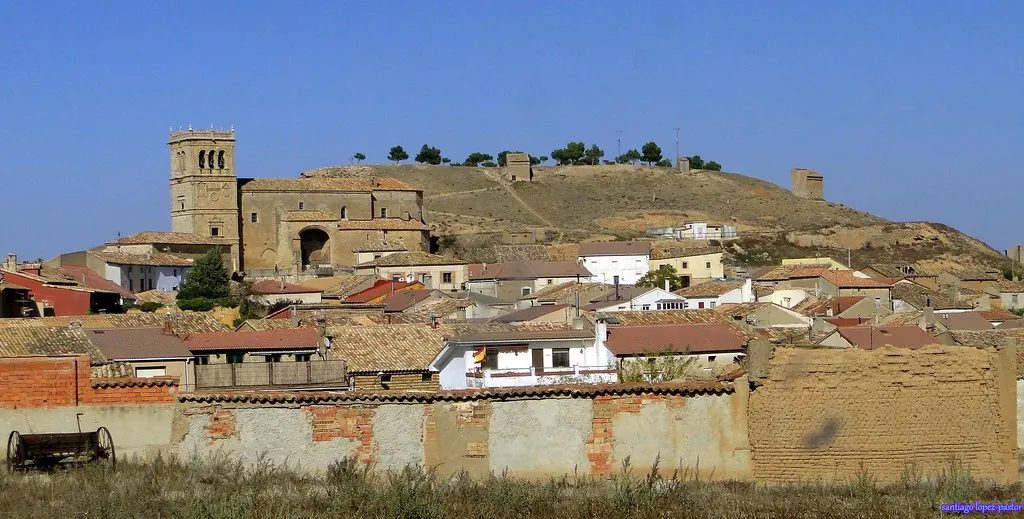
Viana de Duero sits in the province of Soria and has around fifty residents. So few that it operates almost like a shared stairwell in a large building: people recognise each other, know where everyone fits, and who is who. There are no elaborate tourist setups or buildings designed for quick photos. Instead there is a small cluster of stone houses and a rhythm that recalls long summers at a grandparent’s home, when time seemed to move differently.
The village lies near the Duero and in one of the higher parts of the province, at around one thousand metres above sea level. The landscape has that distinctly Sorian character that does not try to please at first glance. It resembles a rustic loaf of bread, firm on the outside, but once you understand it, it becomes clear why people here would not swap it for anywhere else.
Stone, space and quiet details
Walking through Viana feels a little like opening a drawer of old family photographs. Not everything is perfect, yet everything has its place. Stone walls carry the marks of wind and winter. Wooden doors look built to outlast the people who installed them. Red roofs gather into a compact, almost sheltered whole.
At the centre stands the church of San Bartolomé, as is common in many villages across Soria where life tends to revolve around a single square. It is not imposing in size. It works more as a reference point, like a village clock: the place that helps you orient yourself and where neighbours have gathered on Sundays for decades.
Beyond the houses, wide fields open up. In spring, green arrives suddenly, as if someone has turned up the brightness. Autumn shifts everything into ochre and brown tones that suit the dry nature of the area. Near the Duero and along small streams, patches of trees appear, and if you stay still for a while there is often movement among them.
The sky plays its part too. This is one of those big Sorian skies that feel almost like a vast cinema screen. For anyone used to urban life, that amount of open space can feel slightly disorienting at first.
Wandering without a plan
Viana de Duero is not a place that demands a detailed itinerary. It suits a walk taken after lunch, with no clear idea of how far you will go. A slow circuit through the streets, then out along a farm track, and gradually the landscape begins to set the pace.
There is little modern signage and few prepared routes. Many of the paths come from older uses: livestock routes, farmland boundaries, or links between nearby villages. Some are easy to follow, others fade into the fields, so carrying a map or GPS is sensible if you plan to wander further out.
Around the river and open ground, it is common to spot birds typical of inland Spain. Thrushes appear, along with storks, and sometimes a kestrel hovering in place as if held by an invisible thread. The area also suits night photography. On clear evenings, the dark sky reveals itself slowly, like stepping into an unlit room and taking a moment to notice everything above.
For a longer stop or a proper meal, people usually head to larger nearby villages. There it is easier to find traditional Castilian cooking, the kind that feels substantial and often leads to a slow afternoon afterwards. Roast lamb and hearty stews are typical examples.
Summer gatherings and shared tables
Festivities tend to take place in summer, when many residents return after spending much of the year elsewhere. The village shifts in mood, like a house filling up with family in August. There are church services, small processions and shared meals where homemade cured meats and sweets appear alongside long conversations.
There are no large stages or packed programmes. These are gatherings that work because people have known each other for years. The feeling is of a small community where, sooner or later, everyone ends up sitting at the same table.
Viana de Duero does not try to draw attention to itself. It is simply there, continuing at its own pace. Coming from places where everything moves quickly, arriving somewhere like this can feel close to sitting quietly for a while and letting time return to a more natural scale.