Full Article
about Marlín
One of the smallest towns near the capital; peace and clean air
Ocultar artículo Leer artículo completo
The church bell strikes eleven, yet nobody stirs. A tractor idles at the edge of the single-lane high street, its driver chatting across the window frame to a woman shelling broad beans on her doorstep. Both glance up, mildly curious, as a number-plate from Valladolid creeps past, searching for somewhere that simply does not exist: a café, a shop, anywhere to spend money. Welcome to Marlin, province of Ávila, population twenty-nine on the day the census-taker called, and probably not many more whatever day you arrive.
Altitude makes the first impression. At 1,200 m the air thins and sharpens; even in late May the wind carries a sting that sends locals back indoors for a jacket they had optimistically abandoned ten minutes earlier. Granite houses, the colour of weathered pewter, huddle shoulder-to-shoulder as if bracing against the same breeze. Roofs are steep, eaves low, chimneys fat: every detail speaks of winters that can trap the village under snow for a week at a time and summers that never quite lose the memory of frost.
There is no visitor centre, no glossy map in three languages. Instead, a hand-painted board beside the ayuntamiento lists three short walks—“Ruta de las Encinas”, “Ruta de las Vueltas”, “Ruta del Arroyo”—with distances in kilometres but no suggested duration. The implicit message: you’ll know how long you need once you start walking. The paths leave the last cottage behind within five minutes, dissolving into pale earth tracks between dehesa oak. Cows of the rust-coloured Avileña breed watch without bothering to chew; their bells clank a slow, irregular rhythm that follows you longer than expected.
The reward for light legwork is space. Southward the land tips gently toward the cereal plateaux of Castile; northward it wrinkles into the Sierra de Ávila, peaks topping 1,600 m barely fifteen kilometres away as the kite flies. Red kites really do fly here, and booted eagles, and in winter the occasional golden eagle patrolling a territory bigger than Greater London. Bring binoculars, or simply tilt your head: raptors circle at eye level because the village already half-occupies the sky.
Back among the houses, detail emerges slowly. One lintel carries the date 1897 and the initials MJ—Miguel Jiménez, the builder, whose great-granddaughter now lives in Madrid and visits only for the August fiestas. A doorway on Calle de los Hornos still shows the pale scar where a forge chimney was hacked out. The church, dedicated to San Andrés, keeps its Romanesque origin in the thickness of walls and the narrowness of windows, though the interior was scrubbed and whitewashed in the 1970s with little regard for heritage orthodoxy. Ask at number 17 for the key; if Ángel is around he’ll fetch it, chatting about last week’s rainfall and how the council still hasn’t repaired the gutter that’s ruining the south wall. Admission is free; a polite two-euro offering toward roof repairs will not be refused.
Practicalities first, because guidebooks usually bury them. There is no supermarket, no cash machine, no petrol station. The nearest bread, beer and basic groceries are in El Barraco, 18 minutes’ drive down the AV-510, a road that coils through pine plantations so dense they feel tunnel-like after the open village sky. Fill the tank in Ávila before you leave the N-403; weekend closures for roadworks appear without warning and a diversion can add forty kilometres. Mobile coverage is patchy: Vodafone picks up a bar on the church steps, Orange demands you walk fifty metres uphill toward the cemetery. Neither is reliable enough to book tomorrow’s hotel, so plan ahead.
Sleeping in Marlin itself means self-catering. Three cottages have been restored as holiday lets—Casa de la Piedra, Los Robles, and La Estrella—each sleeping four to six, weekly prices from €420 low season to €650 around Easter and August. Owners live in Ávila or Madrid; keys are left in a coded box, groceries must be bought before arrival. Heating is by pellet stove: efficient but you’ll need to feed it every four hours; instructions are taped to the hopper in Spanish and politely stilted English. Hot water is plentiful, towel sets are from IKEA, Wi-Fi runs off a 4G router that drops out in thunderstorms. Book through the provincial tourism portal or directly via the owners’ websites; Airbnb adds commission but gives cancellation flexibility.
If catering feels too much like home, stay in El Tiemblo, 12 km east, where Hostal El Cruce does clean en-suite doubles for €55 including a breakfast of churros, coffee and freshly squeezed orange juice that tastes of Andalucía rather than Castile. Evening meals are available—char-grilled T-bone from local Avileña cattle, €24—but finish dessert by 10 p.m.; the cook wants to close. From there Marlin makes an easy half-day excursion, especially attractive when mist lingers in the valleys and the village appears to float like an island above a cotton-wool sea.
Timing matters. April and May carpet the surrounding oak meadows with daisies and wild red poppies; the air smells of damp earth and bruised thyme. Temperatures reach 18 °C at midday but sink to 5 °C after dark; bring a fleece and expect the pellet stove to earn its keep. October turns the landscape gold, and the first frost sharpens views to a cut-glass clarity that photographers dream of. Mid-August brings the fiesta: a weekend when loudspeakers appear, the population swells to 120, and a travelling disco sets up in the football pitch (a levelled patch of gravel with homemade goals). Visitors are welcome; sleep will be scarce. November to March is the domain of the serious walker: skies are huge, tracks are empty, and overnight snow can strand cars that lack all-weather tyres. The council does grit the main access road, but not before 9 a.m. and never at weekends.
Walking options expand if you have a second car—or an early-morning taxi willing to deposit you at Puerto de Casillas, a pass 7 km north on the AV-511. From there a signed GR footpath descends gently back toward Marlin through holm oak and wild lavender, taking three unhurried hours and delivering you to the village in time for a late lunch you’ve packed yourself. The gradient is kind, but at altitude the sun saps faster than expected; carry at least a litre of water and a slab of the local sheep’s cheese, semi-cured, nutty and oily enough to keep hunger at bay.
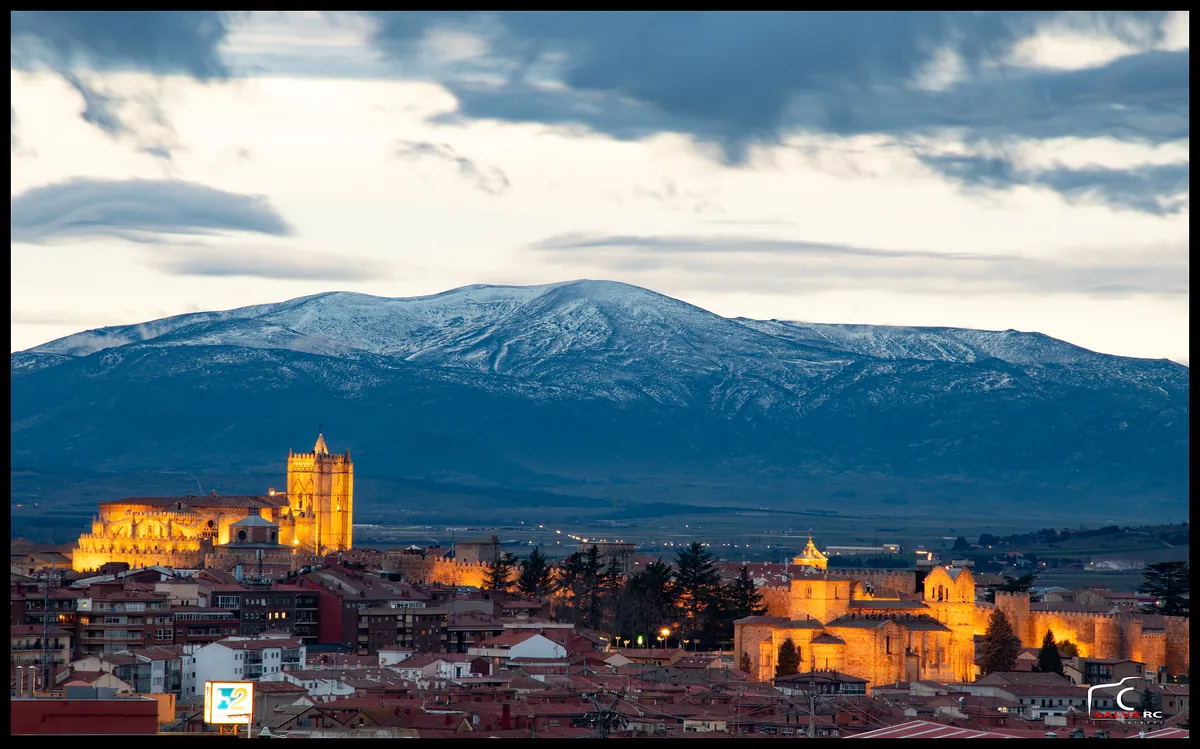
Rainy-day insurance lies 25 minutes away in the city of Ávila, whose medieval walls glow sulphur-yellow when wet. The cathedral, half-fortress half-sanctuary, charges €7 for the cloister and museum; on Sundays entry before 11 a.m. is free, though you’ll queue with half the province. Back in Marlin the only wet-weather amusement is the ethnography corner inside the church porch: two glass cases of agricultural tools whose labels have peeled, and a black-and-white photo of the 1956 blizzard that cut the village off for a fortnight. Locals insist the snow reached the first-floor windows; looking at the low stone cottages, you believe them.
Evenings end early. The last sunlight slips behind the Sierra at half-past seven whatever the season; temperatures drop like a stone and the lanes empty as dogs herd themselves home. Night skies, though, are worth the chill. At 1,200 m and thirty kilometres from the nearest streetlight, the Milky Way spills in a careless arc overhead; shooting stars leave after-images you can almost touch. Stand in the middle of the unpaved Calle Real, extinguish your phone torch, and the darkness feels almost noisy. Somewhere a tawny owl calls; closer, a stable door creaks; otherwise the village is breathing rather than sleeping, listening to itself.
Leave when you must, but expect a polite question at the junction: “¿Ya os vais?”—Are you off already?—asked less as conversation than as confirmation that someone noticed you came. Marlin will not sell you a souvenir; it offers instead a measure of silence you can carry home, an audible hush that lingers in inner ears long after tyres hit the main road. Whether that justifies the detour depends on what you’re looking for. If the answer is distraction, keep driving; if it’s distance, Marlin measures it in metres above sea level and decibels below everyday life.