Full Article
about Mediana de Voltoya
Set beside the Río Voltoya; riverside landscape and holm oaks with a historic palace.
Hide article Read full article
A village where time moves differently
Mediana de Voltoya feels like the sort of place you reach without much of a plan, perhaps after setting out just to stretch your legs. A short wander through a couple of streets is enough to realise that time works differently here. Set at around 1,100 metres above sea level in the Sierra de Ávila, this small village, with just over a hundred residents, keeps the steady rhythm that has shaped many settlements across the Castilian plateau for decades.
Granite defines the first impression. It is everywhere: in the houses, in the thick walls, in the solid feel of the place. Chimneys send up smoke for much of the day during winter. Nothing here tries to stand out or draw attention. There are no tourist signs, no squares designed for photographs. The sound you are more likely to hear is a tractor rather than a passing car.
The countryside does not sit at the edge of Mediana de Voltoya. It blends directly into it. Agricultural buildings appear among the homes, along with corrals and small plots of land close to the last houses. A flock of sheep might pass through the street without anyone giving it a second thought. Daily life and rural work still share the same space.
The heart of the village
At the centre stands the church of San Andrés. It does not dominate the skyline or aim to impress. The building follows the familiar style of many Castilian village churches: stone construction, simple proportions and a restrained interior, if you happen to find it open.
Beyond the church, the interest lies in the overall setting. Walking through the streets reveals how generations have built and adapted their homes. Houses are low, with large gates that once allowed space for machinery or animals. Inner courtyards remain in use, often stacked with firewood or farming tools. The layout tells a quiet story of practical living shaped by climate and work.
The surrounding landscape shifts noticeably with the seasons. Spring brings green meadows and livelier pine woods. Autumn turns the land into shades of ochre, which makes it especially appealing for walking or photography. Winter is unmistakable here. Frost is frequent, and the village takes on a particular kind of silence when the cold settles in.
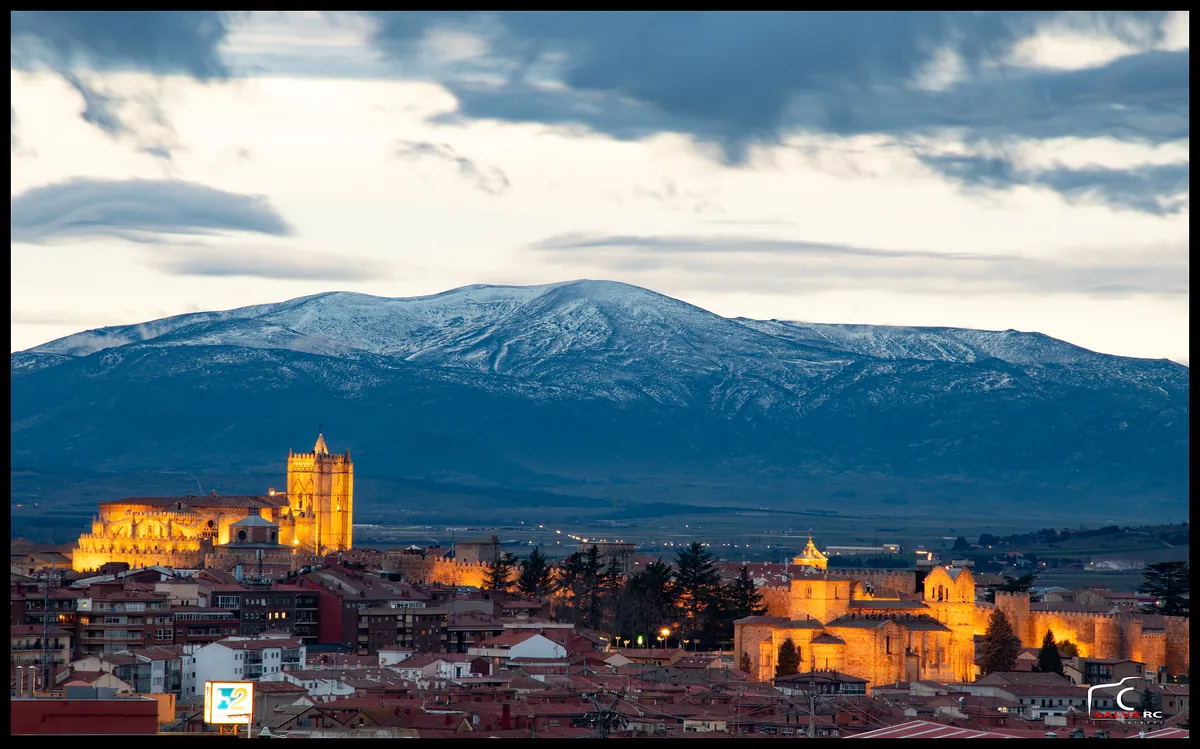
A short climb to any nearby high point offers open views across the Ávila countryside. On clear days, the distant outline of the Gredos mountains can be made out on the horizon.
Walking out into the landscape
Marked trails and information panels are not part of the experience here. The paths around Mediana de Voltoya are the same ones locals have always used, whether to reach their fields, move livestock or work in the pine forests.
A brief walk is enough to leave the village behind and step onto dirt tracks that run between open fields and clusters of pine trees. These routes are generally easy to follow. If you wander further, it helps to have a map on your phone, as some paths intersect and begin to look similar after a while.
Autumn brings a different kind of activity to the pine woods. People from the surrounding area come to search for mushrooms when conditions are right. Níscalos, a type of saffron milk cap, often appear in good seasons, along with other varieties. As in the rest of Castilla y León, it is important to check current regulations before collecting, as rules can vary depending on the year and the specific area.
Night falls quietly in Mediana de Voltoya, and the lack of strong lighting makes a difference. On clear evenings, the sky fills with far more stars than are usually visible in urban areas. It is a simple but striking reminder of how little artificial light reaches this part of the Sierra de Ávila.
Food and simple plans
The village itself is small, so most visitors head to nearby towns if they want to sit down for a meal. Across this part of the province of Ávila, the cooking follows familiar lines. Beef and lamb feature heavily, especially in traditional dishes suited to colder weather. Hearty stews are common, and wood-fired ovens are still widely used in the region.
Another option fits naturally with the setting. Many people who come for a day trip bring their own food and spend time outdoors instead. Sitting in the open countryside with something simple to eat works well here, particularly when the weather is on your side.
San Andrés and village life
Like many places in Castilla, the calendar in Mediana de Voltoya revolves around its patron saint. The festivities for San Andrés usually take place in summer. At that time of year, people with family ties to the village return, and the population briefly grows.
The celebrations include a procession and a programme of modest activities. The atmosphere centres on reunion, with familiar faces coming together again year after year. There is nothing elaborate about it, but that is part of its character.
From time to time, small gatherings or fairs linked to farming and local produce are also organised. The scale remains limited, in keeping with the size of the village, and the pace stays relaxed.
A place to pause
Mediana de Voltoya is not somewhere that offers a long checklist of sights or attractions. The appeal lies elsewhere. A short walk through its streets, a look at the surrounding fields, a moment spent taking in the quiet: these are enough to understand how life unfolds here.
It is a village where the essentials have changed very little. For some, that is precisely the point.