Full Article
about Mingorría
Close to the capital; known for the Adaja river setting and its archaeological sites.
Hide article Read full article
Where Mingorría Sits
Understanding Mingorría starts with its setting. The village lies around 15 kilometres from Ávila, on the wide plateau of the province, at a point where open cereal farmland begins to give way to the first gentle rises of the Sierra de Ávila. At just over a thousand metres above sea level, both the landscape and the buildings reflect a climate shaped by cold winters and dry summers.
This is a place that has grown as an الزراultural community. Its layout still follows that logic. Streets are short and narrow, designed for daily life rather than steady traffic, and many houses are built with local stone, with carefully cut blocks reinforcing the corners. Some façades still display carved stone coats of arms, traces of homes that once held a certain standing within the village.
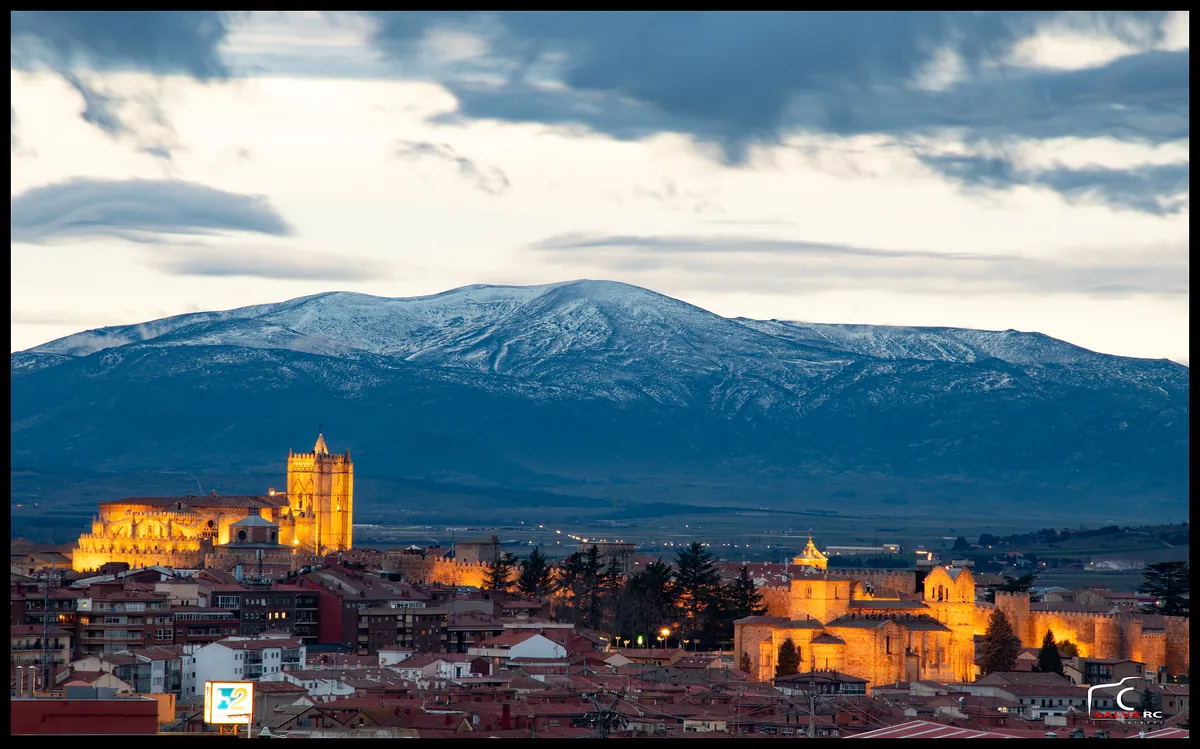
Beyond the last houses, the land opens quickly. Fields of cereal crops stretch out alongside dehesas, the open pastureland typical of central Spain, changing appearance with the seasons. On clear days, the Sierra de Ávila forms a low, continuous line on the horizon.
Local Heritage and Architecture
The most prominent building in Mingorría is the parish church of San Pedro Apóstol. Its origins go back to the medieval period, although what stands today is largely the result of later alterations. The square tower rises above the rooftops and acts as a clear reference point from the tracks and roads leading into the village.
Inside, the decoration is modest. Simple altarpieces and an old baptismal font remain in use. The church is not grand in scale, yet it reflects the character of rural parishes that have been part of everyday life here for centuries.
The older part of the village keeps an irregular layout. Traditional houses combine original stonework with additions made over time. Thick walls and sturdy construction were practical responses to the extremes of the plateau climate, keeping out winter cold and summer heat. Older doorways can still be recognised, and the main square functions as a meeting point for daily life rather than as a formal showpiece.
Open Landscapes Around the Village
The surroundings of Mingorría are defined by the campiña of Ávila. This is open countryside, with wide fields, scattered holm oaks and small areas of pine woodland nearby. The terrain is gentle, with long views in every direction. Wind and light play a constant role in shaping how the landscape feels from one day to the next.
Wildlife is part of that setting. Storks are often seen on rooftops or perched on nearby poles, while birds of prey circle above the fields, carried by rising air currents. Walking along the agricultural tracks gives a clear sense of how local life has long depended on cereal farming, livestock and the stone extracted from the area.
Walking Routes and Outdoor Time
The tracks that link Mingorría with neighbouring settlements are well suited to unhurried walks. These are wide agricultural paths, traditionally used by farm machinery and animals, so there is no technical difficulty in following them on foot or by bicycle.
The plateau offers little natural shade. During the warmer months, carrying water and protecting against the sun is important. In return, the open views make orientation straightforward, with the outline of the Sierra de Ávila always visible in the distance.
Food Traditions from Ávila
The cooking found around Mingorría follows the broader traditions of the province of Ávila. Dishes are substantial, shaped by the demands of winter cold and long working days in the countryside. Beef plays a central role, along with stews based on pulses.
Among the most typical recipes are patatas revolconas, mashed potatoes flavoured with paprika, along with a range of slow-cooked dishes and roasted meats that have been part of local cooking for generations. These are foods rooted in everyday life rather than special occasions.
Festivities and Local Culture
The main celebrations revolve around San Pedro Apóstol, the patron saint of Mingorría. These festivities traditionally combine religious events with community activities that bring together residents and those who return to the village for the occasion.
In summer, there are also more lively festivities, coinciding with the time when many families with ties to Mingorría come back. Easter is marked in a quieter, more restrained way, in keeping with the customs of villages across this part of Spain.
When to Go
Spring and autumn are usually the most comfortable times to explore Mingorría and walk in the surrounding countryside. Summer brings strong sunshine during the day, typical of the plateau, while winter can be intensely cold. Even so, the landscape of open fields and frost has a distinct character during the colder months.