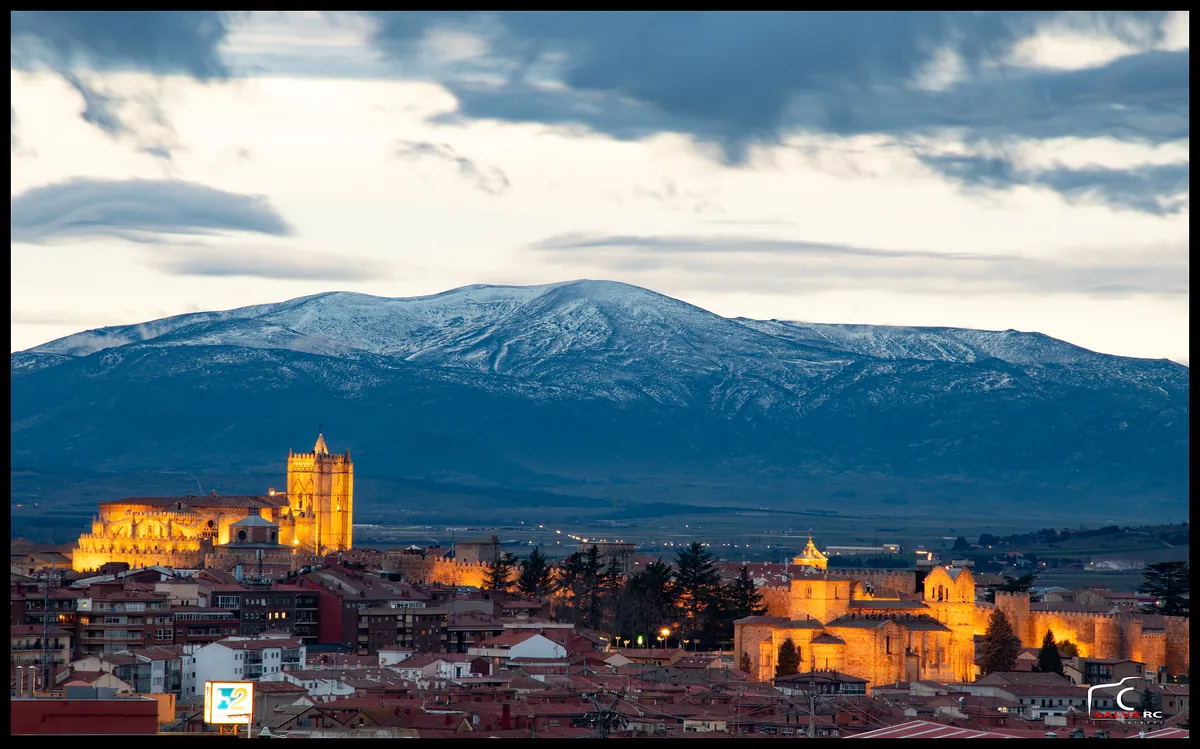
Vista aérea de Ojos-Albos
Instituto Geográfico Nacional · CC-BY 4.0 scne.es
Castilla y León · Cradle of Kingdoms

Ojos-Albos

The church bell tolls twice at noon, and nobody appears. Not because the village is empty—though with fewer than a hundred souls registered, it oft...

89 inhabitants · INE 2025
1225m Altitude

Why Visit

Mountain Rock paintings of Peña Mingubela Route to the rock paintings

Best Time to Visit

summer

Summer festivals agosto

Things to See & Do
in Ojos-Albos

Heritage

  • Rock paintings of Peña Mingubela
  • parish church

Activities

  • Route to the rock paintings
  • Hiking

Festivals
& & Traditions

Fecha agosto

Fiestas de verano

Las fiestas locales son el momento perfecto para vivir la autenticidad de Ojos-Albos.

Full Article
about Ojos-Albos

Mountain village between Ávila and Segovia; noted for its schematic rock paintings.

Ocultar artículo Leer artículo completo

The church bell tolls twice at noon, and nobody appears. Not because the village is empty—though with fewer than a hundred souls registered, it often feels that way—but because everyone already knows the time. In Ojos Albos the day unfolds at granite pace: slow, deliberate, and shaped by altitude rather than algorithms. At 1,225 m the air thins and sharpens; even in May the wind carries winter’s memory, and stone walls 80 cm thick still make sense.

Most visitors race past on the AV-910, bound for the better-known pottery towns of the Tiétar valley or the ski stations above Béjar. Those who brake hard and swing left at the stone cross find a single-lane road that corkscrews upward for 8 km. The final kilometre is tight enough to fold in a wing mirror; meet a tractor and someone must reverse. There is no charge for entering the village, only the unspoken toll of slowing down.

Stone, Water and What Remains

Ojos Albos translates loosely as “white eyes”, a reference to the springs that once bubbled at the village edge. The water is still there, channelled now into a stone trough beside the laundry yard where women scrubbed sheets until the 1970s. Locals will point out the spout, then warn that the flow weakens in August when every drop is claimed by vegetable plots higher up. Respect the hierarchy: gardens first, livestock second, cameras last.

Granite is the other constant. Every house, every terrace wall, every bench is hewn from the same grey stock, quarried 3 km away at Mingubela. The colour shifts with the weather: pewter under cloud, almost silver at dusk. Look closely and you’ll spot 16th-century mason’s marks—tiny crosses and arrows—still crisp because no one has bothered to erase them. In a place where winter lasts six months, decoration is wasted energy; durability is beauty enough.

The parish church of San Millán stands square in the middle of the single plaza. It is locked more often than open; the priest drives up from Muñogalindo on alternate Sundays. Push the heavy door when the lights are on and you’ll find a single-nave box, whitewashed inside to bounce candlelight, with a pine roof tarred black against beetles. The retablo is plain, the saints are local, and the collection box still accepts peseta coins for sentimental reasons.

Paths that Remember Sheep

Beyond the last house the village gives way to dehesa: holm oaks spaced wide enough for sheep, pigs and the occasional fighting bull. These are working pastures, not picture postcards. Expect electric fences, expect droppings, expect a shepherd on a quad bike who will wave you through if you greet him first. The traditional right of way is honoured, but courtesy costs nothing and opens gates—sometimes literally.

A spider’s web of old livestock tracks links Ojos Albos to neighbouring hamlets: Villarejo del Valle at 6 km, Navalmoral at 9 km. None are signposted in English; some aren’t signposted at all. The most reliable map is the 1:25,000 “Sierra de Gredos” sheet from the Spanish military survey, available in Ávila for €9. Without it you will get lost when the fog drops, which happens suddenly at this height. Mobile reception is patchy even on Vodafone’s so-called rural roaming plan.

October is mushroom month. The slopes produce níscalos (saffron milk caps) and rebozuelos (grey chanterelles) in quantities that would make a Borough Road deli owner weep. Spanish law allows each picker 2 kg per day, but you must first register online for a free permit and carry it printed—rural Guardia Civil officers have little patience with phone screens. Plastic bags are banned; use wicker or breathable cotton. Anyone caught raking the forest floor faces fines starting at €300. The locals are watching.

When to Come, When to Stay Away

Spring arrives late and grudgingly. Night frosts can linger until mid-May, so the almond blossom that colours lower valleys in March doesn’t appear here until mid-April. The compensation is scent: colder air traps the faint honey smell for hours after dawn. By contrast, autumn is the village’s golden hour. Days are still, skies are cobalt, and the stone walls radiate stored heat after sunset. Bring layers: a 20-degree midday can collapse into a 3-degree night once the sun slips behind the Sierra de Gredos ridge.

Winter is not for dilettantes. The road is cleared only after 10 cm of snow has fallen; until then you are behind the plough queue that starts in Ávila 60 km away. Chains are compulsory from November to March—rent them in Madrid, not in the province where supplies vanish after the first flake. If you do arrive during a snowfall, the village generator (installed after a three-day blackout in 2009) kicks in automatically, but heating still depends on butane bottles that can sell out for days.

Summer brings the fiestas, usually the second weekend of July. The population swells to perhaps 250 as emigrants return from Madrid and Barcelona. A sound system appears in the plaza, and the one bar extends its licence until 3 a.m. Beds are offered on sofas at €20 a night, cash only. If you need silence, stay in nearby Hoyocasero where the hotel walls are thicker; if you want to dance until dawn with septuagenarians who remember when the village had no cars, book early—there are only four spare rooms in total.

Food, Beds and the Art of Lowering Expectations

There is no hotel in Ojos Albos. The nearest accommodation is the rural house “La Casa del Abuelo” in Villarejo del Valle, 12 minutes by car. Doubles cost around €70 including breakfast (strong coffee, churros, homemade jam). They will pack a picnic if ordered the night before: tortilla, manchego, and a 50 cl bottle of local red for €12. Mention you’re walking to Ojos Albos and they’ll add a laminated map photocopied from the 1987 edition—still the most accurate.

Eating inside the village hinges on the Bar Castilla, open Friday through Sunday and whenever owner Paco feels like it. The menu is written on a paper plate nailed to the wall: judiones del Barco (giant butter beans stewed with chorizo), chuletón de Ávila (a 900 g T-bone for two), and pimientos del piquillo that arrive roasted from his cousin’s greenhouse. A three-course lunch with wine runs to €18; cards are accepted, but the signal fails in rain, so carry cash. If the shutter is down, the next nearest meal is in Hoyocasero at Asador El Duende—add 25 minutes on winding roads, and book ahead at weekends.

Vegetarians should declare themselves early. The default seasoning is pork fat, and “sin jamón” is treated as a charming eccentricity rather than a moral stance. Gluten-free bread is unknown; coeliacs should pack their own. On the plus side, the local water is safe, and the altitude means wine goes straight to your head—plan the walk home accordingly.

Leaving Without a Souvenir

Ojos Albos does not sell fridge magnets. The only shop closed in 2014 when its proprietor retired at 84. If you must take something, pick up a single granite pebble from the track beyond the church—perfectly legal, morally questionable, and guaranteed to add 2 kg to your rucksack. Better to pocket the silence instead. Drive back down the corkscrew road, round the bend where the village disappears, and notice how the temperature rises a degree with every 100 m descended. Granite turns to shale, oak to olive, and the 21st century reasserts itself with a mobile ping. The bell at San Millán won’t ring again until next time, but the sound lingers longer than the echo.

Key Facts

Region
Castilla y León
District
Ávila
INE Code
05173
Coast
No
Mountain
Yes
Season
summer

Livability & Services

Key data for living or remote work

2024
TransportTrain 11 km away
HealthcareHospital 13 km away
Housing~5€/m² rent · Affordable
January Climate3.5°C avg
Sources: INE, CNMC, Ministry of Health, AEMET

Official Data

Institutional records and open data (when available).

  • ABRIGO DE LA CABRA
    bic Arte Rupestre ~1 km
  • PINTURAS RUPESTRES DE PEÑA MINGUBELA
    bic Arte Rupestre ~1.5 km

Planning Your Visit?

Discover more villages in the Ávila.

View full region →

More villages in Ávila

Traveler Reviews