Full Article
about Peñalba de Ávila
Close to the capital; noted for its fortified church and archaeological remains.
Hide article Read full article
A small settlement on the southern slopes
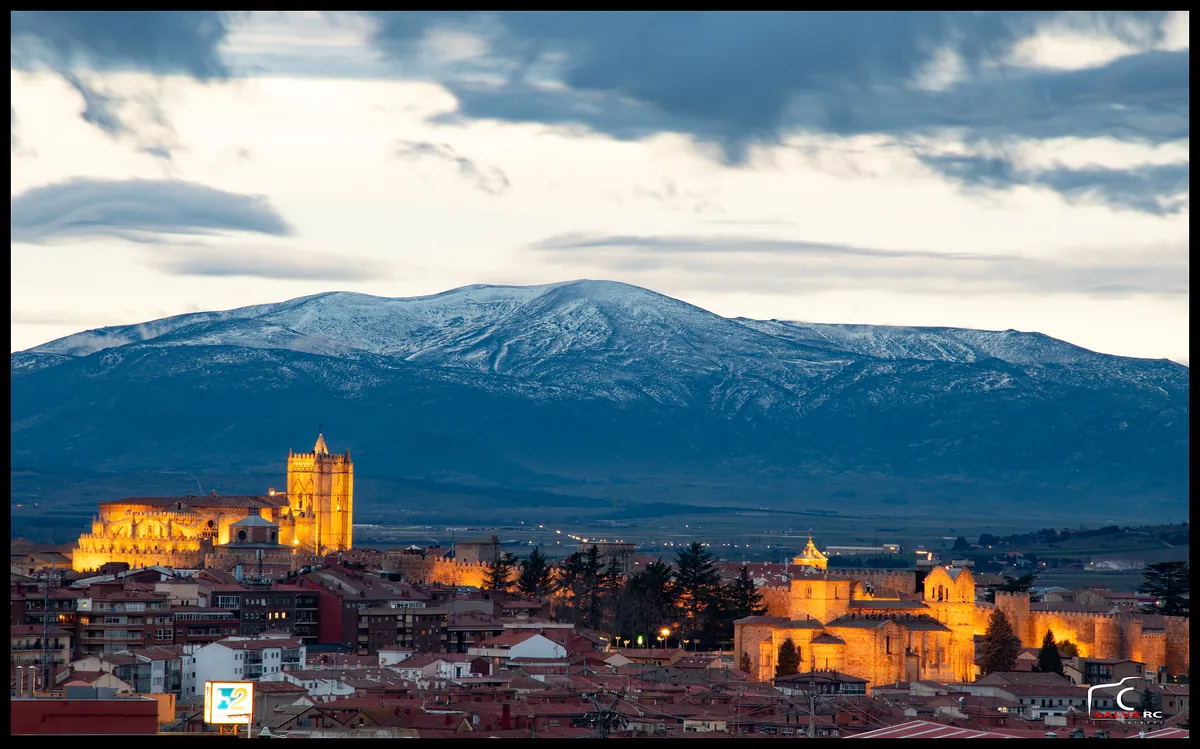
Peñalba de Ávila sits on the southern side of the Sierra de Ávila, at just over 1,000 metres above sea level. The setting is open and expansive, shaped by cereal fields and scattered holm oaks. It belongs to that wide stretch of Castilla y León where the landscape feels broad rather than dramatic, with long horizons and subtle shifts in colour through the year.
The village itself is small, with a population of just over a hundred people. Its layout reflects the long-standing rural life of the province of Ávila. Stone and adobe houses line the streets, accompanied by farm buildings and enclosed yards. These spaces point clearly to an economy traditionally based on agriculture and livestock, where daily life has been organised around the land.
There is no strict plan behind the arrangement of the houses. Instead, the village has grown according to practical needs tied to farming. Some buildings have been updated, while others retain older features. Large gateways once used for moving animals are still visible, and thick masonry walls remain in place, designed to keep out the cold of the long winters typical of the Castilian plateau.
The heart of the village and its church
Peñalba de Ávila has a compact centre. Its streets are short, and the few small squares feel more like widened sections of road than formal gathering spaces. There is little sense of monumentality. Instead, the village has a straightforward, functional character shaped by everyday use.
At the highest point stands the parish church of the Asunción. The building appears to date, at least in part, from the 16th century, although it has undergone later alterations, something quite common in rural churches across the province. Its construction is simple, built in stone, and it features a bell gable that can be seen from different points in the village.
Inside, the church consists of a single nave. It is not always open outside of religious services, which is typical in places of this size. The building remains part of the rhythm of local life rather than a permanent visitor attraction.
Fields, trees and wide views
The landscape around Peñalba de Ávila is mostly flat. Cereal crops dominate, creating a scene that changes noticeably with the seasons. In spring, the fields are a vivid green. By late summer, they turn into dry, straw-coloured expanses.
Holm oaks appear here and there between the cultivated plots, breaking up the uniformity of the fields. In less intensively farmed areas, there are occasional oak trees as well. These elements give the terrain a slightly varied texture without altering its overall openness.
A network of agricultural tracks extends outwards from the village. Walking along these paths offers clear views across much of the Ávila plain. On bright days, the mountain ranges on the horizon come into view, helping to place Peñalba within a transitional landscape between higher ground and the plateau.
These routes are easy to follow and do not require much preparation. They are not marked as formal hiking trails, and many still function as working paths used by farmers and livestock keepers. The experience is therefore tied closely to the everyday use of the land rather than to organised tourism.
The area is also known for birds of prey. It is common to see them gliding above the open fields, taking advantage of rising warm air currents. Among the species that appear regularly are the common buzzard and the red kite, both of which are well adapted to this type of terrain.
Rural rhythms and shared traditions
Life in Peñalba de Ávila continues to follow the agricultural calendar to a large extent. Seasonal work still shapes the pace of daily activity, even as the population has declined over time.
Some traditional practices remain, especially within families. One example is the winter pig slaughter, a custom with deep roots in rural Spain, where it has long been a way of preparing and preserving food for the colder months. Although less widespread than in the past, it still takes place in a domestic setting.
The main celebrations are usually held in summer. This is when many people who have moved away return to the village, temporarily increasing its population and activity. The festival dedicated to the Virgen de la Asunción, traditionally celebrated in August, brings together religious events and activities organised by local residents. These occasions highlight the role of the community in maintaining shared traditions.
Visiting with simple expectations
Peñalba de Ávila can be explored in a short amount of time. It is not a destination defined by major monuments. Instead, it offers a quiet setting that helps explain how agricultural life shapes this part of the province.
The appeal lies in walking through its streets, observing the mix of older and updated buildings, and stepping out into the surrounding countryside. The nearby tracks provide a straightforward way to experience the landscape and its changing colours across the seasons.
It is worth keeping in mind that services within the village are limited, which is typical for a place of this size. Planning ahead and relying on nearby towns for anything essential is the most sensible approach when visiting.