Full Article
about Revilla Y Ahedo La
Ocultar artículo Leer artículo completo
The church bell strikes midday and the only other sound is a tractor clearing the last row of stubble. No café latte machine, no souvenir rack, just the faint smell of diesel and newly-turned earth drifting across a single junction that passes for a centre. Welcome to Revilla y Ahedo, 500 souls strung along a ridge 1,050 m above sea level, halfway between Burgos and Soria, where the map turns beige and the mobile signal flickers between three bars and none.
Horizon on Repeat
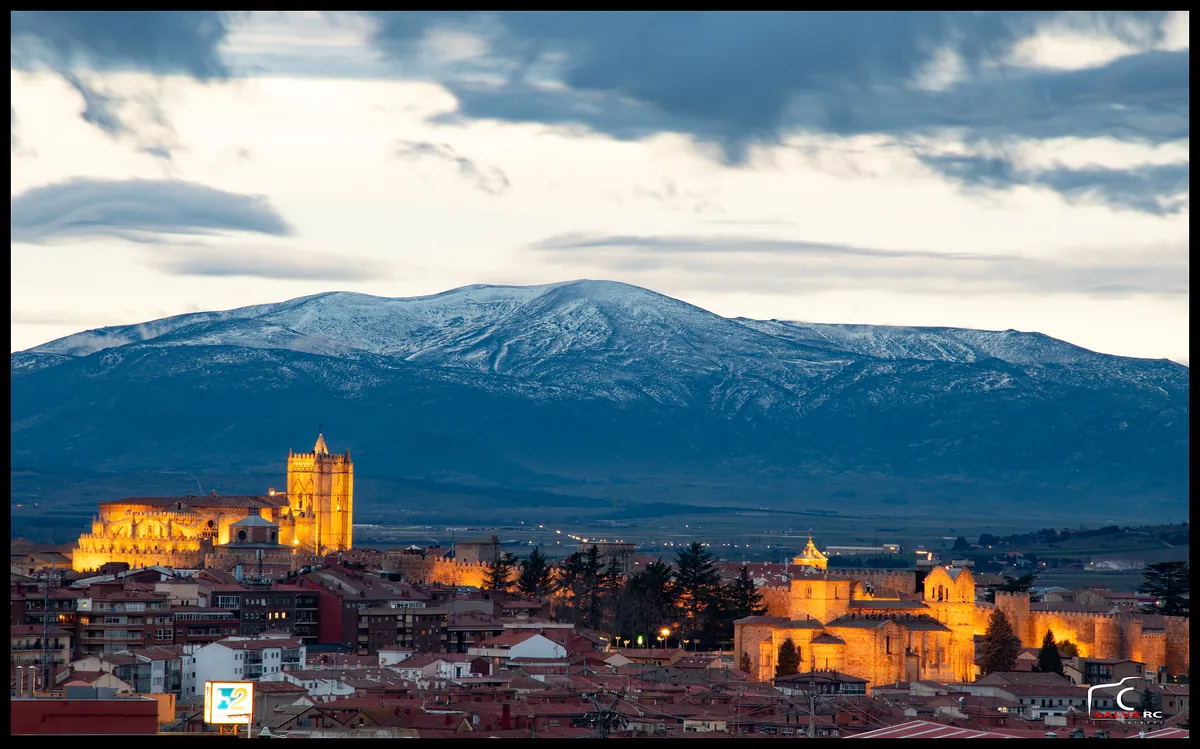
The village sits on a gentle fold of the Meseta, the high plateau that keeps central Spain wind-swept and largely ignored by the coastal rush. In April the surrounding fields stripe lime-green with young wheat; by July they bleach to parchment. Oak windbreaks and the occasional poplar are the only verticals until the Sierra de la Demanda appears 30 km south, snow-dusted well into May. Dawn starts cold even in midsummer – 12 °C is normal – but by 3 p.m. the thermometer can touch 32 °C before plummeting again at dusk. Bring layers; the plateau does not do lukewarm.
There is no “old quarter” to tick off. Instead, low limestone houses, many still roofed with Arab tile, run in an irregular spine for barely 400 m. Adobe walls bulge like well-proofed loaves; timber doors are pint-sized, built when people were smaller and heating bills non-existent. Peek over any gate and you will see the classic Castilian courtyard: firewood stacked to the eaves, a rusty diesel barrel, perhaps a greyhound dozing in its own dust bath. Photographers hunt for colour at sunrise when the stone turns honey and the sky delivers the huge cloudscapes that inspired the region’s sober Baroque painters.
What Passes for a High Street
Calle Real is the village’s sum total of commerce. At number 14, Bar La Demanda opens at 07:00 for farmers who need a brandy-anis before checking irrigation. Coffee is €1.20, served in glass tumblers; they will make you a sandwich of local morcilla if you ask before the lunchtime rush of six regulars. Next door, the grocery doubles as the off-licence and post counter. The ATM inside charges €1.50 per withdrawal and runs out of €20 notes on Friday – plan accordingly. There is no petrol pump; the nearest reliable fill-up is in Salas de los Infantes, 15 km south on the BU-550, so arrive with at least a quarter tank.
Monday is ghost-town day. Both bars and the bakery shutter, and the nearest alternative meal is a 20-minute drive. Weekend visitors who assume Spain runs on seven-day tourism learn otherwise here.
Walks without Waymarks
You will not find a tourist office handing out glossy route cards. Instead, download the free IGN 1:25,000 map (leaflet MTN50-267) and head north on the gravel camino that leaves from the cemetery. In 45 minutes you reach a ruined medieval watchtower, Cerro del Castillo, elevation 1,180 m, where the view opens across three provinces. Skylarks rise from the wheat; on a clear day you can pick out the aluminium roof of a grain silo 25 km away. The track continues another 7 km to the hamlet of Barbadillo de Herreros, population 38, where one house sells cold beer from a fridge on the porch – honesty box provided.
Cyclists can loop south through pine plantations towards Salas, a 28 km ride with 350 m of ascent. Traffic is negligible; the biggest hazard is loose chippings and the occasional free-range mastiff who believes tarmac is territory.
Fire, Smoke and a Sheep
Food is not theatre here, it is calendar. Locals still fatten two lambs each autumn for the family freezer; the same wood-fired ovens heat the village hall during fiestas. Visitors can taste the result at Sidrería Asador Fuentelamora on Calle Real (book one day ahead, €22 per person for half a lamb). The meat arrives bronzed, resting on a clay dish the size of a bicycle wheel; chips are optional, salad almost an insult. Vegetarians get a plate of roast piquillo peppers and excellent sheep’s cheese, Queso de Burgos, crumbly like early-season Wensleydale.
Sweet cider from the nearby Rudrón valley accompanies the meal. It is still, honey-coloured, and tastes of bruised apples rather than the vinegar-sharp Asturian stuff British palates shy away from. Order una botella and they will pour it from shoulder height, even if you are the only table.
One Week in August
Fiestas patronales begin the third weekend of August when the population triples. The church of San Pedro Apóstol is draped with awnings, brass bands march at 11 p.m. (earplugs advised), and the village square becomes an open-air kitchen. On Saturday night, residents contribute kilos of pork to a giant stew simmered in a cauldron once used for rendering soap; tickets cost €5 and you eat from plastic bowls balanced on beer crates. Sunday’s procession is short – 250 m to the church and back – but the image of the Virgin is carried beneath a twenty-year-old umbrella of artificial roses, lovingly re-fluffed each year. It is amateur, heartfelt, and over by 13:00 when the heat makes marching dangerous.
Getting There, Staying Over
Bilbao is the most convenient airport for Brits. Ryanair flies daily from London Stansted; EasyJet covers Manchester three times a week. Collect a hire car, join the A-68 south, switch to the A-1 after Miranda de Ebro, exit at junction 230 for the BU-550. Total drive: 1 h 45 min, €14.30 in tolls. Do not rely on public transport; the nearest ALSA coach stop is Salas de los Infantes, 15 km away, and taxis must be booked a day ahead (Radio Taxi Salas, +34 947 38 41 41).
The only beds actually inside the village are at Casa Rural La Demanda, a three-bedroom cottage with Wi-Fi that works most evenings. Rates hover around €90 per night for the whole house, minimum two nights. If you prefer a pool and English-speaking reception, the Hotel Spa Villa de Soria in Salas offers doubles from €65, including underground parking wide enough for a Range Rover.
When to Come, When to Skip
Late April to mid-June is prime time: green wheat, mild afternoons, night-time frost that keeps the air crystalline. September repeats the trick with added stubble fields and migrating storks. July and August deliver cloudless skies but also 35 °C heat and the hum of combine harvesters from dawn until the siesta. Winter is Siberian-lite – brilliant, empty, and often cut off after snow. The BU-550 is gritted, yet Spanish gritters are selective; if the forecast mentions cota de nieve 900 m, stay in the city.
Parting Shot
Revilla y Ahedo will not change your life. It offers no waterfalls, no Michelin stars, no Celtic ruins to brag about back home. What it does provide is a calibration point: an hour in the square teaches you how slow time can move when nobody is selling you anything. Bring a paperback, order a coffee, and listen to the wheat shifting in the breeze. That faint rustle is the region’s soundtrack, and it has been playing long before any of us arrived.