Full Article
about Riocavado De La Sierra
Ocultar artículo Leer artículo completo
The church bell strikes midday, yet nobody quickens their pace. Two elderly men pause their conversation about rainfall to acknowledge the bronze clangs, then resume exactly where they left off. In Riocavado de la Sierra, time operates on a different frequency—one measured in seasons, harvests, and the slow drift of clouds across the Sierra de la Demanda.
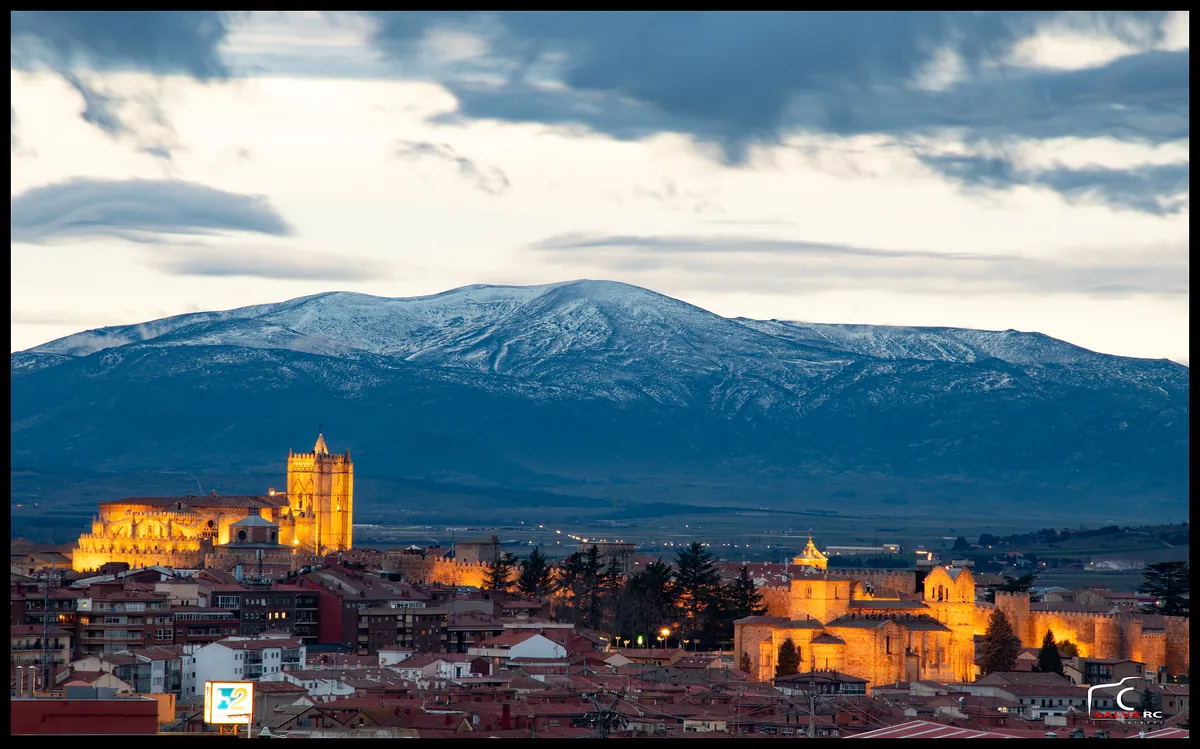
At 1,150 metres above sea level, this stone cluster of 120-odd houses feels closer to the sky than to anywhere else. The village perches on a ridge where cereal fields surrender to heather and juniper, marking the psychological border between Castile's agricultural heartland and the proper mountains beyond. It's the sort of place where weather forecasts feel pointless; within half an hour you can experience four seasons and a hailstorm that lasts exactly three minutes.
The Architecture of Survival
Walk the single main street at 7:30 am and you'll understand why every building here faces south. Winter temperatures regularly drop to minus twelve, and the wind arriving from the Cantabrian coast has nothing to slow it for 100 kilometres. The houses—thick stone walls, tiny windows, doors that close with the satisfying thunk of serious timber—represent centuries of trial-and-error in keeping warm without central heating.
What's remarkable is how little has changed. Yes, satellite dishes sprout from medieval walls and someone's installed aluminium-framed windows in the old schoolhouse. But the fundamental structures remain: timber beams blackened by centuries of wood smoke, adobe bricks the colour of burnt toast, roofs pitched at precisely the angle required to shed snow yet not too steep for terracotta tiles. It's architecture born from necessity, not aesthetics, which somehow makes it more honest than any heritage scheme.
The church, dedicated to San Juan Bautista, dominates the skyline without particularly meaning to. Built in stages between the 16th and 18th centuries, its weathered sandstone tower serves as both spiritual centre and meteorological instrument. Locals claim they can predict tomorrow's weather by the colour of the stone at sunset—pink means rain, grey means snow, white means you're already too late.
Walking Into Silence
Leave the village by any of the three dirt tracks and something immediate happens. The stone walls stop reflecting sound, and suddenly you can hear your own heartbeat. These paths—really just worn strips between dry-stone walls—connect Riocavado to neighbouring hamlets at distances that feel medieval: Huerta de Abajo (12 kilometres), Barrio Panizares (8 kilometres), Salas de los Infantes (25 kilometres). Nobody walks them anymore except shepherds and the occasional German with trekking poles.
The landscape shifts constantly. One bend presents a view across the Arlanza valley, the next plunges you into a holm-oak copse where wild boar have rooted up the path. In April, the fields glow green with young wheat. By July, they've bleached to parchment yellow. October brings a brief, furious display of colour—ochre broom, scarred maple, the silver flash of birch bark—before November's gales strip everything bare.
Birdlife here operates on a vertical axis. Crag martins nest under the church eaves, red kites circle at eye level, and if you're patient (and lucky) you'll spot a golden eagle riding the thermals far above the ridge. The real star, though, is the nightjar—a cryptic brown bird that appears at dusk, hawking insects with mechanical precision while making a sound like a distant motorbike engine.
The Gastronomy of Altitude
Food in Riocavado follows the altitude rule: the higher you go, the heartier it gets. Nobody apologises for serving stew in August; at these elevations, you need the calories. The local speciality is cordero lechal—milk-fed lamb roasted in a wood-fired oven until the skin achieves the consistency of pork crackling. Portions arrive on shared platters because that's how it's always been done, and complaining about cholesterol marks you immediately as an outsider.
Breakfast means tostadas—thick slabs of bread rubbed with tomato, drizzled with local olive oil, topped with jamón so thin you can read through it. The oil tastes different here, greener, with a peppery finish that catches the back of your throat. That's the altitude again—olive trees at 1,000 metres produce smaller fruit with more concentrated flavour.
For supplies, you're dependent on the weekly mobile shop: a white van that tours mountain villages on Tuesdays and Fridays, selling everything from toothpaste to chorizo. Miss it and you'll drive 25 kilometres to Salas for basics. The nearest proper restaurant is in Ezcaray, 35 minutes down a road that demands full concentration and preferably a vehicle with decent ground clearance.
When to Arrive, When to Leave
Spring arrives late and tentatively. May can still bring frost, but the compensations are huge: meadows full of wild narcissus, clear air that makes distant mountains appear closer than they are, and the satisfying crunch of gravel underfoot on paths that won't see another walker all day. This is also when villagers emerge from winter hibernation, and conversations that started in October finally reach their conclusions.
August surprises first-time visitors. Days might hit 30°C, but nights drop to single figures. The village fills with returning emigrants—families who left for Bilbao or Barcelona decades ago, now back to show grandchildren where grandparents grew up. The fiesta, centred on the last weekend of August, involves processions, brass bands, and quantities of red wine that would alarm a British licensing committee. It's not staged for tourists because, frankly, there aren't any.
Winter divides opinion. From November to March, Riocavado becomes a study in grey and brown. The wind never stops. Snow arrives suddenly, closes the road for days, and transforms the village into something approaching beauty. Some visitors find this thrilling—the digital detox to end all digital detoxes. Others last exactly 24 hours before fleeing to the nearest city with a Starbucks.
The honest truth? Riocavado de la Sierra doesn't suit everyone. It offers no Instagram moments, no boutique hotels, no craft breweries. What it provides instead is increasingly rare: a place where the modern world feels like an optional extra rather than the main event. Come prepared for silence, for weather that changes its mind mid-sentence, for conversations that begin with rainfall statistics and end three hours later with someone's entire family history.
Bring walking boots, cash (the nearest ATM is 25 kilometres away), and a tolerance for the fact that nothing happens quickly here. Leave behind your need for constant stimulation, your city reflexes, your assumptions about what constitutes a holiday. The village will still be here when you arrive. It was here before you planned the trip, and it will remain long after you've gone home to check your emails.