Full Article
about Santa Gadea Del Cid
Ocultar artículo Leer artículo completo
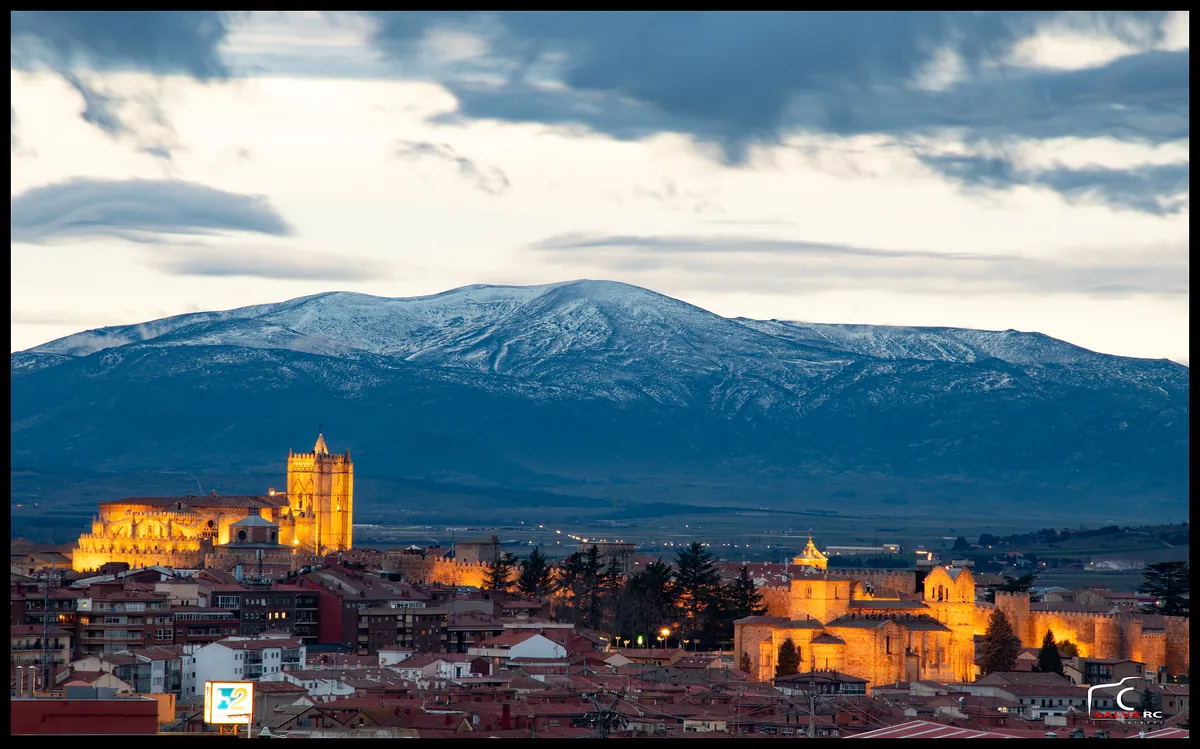
The thermometer drops five degrees in the last ten minutes of the drive from Burgos. At 1,000 metres above sea level, Santa Gadea del Cid sits high enough for the air to carry a snap of mountain clarity, even when the Duero basin below is sweltering. The first thing you notice is the stone: honey-coloured blocks that have absorbed eight centuries of Castilian winters, piled into walls, tower and the sharp Gothic arch of San Pedro church—scene of Spain’s most famous oath-swearing.
Inside that church, in 1072, Rodrigo Díaz—El Cid—forced Prince Alfonso to swear three times he had no hand in the murder of his brother King Sancho. The story survives in the Poema de Mío Cid; the exact spot is marked by a worn flagstone in the north aisle. Weekday mornings the building is unlocked by 10 a.m.; if the door is bolted, ask in the bakery opposite—someone keeps the key. Entry is free, but a €1 coin in the box keeps the lights on long enough to study the 16th-century retablo whose gold leaf still glows when the sun slants through the clerestory.
Stone, Shield and Silence
Walk the single main street and you pass six manor houses whose coats of arms are carved so deeply that moss has taken root in the lions’ mouths. One shield shows a boar pierced by an arrow—local legend claims it represents a knight who died hunting rather than in battle. The houses are private, but knock at number 18 and the owner, Señora Arce, will usually show you the Renaissance courtyard for the price of a postcard. She keeps the original wine press in the cellar; the must once ran downhill into the church crypt, handy for communion wine.
Beyond the houses, the tarmac gives way to a farm track that climbs west towards the Sierra de la Demanda. In twenty minutes you are among holm oaks and grazing sheep; stoop and you will find tiny wild strawberries the size of a fingernail, ripe in late June. The path is way-marked as the PR-BU 71, but paint flashes are faded—download the GPX before leaving the village bar, whose Wi-Fi password is still “CidCampeador”.
When the North Wind Shuts the Road
Altitude has its price. From November to March the BU-532 approach is closed after 7 p.m. when snow poles go up; morning ice can linger until 10 a.m. Even in April, a sudden northeasterly can drop the temperature below freezing, so pack a wind-shirt whatever the forecast says for Burgos. Conversely, July and August can be deceptively cool at midday—ideal for walking—but the sun still burns: the UV index here is 30 % higher than on the coast at Santander, 90 minutes away by car.
The village’s 500 souls have learned to live with the weather. Shutters are painted ox-blood red on the south side to absorb heat; north-facing windows stay green to discourage frost. Bread is baked twice weekly because the old stone oven takes four hours to reach temperature, and firing it daily would empty the wood-store before Christmas.
Lamb, Lentils and the Last Bar
There are no restaurants per se. Instead, three front rooms open as comedores on Friday and Saturday nights; you book by placing your name on the slate outside the butcher’s before noon. The set menu never changes: roast suckling lamb (lechazo), morcilla de Burgos, and ajoarriero—salt-cod pounded with potato and garlic—followed by sheep’s-milk cheese that tastes faintly of thyme. Price is fixed at €22 including a half-bottle of house Ribera; vegetarians get a bigger portion of pisto and a fried egg, but must ask in advance—eggs are counted daily by the hen-woman opposite the church.
On ordinary weekdays, the only food available is in the bar at the petrol station on the N-232, 4 km south. Their bocadillo de chorizo (€3.50) is grilled to order and better than it sounds; eat it on the terrace and you can watch trucks disappear into the tunnel that links Castile with the Basque ports, a reminder that this quiet ridge was once the border between Christian Spain and the Moorish taifas.
Sleeping Off the Ridge
Rooms inside the village are non-existent—there is one casa rural, but it has been booked every weekend since 2019 by a Bilbao gastronomy club who arrive with their own Txakoli and leave at dawn. Most visitors stay down in the valley. The closest decent bed is Hotel Rural Río Molinar at Ranera, nine kilometres away along a road that twists like a dropped rope (€85 B&B, bike hire €15/day). If you need supermarkets or evening cinema, Hotel Abades Via Norte in Miranda de Ebro has sound-proofed rooms facing away from the AP-1 motorway and a 24-hour Carrefour next door (€65 room-only). For something grander, the nineteenth-century manor Casona Indiana de Ayuelas offers four-poster beds and a breakfast of churros made while you watch, 25 minutes west through beech woods (€120).
A Calendar of Two Speeds
Santa Gadea’s year pivots on 15 May, when San Isidro Labrador is paraded through vegetable plots so the priest can splash holy water on the soil. After mass, the village eats 250 kg of cocido in the square; outsiders are welcome, but you must bring your own bowl and spoon—plastic is frowned upon. The second burst of life comes in mid-September for the Virgen de la Soledad. Then the population doubles as grandchildren return from Bilbao and Madrid; a disco runs off a generator in the cattle market until 3 a.m., and Monday morning smells of stale beer and disinfectant.
Between those dates, the place returns to a hush broken only by the church bell, which strikes the half-hours because the mechanism was installed in 1783 and no one has bothered to silence it. Ringing stops only when the temperature falls below –5 °C; the iron clapper freezes to the bell wall, a quirk that locals read as the first reliable sign winter has arrived.
Leaving the Ridge
Drive away south and the landscape tilts like a seesaw. Within twenty minutes you have lost 600 metres of altitude; the air thickens and the thermometer climbs back into Spanish normality. In the rear-view mirror Santa Gadea is a single sandstone scar on the pine-dark ridge, its church tower catching the last light. El Cid rode out of here cleared of regicide, heading for Valencia and the wider world. Most visitors simply head for the A-1 and Madrid, leaving the high air—and the oath—to echo quietly behind them.