Full Article
about Santa Maria Del Invierno
Ocultar artículo Leer artículo completo
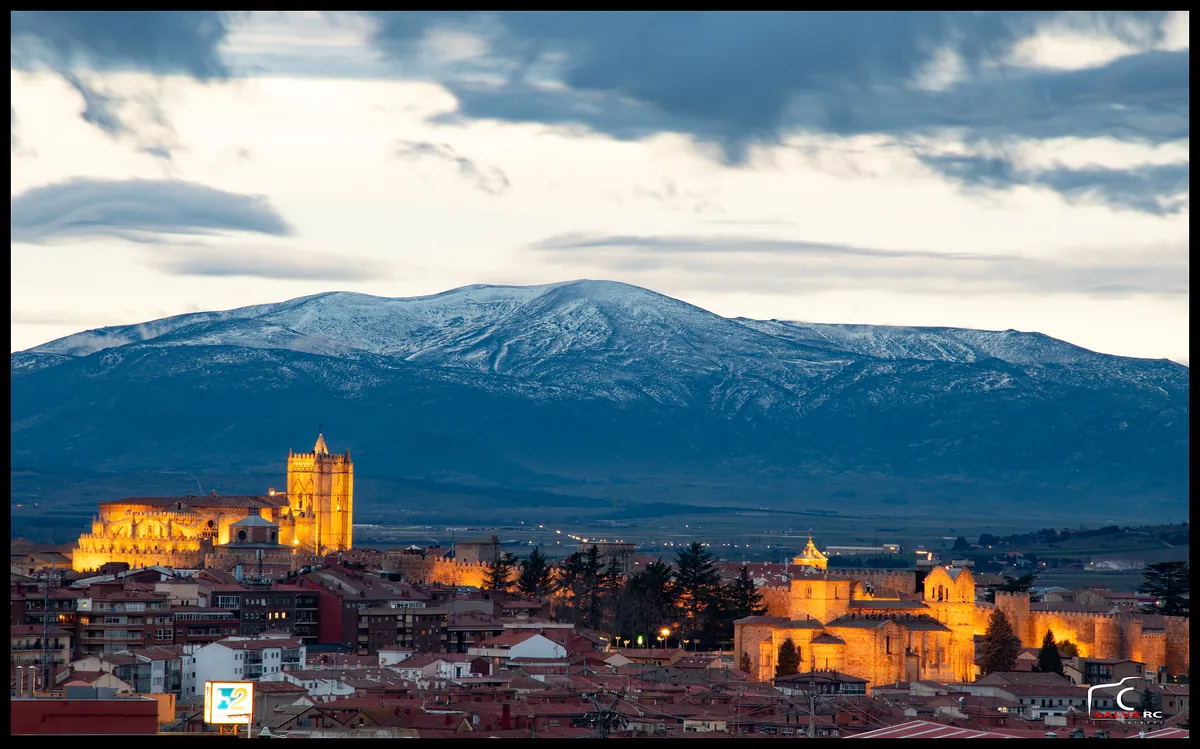
The church bell strikes noon, and the only other sound is a tractor labouring through wheat stubble somewhere beyond the stone houses. In Santa María del Invierno, population 120 on a busy Sunday, the clock doesn't merely mark time—it measures distance between human noises.
This Burgos village sits where the meseta drops into the Duero basin, 45 minutes south-east of the provincial capital. The name translates literally as "Saint Mary of Winter," though nobody agrees why. Some locals claim a 12th-century miracle during a blizzard; others shrug and point out that winters here bite hard enough to justify any moniker. At 940 metres above sea level, January temperatures regularly dip below -10°C, and Atlantic storms roll across the plains with nothing but barley stalks to slow them down.
The architecture responds accordingly. Houses huddle shoulder-to-shoulder, built from honey-coloured limestone hauled from nearby quarries. Walls measure half a metre thick; doors sit low, some barely five foot six, designed to keep heat in and north winds out. Windows face south whenever possible, and the older dwellings still lack glass in the traditional sense—wooden shutters with iron bars that clank against stone on stormy nights. Roofs pitch steeply, tiled in curved Arab terracotta that rattles like castanets when hail arrives.
Visitors expecting manicured medieval perfection will find instead the honest wear of agricultural life. Render flakes off in palm-sized patches. A 1930s-era grain store leans fifteen degrees west, kept upright by habit and neighbouring walls. Yet the overall impression isn't decay but endurance. These buildings have outlasted civil wars, mechanisation, and three separate waves of rural exodus. They can handle a few more winters.
The Plaza That Isn't
Spanish villages centre around a plaza mayor. Santa María del Invierno never got the memo. Its heart is a widening in the main street where the asphalt crumbles into packed earth wide enough for two tractors to pass—if both drivers breathe in. Here stands the parish church, Nuestra Señora de la Asunción, its squat tower visible from every approach road across the cereal ocean. Built between 1530 and 1630 on earlier foundations, it mixes late Gothic ribs with Renaissance restraint. The门户 holds a carved tympanum depicting the Virgin flanked by wheat sheaves: faith and farming in equal measure.
Step inside and the temperature drops another five degrees. Thick walls maintain a year-round chill that preserves 17th-century fresco fragments in the apse. Saints stare down from cracked plaster, their faces salt-stained by roof leaks. A single bulb hangs from the nave, casting shadows that make the painted eyes follow movement. Mass attendance averages twelve on ordinary Sundays; at Easter the population triples as grandchildren return from Burgos and Valladolid to keep grandparents company.
Behind the altar lies the village's only piece of recognised art: a polychrome wooden Virgin whose robes show Moorish geometric patterns, evidence of craftsmen who stayed after the Reconquista. She wears a winter cloak—thick wool, naturally—added by local women in 1923. Nobody remembers why. The cloak gets dusted twice yearly and replaced every generation, always in the same dark grey.
Walking the Grain Belt
Three marked footpaths radiate from the church, though "marked" overstates the case. Yellow paint flashes appear roughly every 500 metres on electricity poles or gateposts. The longest, 11 kilometres, loops through three abandoned hamlets now reduced to roofless walls and ivy-choked presses. These ghost settlements—Valdezate, Losana, Villanueva—explain why Santa María still exists. Their former residents converged here during the 1950s and 1960s, seeking schooling and running water.
The walk crosses what birdwatchers call pseudo-steppe: vast fields of wheat and barley broken only by stone boundary walls too low to interrupt wind. Cereal farmers here practice dryland agriculture; rainfall averages 450mm annually, marginal at best. Climate change has shortened the growing season by ten days since 1980, forcing earlier sowing and pushing yields ever closer to the economic edge. Look closely and you'll spot patches of black: ergot fungus, increasingly common as weather patterns shift.
Bring binoculars. Calandra larks rise in song flights, their black underwings flashing white patches. Red-billed choughs—rare elsewhere—probe cow pats for beetles. On calm days you can hear the rasp of corn buntings from half a kilometre away. The real prize comes at dusk: little bustards, three or four males displaying in spring, transforming the field into an avian lek that few outsiders ever witness.
Cyclists find the same tracks rideable on gravel bikes, though the surface varies from packed earth to fist-sized limestone chunks. Gradient never exceeds 4%, but the wind can hit 40kph with nothing to block it. Carry two bottles; the only public fountain stands outside the cemetery—cold, delicious, and mildly carbonated from deep aquifer limestone.
Eating What the Land Allows
Food options occupy the spectrum between limited and non-existent. The village bar, Casa Juana, opens Thursday to Sunday, hours approximate. Juana cooks whatever her husband José shoots or neighbours trade: partridge stew in autumn, migas—fried breadcrumbs with garlic and chorizo—when bread goes stale. A plate costs €8, wine included. The wine comes from Aranda de Duero, 50 kilometres west, and arrives in reused mineral-water bottles. It's young, robust, and tastes of tempranillo with a hint of tractor diesel—an acquired note that somehow works.
For self-caterers, the weeklymobile shop pulls into the church square every Wednesday at 11:00. White van, no signage, horn tooted twice. Stock up on tinned beans, local cheese made from sheep grazed on the surrounding stubble, and morcilla—blood sausage spiced with onions grown in the river valley. Fresh fish arrives frozen; the nearest coast lies three hours away, and Madrid restaurants outbid village buyers for day-boat catch.
The annual pig slaughter still happens in four family farms each January. Visitors sometimes get invited to help if they ask respectfully and bring brandy. The process follows medieval ritual: the animal walked, not trucked; throat cut with knife blessed by the priest; every centimetre used—blood for morcilla, fat for chorizos, skin fried into crisp chicharrones. Vegetarians should avoid the bakery storeroom during this week; hooks in the ceiling serve double duty for hams and bicycles.
When to Brave It
Spring delivers the plains at their greenest, usually mid-April to mid-May when wheat shoots carpet the landscape in an almost Irish hue. Temperatures range 8–18°C; nights remain cold enough to warrant a jumper. Wild tulips and fritillaries bloom along field margins, surviving because modern herbicides can't reach the strip between cereal and stone wall.
Autumn brings harvest dust and crane migration. From late October thousands of common cranes fly overhead, calling like wooden trumpets as they head south to Extremadura. Stand in the cemetery at dusk; the sky fills with Vs against a blood-orange sky that makes the limestone glow pink.
Summer hits 35°C regularly; shade exists only inside buildings. Most locals close shutters from 14:00 to 18:00 and emerge at sunset to sit on folding chairs in the street, gossiping while swifts scream overhead. August fiestas feature a brass band, foam machine for children, and disco that stops at 03:00—late by village standards but tame compared to coastal Spain.
Winter owns the place. Snow falls maybe twice, but the wind knife-cuts through every layer. Many houses lack central heating; residents move from kitchen to bedroom with electric heater, following the day's warmth. If you visit between December and February, book accommodation with wood-burner specified. The nearest hotel stands 18 kilometres away in Lerma, a Ducal town built from the same stone but with four-star prices and underfloor heating.
Getting There, Getting Out
No railway arrives. ALSA buses connect Burgos to Santa María twice daily, timing geared to market and medical appointments rather than tourists. The 09:15 departure reaches the village at 10:40; the return leaves 17:30, which gives six hours—ample unless you plan serious walking. Single fare costs €5.75, paid in cash only. Drivers take the A-1 motorway south-east from Burgos, exit at Lerma, then follow the CL-117 for 24 kilometres. Petrol stations vanish after Lerma; fill up.
Mobile coverage extends to Vodafone and Movistar; Orange users wander in 3G wilderness. Wi-Fi exists in the village hall, password taped to the door: "Invierno1956"—the year the building opened, not some nostalgic golden age. Download maps offline before arrival.
Leave with more diesel than you arrive; the nearest 24-hour pump lies 35 kilometres south in Aranda. And carry a blanket, even in July. The village name doesn't bluff. Winter here isn't merely a season—it's a state of mind that can arrive any month the wind swings north and the sky turns the colour of wet limestone.